Women In Trucking Association names Member of the Month
Photo: Port of Long Beach
">Photo: Port of Long Beach
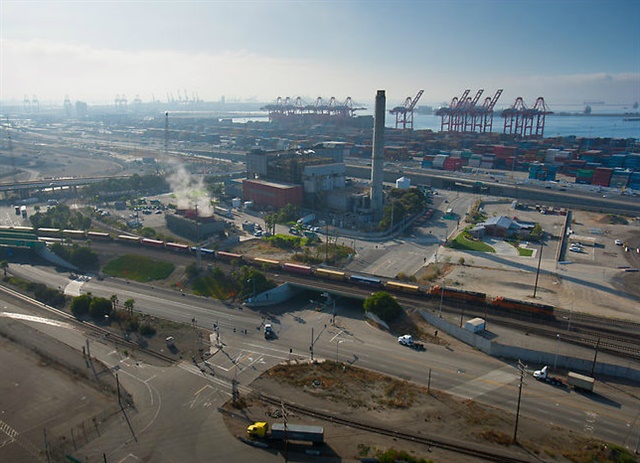
">The Clean Air Action Plan, which seeks to aggressively reduce emissions at the Ports of Los Angeles and Long Beach, has been approved by the harbor commissions of both ports.
The 2017 CAAP Update is designed to push for zero emissions by 2035. The plan to reduce emissions will include cleaner vehicles and equipment, better freight infrastructure and planning, and improved freight efficiency.
For trucking companies servicing the ports, newly registered vehicles will be required to meet stringent environmental regulations or face penalties. By mid-2018, all new trucks on the registry must have at least 2014 model year engines. By 2020, a near-zero emissions standard will be enforced with a fee charged when entering port terminals. By 2023, trucks must meet near-zero emissions to enter the registry, and by 2035 only zero-emissions vehicles will be able to enter the port without being charged.
The ports estimate incremental costs of between $7 and $14 billion for new technologies, infrastructure investments, and incentive programs to support the CAAP strategies outlined in the latest version of the plan. The plan was developed with feedback from industry stakeholders in order to put forward goals that could be implemented successfully.
The Harbor Trucking Association, which represents many of the stakeholders at the affected ports, took a positive but circumspect position on the approved plan.
“The Harbor Trucking Association is very thankful to the Ports of Los Angeles and Long Beach for engaging with us in the development of the Clean Air Action Plan update,” said Weston LaBar, executive director of the association. “While we appreciate the ports' approach, we feel the milestones are very ambitious and will be hard to meet.
The CAAP is one of the most ambitious environmental investments ever undertaken by a port complex and must strike a delicate balance of improving ...Read the rest of this story
Photo: Port of Long Beach
">Photo: Port of Long Beach
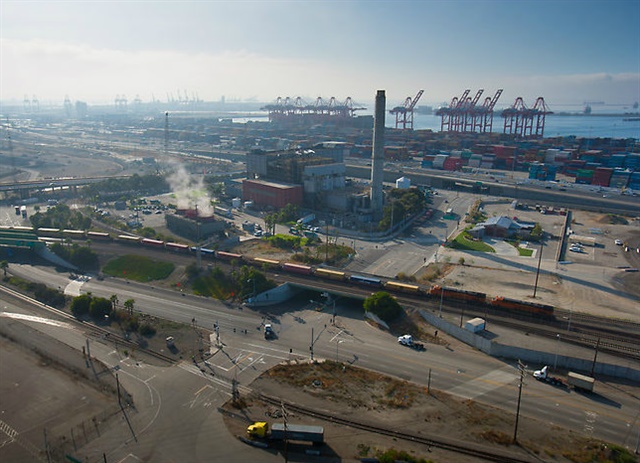
">The Clean Air Action Plan, which seeks to aggressively reduce emissions at the Ports of Los Angeles and Long Beach, has been approved by the harbor commissions of both ports.
The 2017 CAAP Update is designed to push for zero emissions by 2035. The plan to reduce emissions will include cleaner vehicles and equipment, better freight infrastructure and planning, and improved freight efficiency.
For trucking companies servicing the ports, newly registered vehicles will be required to meet stringent environmental regulations or face penalties. By mid-2018, all new trucks on the registry must have at least 2014 model year engines. By 2020, a near-zero emissions standard will be enforced with a fee charged when entering port terminals. By 2023, trucks must meet near-zero emissions to enter the registry, and by 2035 only zero-emissions vehicles will be able to enter the port without being charged.
The ports estimate incremental costs of between $7 and $14 billion for new technologies, infrastructure investments, and incentive programs to support the CAAP strategies outlined in the latest version of the plan. The plan was developed with feedback from industry stakeholders in order to put forward goals that could be implemented successfully.
The Harbor Trucking Association, which represents many of the stakeholders at the affected ports, took a positive but circumspect position on the approved plan.
“The Harbor Trucking Association is very thankful to the Ports of Los Angeles and Long Beach for engaging with us in the development of the Clean Air Action Plan update,” said Weston LaBar, executive director of the association. “While we appreciate the ports' approach, we feel the milestones are very ambitious and will be hard to meet.
The CAAP is one of the most ambitious environmental investments ever undertaken by a port complex and must strike a delicate balance of improving ...Read the rest of this story
Photo: Chanje
">Photo: Chanje
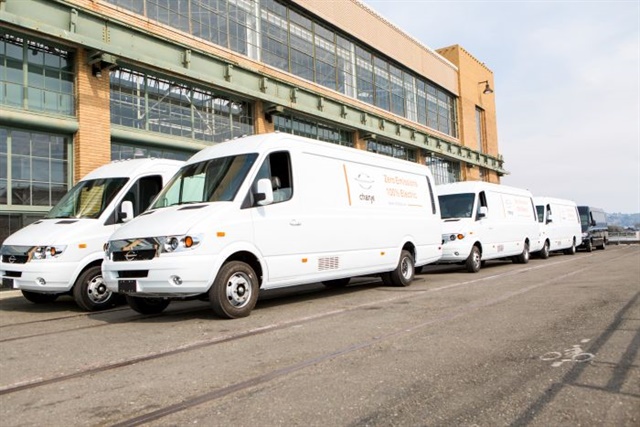
">Ryder System has started to take delivery of 125 medium-duty electric-powered panel vans as part of the company's exclusive sales and service partnership with Chanje Energy, which was announced in August.
Ryder also plans to equip its maintenance facilities in several major markets, including in California, and in Chicago and New York, with commercial electric vehicle charging stations. Ryder is leveraging Chanje's energy services solutions business and is equipping key Ryder locations with charging stations from eMotorWerks, Chanje's recently announced partner.
“The rollout of our new electric vehicle offering reinforces Ryder's leadership in commercial advanced vehicle technology solutions and demonstrates our commitment to identifying innovative ways to meet our customers' transportation needs,” said Dennis Cooke, president, global fleet management solutions for Ryder. “We are proud to partner with Chanje to bring an all-electric medium-duty vehicle to market as this will further promote energy efficiency in the industry by allowing our rental and lease customers to implement electric vehicles into their operations on a short-term or long-term basis.”
Chanje's all-electric large delivery-style van is equipped to haul up to 6,000 pounds and up to 580 cubic feet of cargo. It will become available for Ryder ChoiceLease and rental customers in several key markets by the end of 2017.
The initial 125 vehicles will be maintained at Ryder's maintenance facilities within the California, New York and Illinois markets where EV charging stations are being installed. These smart charging stations connect with a customized cloud-based JuiceNet control platform to intelligently manage EV charging, including remote access control, automatic energy management to avoid peak pricing, smart algorithms to maximize charging with available renewable energy from the grid, and electricity usage tracking.
Ryder is the exclusive distribution and service provider for Chanje's medium-duty EV fleet, for which the company is offering preventive maintenance s part of Ryder's ...Read the rest of this story
Photo: UPS
">Photo: UPS
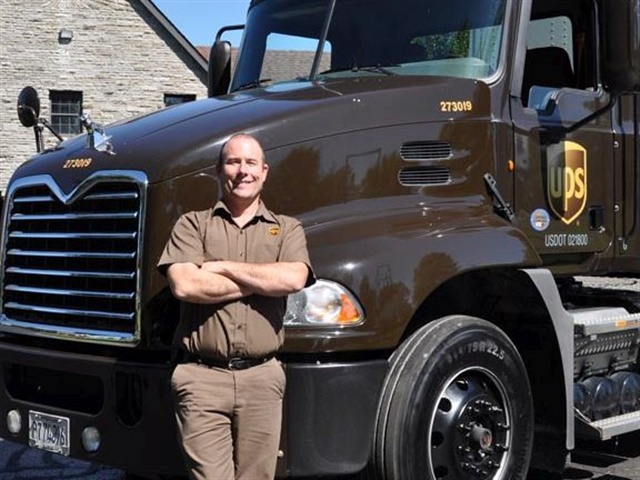
">UPS has announced that it is equipping more than 5,700 of its existing Class 8 tractors with advanced collision mitigation technology that can alert drivers to moving and stationary objects around the vehicle.
This will result in more than 60% of UPS's Class 8 tractor fleet, more than 11,000 vehicles, being equipped with collision mitigation technology. Every new Class 8 tractor that UPS has purchased since 2015 includes the technology, which provides blind spot warnings, lane departure warnings, electronic stability control, and forward collision warning with automatic brake application.
“UPS has some of the safest drivers on the road, and some of our best drivers have told us that collision mitigation systems help make them even better drivers,” said Carlton Rose, president of global fleet maintenance and engineering for UPS. “This investment is indicative of UPS's commitment to the safety of our employees, their families, our customers and the motoring public.”
The retrofitted collision mitigation systems will supplement each vehicles' current safety technology package by adding features including adaptive cruise control, which helps the driver maintain a constant distance behind the vehicle in front of the UPS tractor.
With the adaptive cruise control turned on, the UPS tractor will automatically slow to help the driver mitigate a collision. Secondary benefits can include reducing the "accordion effect" caused by traffic and improving fuel economy. The UPS tractors that will receive the new systems were selected based on the collision mitigation system's compatibility with the vehicles' powertrain and existing safety systems.
“Driving conditions can change quickly,” said Dale Brenaman, a UPS driver, who won the 2017 Kentucky State Truck Driving Championship and placed third in the 2017 National Truck Driving Championship for precision driving. “Collision mitigation technology is like an extra set of eyes that helps you make decisions more quickly, especially when you're driving in ...Read the rest of this story

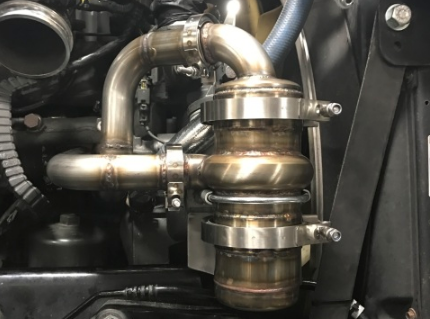
The Dorothy Tornadic EGR Cleaner is designed to remove heavy soot particles from the exhaust gas recirculation system and feed the cleaner gases back into the engine.
The process can lower NOx emissions, decrease DEF usage and increase engine efficiency, according to Dorothy manufacturer Pittsburgh Power.
The Dorothy works by taking in heavy soot mix and spinning it around while the engine is at full load. The heavy particles will remain on the outside diameter of the filter until EGR flow is low or nonexistent.
Each time a driver lets off the accelerator, the decreased EGR flow causes the particles to fall through the dropout gap and into a collection pot. This allows the lighter clean gasses to rise up and exit the top of the unit back into the engine intake.
The cleaner air can lead to more efficient engine combustion, decreased combustion temperature, lower NOx emissions, decreased DEF consumption, improved fuel economy, fewer ReGens, and less downtime, according to the company.
Follow @HDTrucking on Twitter
...Read the rest of this story