Author: Vitaliy Dadalyan

Tesla Lists Electric Truck at $150K for Base Model

<img width="150" src="http://www.automotive-fleet.com/fc_images/news/m-semi-front-34-blue-1.jpg" border="0" alt="

Photo: Tesla

">

Photo: Tesla

">

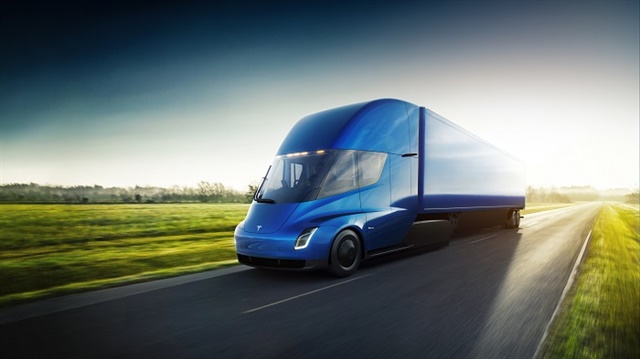
Tesla has posted the prices for its upcoming electric truck, the Tesla Semi, showing a base price of $150,000 for the base model.

The base model will have a 300-mile range, less than the 500-mile figure given by company founder and CEO Elon Musk at the Tesla Semi's introduction in late November. The 500-mile range version will sell for $180,000. The company is already accepting reservations for the vehicle at $20,000 a pop. The truck is expected to go into production in 2019.

If you balked at the aforementioned base prices, Tesla will also offer a limited-edition Founders Series truck for $200,000, requiring a $200,000 reservation. Tesla will only produce 1,000 Founders Series Tesla Semis.

Tesla's vice president of truck and programs, Jerome Guillen, gave a presentation at an electric truck conference in Europe. While he was speaking about the Tesla Semi's future in the European market, he did offer a few more details about the truck.

For one thing, Guillen said Tesla would be its own first customer, using the Tesla Semi to haul cargo between its facilities in Freemont, Calififornia, and its Gigafactory just outside of Reno, Nevada, a route of about 260 miles.

Most of what Guillen presented to the audience in Europe was a rehash of specs and expected performance marks that were given at Tesla's official launch. However, he did comment that the truck would have a similar cargo capacity to diesel trucks, implying that the weight of the Tesla Semi would not be significantly more or less than an average Class 8 truck – something many skeptics doubt is possible.

Guillen did not give an expected launch date for the Tesla Semi in the European market, but promised a vague timing that would come after “things are good in the U.S.”

Related: Tesla Unveils ...Read the rest of this story

Cross-Border Freight Value Posts 11th Straight Monthly Increase

<img width="150" src="http://www.automotive-fleet.com/fc_images/news/m-figure-1-crop-3-1.jpg" border="0" alt="

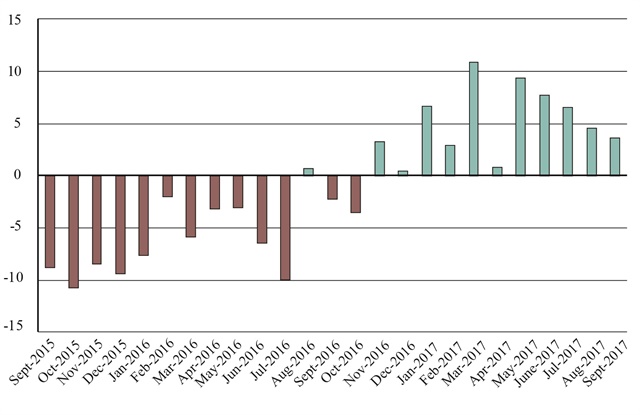
U.S.-NAFTA Freight Value Percent Change from Previous Year, September 2017. Graphic: U.S. DOT

">

U.S.-NAFTA Freight Value Percent Change from Previous Year, September 2017. Graphic: U.S. DOT

">

The value of freight moved between the U.S. and its North American Free Trade Agreement (NAFTA) partners increased for the 11th straight month during September, according to new Transportation Department figures, but it's the smallest gain since April.

The 3.6% overall rise from the same time a year ago came as three of the five major transportation modes carried more freight by value between the U.S., Canada and Mexico.

The value of commodities moving by vessel increased 28.6%, pipeline by 9.1%, and truck by 2.9%. Rail decreased by 3.3% and air decreased by 3.4%. The large percentage increase in the value of goods moving by vessel was due in part to an increase in the unit value and a 6.1% increase in the volume of mineral fuels traded, according to the report.

Trucks carried 64.3% of U.S.-NAFTA freight and continued to be the most utilized mode for moving goods to and from both U.S.-NAFTA partners. Trucks accounted for $31 billion of the $50.2 billion of imports, or 61.8%, and $29.7 billion of the $44.2 billion of exports, or 67.2%.

Rail remained the second largest mode by value, moving 14.9% of all U.S.-NAFTA freight, followed by vessel, 6.7%; pipeline, 5.2%; and air, 3.9%.

The surface transportation modes of truck, rail and pipeline carried 84.4% of the total value of U.S.-NAFTA freight flows.

U.S.-Canada Freight Moves Up By 5%

Comparing September 2016 to September 2017, the value of U.S.-Canada freight flows increased by 5% to $48.5 billion as the value of freight on four major modes increased from a year earlier.

The value of freight carried on vessel increased by 52.4% due in part to an increase in the unit value and a 23.9% increase in the volume of mineral fuels traded, according to the report. Pipeline increased ...Read the rest of this story