You'd be stupid to turn off Apple's iPhone performance limiter
Apple will soon release an update that lets you turn off its performance limiter on the iPhone, but doing so will be a bad move.
Apple will soon release an update that lets you turn off its performance limiter on the iPhone, but doing so will be a bad move.
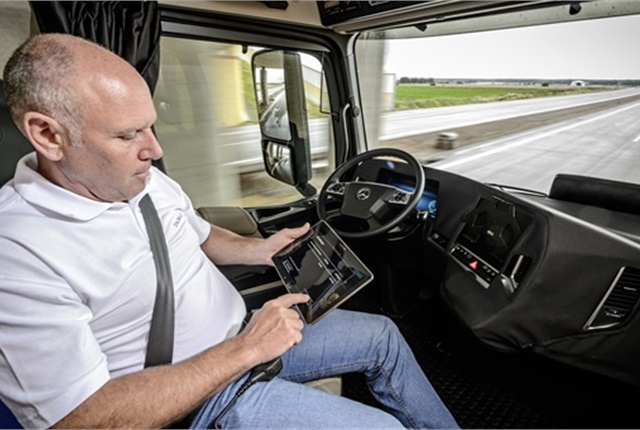
Technology will soon alter existing jobs and create new ones. And now is the time to be considering how your fleet will navigate those changes. Photo: Daimler Trucks North America
">Henry Ford didn't invent the automobile. He just designed a vehicle that met the needs of the vast majority of customers at the time, then went about figuring out how to build them quickly and cheaply so those people could buy his cars.
Likewise, Clessie Cummins didn't invent the diesel engine. Rudolf Diesel did. But Cummins figured out to package the engines and make them efficient enough to work in highway trucks.
And, regardless of what you hear from time to time, the Wright Brothers did invent the airplane. Just as importantly, the figured out how to control an airplane in flight – a pretty vital concept that no one else working on heavier-than-air flight had even considered. But they soon became ensnarled in endless lawsuits attempting to protect the patents surrounding their flying machine and quickly lost the technological edge as their competitors developed more efficient airplanes and the methods to control them.
"I expect the caveman who invented the club was pretty bummed out when he showed up for a battle and found out the other guy had invented the spear."
This sort of thing has been going on as long as technology has been around. I expect the caveman who invented the club was pretty bummed out when he showed up for a battle and found out the other guy had invented the spear. That guy probably did pretty well for a while, until the guy who invented the bow and arrow showed up on the battlefield one day.
And on and on and on…
If there's a lesson in those little historical anecdotes, it's that it's important to keep in mind that nothing ...Read the rest of this story
CNBC's Kayla Tausche reports on Democratic Senator Chuck Schumer's return to Capitol Hill after returning from a 90-minute meeting with President Donald Trump over the looming government shutdown.
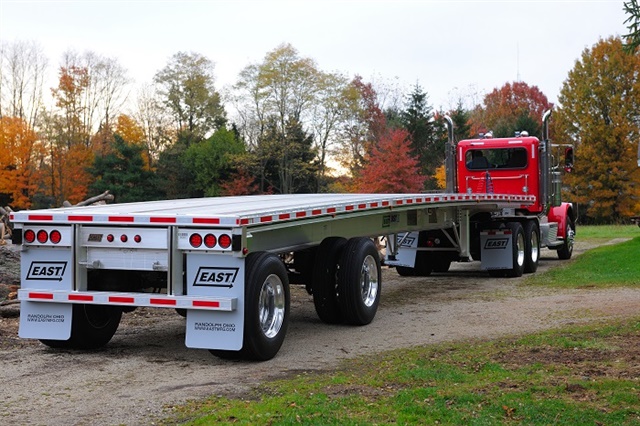
New composite materials show great promise in lightening trailer designs. But their use must be tempered by cost and maintenance concerns. Photo: East Manufacturing
">Commercial truck trailers are the kind of unsolvable puzzle engineers dream about. Regardless of what they are built to haul, all trailers conform to strict laws governing overall dimensions and weight that limit cargo-carrying capacity. But the lighter the trailer, the more payload that can be legally carried.
That pressure has always been there, says Craig Bennett, president and CEO of Utility Trailers. But with retailers such as Amazon and Walmart pushing for ever-greater efficiency, it is more intense than ever. And in Bennett's mind, it's a challenge that starts — and ends — with today's driver shortage. “There just aren't enough truck drivers to go around,” he explains. “And the ones that are out there don't want to spend weeks going coast to coast. They want to go home at night.”
The result, Bennett says, is a very real push from both shippers and fleets to maximize the amount of cargo hauled by every available driver. “But,” he adds, “fleet operations are changing at the same time. Fleets are running more regional routes today with more hub-and-spoke operations in order to get their drivers home regularly. That means more loading and unloading of trailers. Which means significantly increased duty cycles with more associated wear-and-tear on trailers — more docks getting bumped, and more forklifts pounding on trailer floors.”
The result, Bennett says, is an industry looking for lighter weight designs that can hold up to dramatically enhanced duty cycles and durability issues. “Designing trailers that can handle these opposing operations demands can be quite a challenge for us at times,” he says with a chuckle.
Bill Wallace, platform product manager at East Trailers, says his ...Read the rest of this story

WASHINGTON (AP) — The Latest on the budget battle in Congress (all times local):
It is important to company wellbeing and employee safety to make sure the trucks you purchase are designed for their intended purposes. Photo: Jack Roberts
">GVWR and gross vehicle weight (GVW) are often thought to be the same, they actually aren't. A truck's GVWR is the maximum weight rating established by the chassis manufacturer. GVW is the total weight of the truck and payload at a point in time.
There's a common misconception that a truck's GVWR is determined by adding gross axle weight ratings (GAWRs) together for all axles. Although this was a common way of calculating GVWR many years ago, it's no longer an accurate method. The chassis manufacturer's task of establishing a vehicle GVWR is much more difficult today due to advancement of safety system standards and how vehicles meet these requirements. This is why many trucks have a GVWR much lower than the combined axle ratings.
It is not uncommon for a truck with a GVWR of 19,500 pounds to have a front axle rated at 7,500 pounds and a rear axle rated at 14,700 pounds. Safety standards that apply to braking, vehicle stability, and chassis manufacturer internal standards for durability, dynamic stability and handling can restrict GVWR even though the sum of the axle ratings exceeds 22,000 pounds. In this instance, the OEM set the GVWR at 19,500 pounds based on test results and vehicle dynamic performance to ensure a safe, reliable truck.
A specific vehicle's GCWR is based on parameters established by chassis manufacturers. The manufacturer makes an assessment in accordance with SAE International test protocols, determining maximum GCWR. Additionally, the OEM runs stringent tests based on internal requirements which may include testing total GCWR braking capability using only the towing vehicle chassis braking system. As noted in the previous article, GCWR is the total weight of ...Read the rest of this story
CNBC's Eamon Javers reports the latest details on the high-stakes meeting between President Trump and Democratic Senator Chuck Schumer.