Parker unveils smaller, stronger and faster dump pump
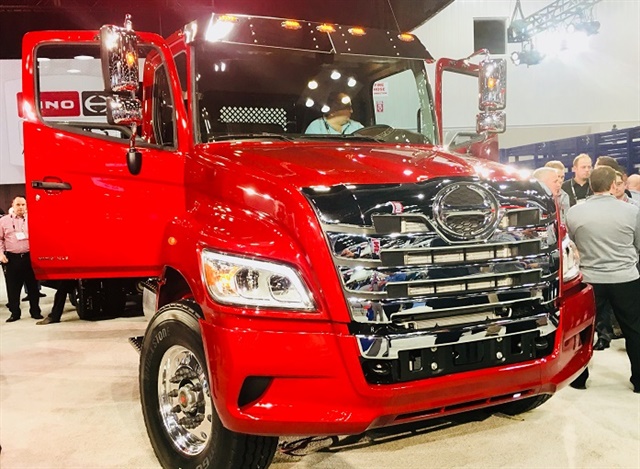
Hino debuted the XL Series Class7/8 trucks exanding into the heavy duty segment in the U.S. for the first time. Photo: David Cullen
">Hino Trucks announced a new, larger lineup of Class 7/8 trucks called the XL Series which debuted at the 2018 Work Truck Show in Indianapolis, Ind.
The Hino XL Series brings the company into the Class 8 market in the U.S. for the first time which the company characterized as the next step in expanding its presence in North America.
“Considering our remarkable success in Class 4-7 in North America, and our growing global presence in the Class 8 market, entering the North American heavy duty segment makes for the next logical step. Not to mention our customers and our dealer network have been asking for this for some time,” said Yoshinori Noguchi, president and CEO of Hino Trucks North America.
<img src="http://www.automotive-fleet.com/fc_images/news/m-hino-xl-work-truck-show-1.jpg" border="0" alt="
The XL was revealed at the 2018 Work Truck Show in Indianapolis. Photo: Justin Miller
" width="300" height="300">Both the XL7 and XL8 models are powered by Hino's A09 8.9L inline 6-cylinder diesel engine and will be offered in both straight truck and tractor configurations. The different models will range from a GVWR of 33,000 to 60,000 pounds and a GCWR up to 66,000 pounds. Max performance will top out at 360 horsepower and 1,150 lbs.-ft. of torque.
Available wheelbase selections of up to 304 inches and tandem axle and fifth wheel configurations are designed for a variety of vocational applications.
The XL Series lineup features new active safety solutions with electronic stability control – standard on tractor models – and collision mitigation systems, payload management suspension options and a body builder optimized design that was engineered for better serviceability.
Hino says that it also focused on the driver with good styling, ergonomics and amenities. It features a wide entry for easier ...Read the rest of this story

The number of loads on the spot truckload freight market surged 7.6% during the week ending March 3 as rates appear poised to rebound, according to DAT Solutions, which operates the DAT network of load boards.
Truck posts declined 2% which helped push load-to-truck ratios higher from the previous week for all three trailer types.
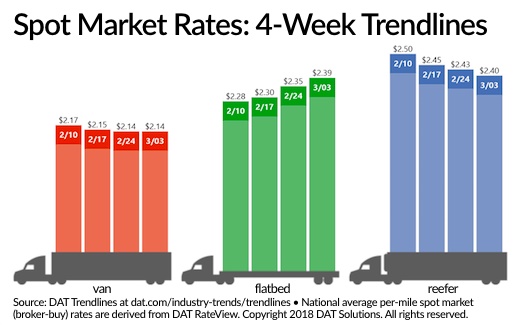
After seven weeks of declines, the national average spot van rate was unchanged at $2.14 per mile but rates rose on 66 of the top 100 van lanes. Van load posts increased 4% while truck posts declined 1%. The current van load-to-truck ratio is about three times higher than it was at this time last year.
The national average reefer rate fell 3 cents to $2.40 per mile but the number of available loads was 11% higher than the previous week and truck posts declined 3%. Reefer load counts are roughly equal to where they were in mid-January.
Flatbed rates rose 4 cents to an average of $2.39 per mile, an increase for the fourth straight week. Capacity continued to tighten and the load-to-truck ratio for flatbeds hit its highest point in years. Extremely strong markets include Atlanta, Birmingham, Memphis, Green Bay, and Cleveland.
According to DAT, capacity may tighten in the weeks ahead with the end of the first quarter of the year coinciding with both Easter weekend and the April 1 end of the phase-in period for the electronic logging device mandate.
All reported rates include fuel surcharges. The national average diesel price during the reporting period dropped another 1.5 cents to $2.99 per gallon.
Follow @HDTrucking on Twitter
...Read the rest of this storyDaimler's Kary Schaefer explains why she thinks that green innovation “goes beyond reducing tailpipe emissions.” Photo: NTEA
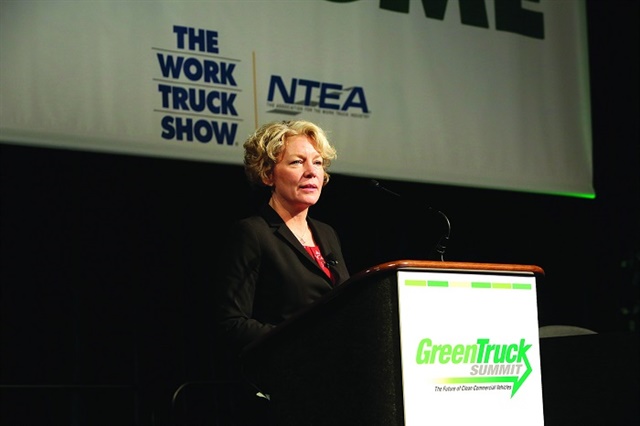
">INDIANAPOLIS — As Kary Schaefer sees it, what's green for trucking shouldn't be narrowly defined. Rather, it should embrace any number of innovative advances that enhance efficiency. “I believe that green innovation goes beyond reducing tailpipe emissions – it's about creating a sustainable future; about providing a gateway to green,” she contended in her March 6 keynote address for the Green Truck Summit held here at the NTEA Work Truck Show.
Schaefer, Daimler Truck North America's general manager of marketing & strategy, said that, to her, “Green means increased uptime, lower operating cost, and enabling future investment in new equipment. It means improving efficiency and eliminating waste.” With that thinking in mind, she detailed “the big three” technology areas that fleets need to consider: active safety, connectivity, and propulsion.
She asked rhetorically why would active safety systems be regarded as “a green technology” before pointing out that “not only do these systems help prevent fatalities and accidents, they increase uptime and reduce cost. Many go beyond safety and provide a better environment for the driver by reducing workload, fatigue and stress.”
Making a business case for active safety, Schaefer pointed to a graph of internal data collected by Conway from a report by the National Transportation Safety Board on safety technology. The data compared trucks with and without active safety systems, specifically forward collision mitigation systems, electronic stability control, and lane departure warning systems
“Most significant is the reduction in rear end collisions, 71%, and crashes due to lane departures,” she noted. But at the time of the study, CMS on the market had evolved from just a warning system to providing active emergency braking on moving objects. “Now, through generations of innovation, CMS will ...Read the rest of this story