TMC Developing S-cam Brake Troubleshooting Guide
Work is underway on a long-overdue Recommended Practices document addressing excessive applied stroke in S-cam brakes. The RP will provide a diagnostic and troubleshooting guide to help technicians repair the actual cause of an brake taken out-of-service because of excessive push-rod travel.
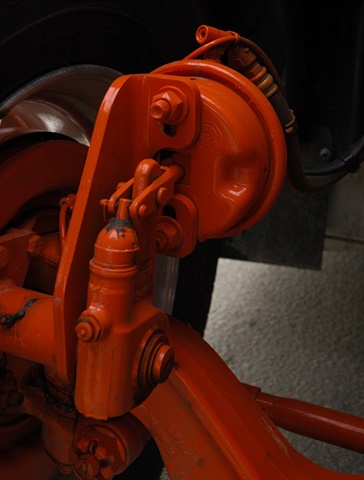
Photo: Jim Park
" width="300" height="396">Discussions took place during Monday's S.6 Chassis & Brake Task Force meeting, "Proper Diagnosis of S-cam Out-of-service Criteria," at the annual meeting of the ATA's Technology & Maintenance Council meeting in Atlanta. The task force committee were refining the wording of the RP.
Ever since automatic brake adjusters (ABA) were first required by law in 1994, many drivers and surprisingly, brake technicians still respond to an over-stroking S-cam brake by manually readjusting the device rather than determining the root cause of the problem. By design, an ABA will self-adjust based on either the application stroke (stroke sensing ABA models) or the return stroke (clearance sensing ABA models) of the adjuster and find their own stroke length based on the conditions it senses. Unfortunately, a manually readjusted ABA will return to an over-stroke condition in just a few brake applications if some other physical problem exists with the foundation brake, the parking brake or any other component in the wheel-end brake assembly.
This RP will walk the technician through a troubleshooting tree that will determine the cause of the over-stroke so appropriate steps can be taken to solve the problem.
"All too often, the root cause of the excessive applied stroke condition is not diagnosed properly," said task force chairman, Glen Cram of Meritor. "it became clear during our research that no publication out there in the industry really gives the technician a clear-cut way to determine how to diagnose this problem."
When complete, the RP will take the technician through an eight-step process from confirming that an over-stroke condition ...Read the rest of this story