Southern California Ports Plan for Zero-Emission Trucks
Screenshot via Clean Air Action Plan
“>
Screenshot via Clean Air Action Plan
“>
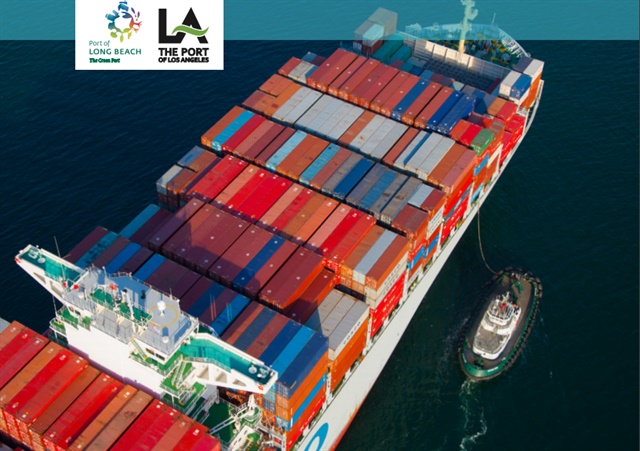
The Ports of Los Angeles and Long Beach have released a draft of a proposed 2017 Clean Air Action Plan Update, outlining a new set of aggressive near-term and long-term strategies to reduce air pollution from the ports.
The draft plan lays out how the ports plan to reach emissions targets that include the goal of transitioning to a zero-emission drayage fleet by 2035.
The draft 2017 CAAP sets new clean air goals focused on reducing greenhouse gas emissions to 40% below 1990 levels by 2030 and to 80% below 1990 levels by 2050.
The plan carries over previous 2023 targets for cutting other primary pollutants aimed at reducing diesel particulate matter 77%, sulfur oxides 93%, and nitrogen oxides 59% below 2005 levels.
Preliminary analysis on implementing the 2017 CAAP estimate the costs at $7 to $14 billion.
Recent emissions inventories show that the two ports have already surpassed the 2023 diesel particulate matter and sulfur oxide reduction targets and are close to the NOx goal.
“These ports are going where no port has gone before,” said Gene Seroka, Port of Los Angeles executive director. “Based on what we’ve already accomplished to promote healthy, robust trade through our gateway, we’re ready to make history again, looking at a new array of technologies and strategies to further lower port-related emissions in the decades ahead.”
The 2017 draft was drawn up using feedback from two years of dialogue with industry, environmental groups, regulatory agencies, and neighboring communities. The ports conducted small group meetings and large public workshops before detailing its goals, priorities and strategies for public review and comment.
Since then, the ports have held more than 50 stakeholder meetings and another community workshop leading into the release of the draft 2017 CAAP Update. Updates to the plan include local, regional, state and federal …Read the rest of this story
