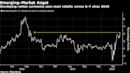
(Bloomberg) -- A two-track world is starting to establish itself in emerging markets.Not only are the stocks, bonds and currencies of the developing economies reacting to the Covid-19 pandemic in very different ways, but the fallout is quickly creating two distinct camps of winners and losers. Hence, the extra premium investors demand to hold riskier emerging-market debt has ballooned, with the the spread between high-yield bonds and their investment-grade counterparts now close to its widest since 2002, according to JPMorgan Chase & Co.’s indexes. Qatar, Abu Dhabi and Saudi Arabia -- which have single-A or double-A ratings -- accounted for more than a third of developing-nation Eurobond sales this month.“Emerging-market debt broadly reached its lows during March and will ever so slowly continue to recover from here,” said Paul Greer, a London-based money manager at Fidelity International, which manages about $380 billion. “In the near term, the best opportunity set --...
Apple Inc. (AAPL) is preparing to develop its own processors for Mac computers to be rolled out as early as next year, according to a Bloomberg report.Until now, Apple had been using Intel Corp.’s (INTC) processors. Apple is said to be working on three different processors that are based on the A14 chip that will power the next iPhone. The first of these new Apple-made chips is expected to be much faster than that of the iPhone's and will arrive in a new computer next year, according to the report. In taking this step, Apple is likely to be slowly moving towards ditching its dependence on Intel chips altogether, the report suggested.Apple’s partner for iPhone and iPad processors, Taiwan Semiconductor Manufacturing Co. (TSMC), will develop the new Mac chips. The components will be based on a 5-nanometer production technique, the same size Apple will use in the next iPhones and iPad...
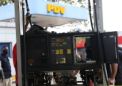
Venezuelans reported paying above $2 per liter ($7.57 per gallon) for gasoline last week amid fuel shortages, one of the world's highest rates and a dramatic reversal for an OPEC nation that long boasted of having the world's cheapest fuel. Thanks to subsidies under socialist former President Hugo Chavez and his succesor and protege, Nicolas Maduro, gasoline sold by state oil company PDVSA - which has a legal monopoly on fuel sales - is essentially free in Venezuela. Octavio Salom, 53, said he and fellow kidney patients in the eastern city of Puerto Ordaz bought 20 liters of gasoline at $2 per liter for the nurses that provide their dialysis treatment to take a taxi to the clinic....
Prices could continue to stabilize this week if more OPEC+ members announce early production cuts. An escalation of military activity in the Middle East will be a bonus. However, the wildcard will be the announcement of output cuts by U.S. producers. This news could trigger a steep short-covering rally....
The coronavirus relief act gives workers of any age a way to dip into retirement savings for emergencies. And retirees can drag out their withdrawals....
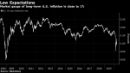
(Bloomberg) -- Bond investors are starting to debate whether the U.S. is heading into a deflationary spiral, even after trillions of dollars of stimulus to offset the pandemic-driven hit to growth.This year’s collapse in oil prices and the drumbeat of staggeringly weak economic data are putting the question front and center as the Federal Reserve meets this week. The central bank is expected to sit tight for now and assess the programs it’s rolled out in the past month to calm markets, while reiterating a commitment to do more as needed.But with market-based gauges showing investors see inflation stuck at best around half of the Fed’s target for the next decade, the risk of falling prices is creeping into money managers’ calculus. For Fred Marki at Western Asset Management Co., it comes down to the pace of economic recovery and the availability of testing and medical advances. Although the firm anticipates...