Plant celebrates 40 years of retreads
Deborah Lockridge
" >Deborah Lockridge
" width="185" height="243">A trucker once told me this joke:
What do you get when you put a dozen truck drivers in a basement?
Answer: A whine cellar.
You don't have to be a driver to know there are plenty of things we can complain about in trucking: the high cost of equipment or insurance, shortages of drivers and technicians, the increasing barrage of federal regulations, higher taxes and highway tolls, litigation-hungry truck crash lawyers, or any one of a host of other issues we struggle with every day.
But it's November, so in honor of Thanksgiving, I thought I would devote this space this month to a few things we could be thankful for.
1. Fuel prices.It wasn't that long ago that the industry was in a panic as diesel prices shot up above $3, above $4, and $5, and even higher in some places. But the past couple of years we've actually enjoyed relatively stable and relatively low fuel prices. U.S. Department of Energy figures show the average price of on-highway diesel in 2014 was $3.83 per gallon. That dropped to $2.71 last year, and as of mid-October the forecast was for it to average 2.31 for 2016. The forecast is calling for that to rise somewhat for 2017 to an average of $2.69, but still well short of the near-$4 average of 2012.
2. Trucks that drivers want to drive.Truck and engine makers had their hands full in the previous decade figuring out how to meet EPA emissions mandates for particulate matter and NOx. We saw fuel economy and reliability go down. Now engineers and designers are able to devote time to improving fuel economy (driven partially by federal GHG emissions regulations, but providing a benefit to truck owners as well as to the environment). Uptime has been a major focus of these ...Read the rest of this story

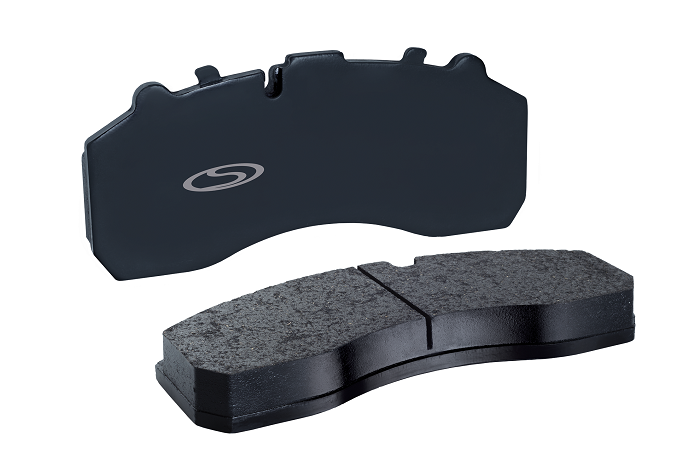
Stemco's Lunar line of air disc brakes are designed to meet original equipment manufacturer stopping distance standards from the National Highway Safety Traffic Administration.
The Lunar line of air disc brakes includes two conventional air disc brake pads that are designed to fit form and function as well or better than OEM equivalents.
Lunar HP is built for extreme heavy-duty applications that demand extra performance while delivering improved stopping power.
Each part has been tested to ensure it performs within the tolerance of OEM parts in accordance with ECE Regulation 90. The Lunar brakes are formulated to meet rigorous demands without degrading due to prolonged exposure to friction and heat, improving longevity and stopping performance.
"The Lunar line benefits from our long experience with engineered friction components," said Jim Reis, vice president/general manager for Stemco Brake Products. “These brake pads can dissipate heat rapidly, even under severe operating conditions. They last longer, preserve other brake components, including the rotor, which means vehicles in your fleet are on the road more and in the shop less, all while improving safety.”
Follow @HDTrucking on Twitter
...Read the rest of this storyScreenshot via Peloton
">Screenshot via Peloton
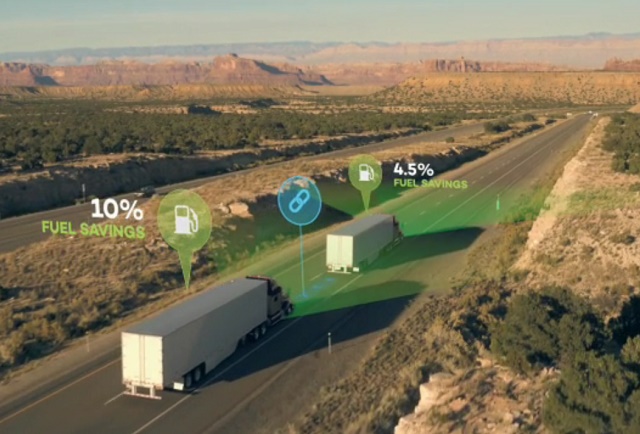
">Peloton Technology has announced its participation in the Next-Generation Energy Technologies for Connected and Autonomous On-Road Vehicles program, which is sponsored by the U.S. Department of Energy.
The project aims to combine next-generation truck platooning technology and concepts with smart, cloud-connected powertrains to achieve 20% fuel savings for tractor trailers.
Led by Purdue University, Peloton's NEXTCAR project team also includes Cummins, Peterbilt, ZF TRW, the University of Arizona, and the National Renewable Energy Laboratory. Contributions from partners include Peloton's current platooning system and higher-automation platooning technology under development, advanced powertrain solutions from Cummins, steering controls from ZF TRW, and state-of-the-art trucks from Peterbilt.
“Our first truck platooning system is coming to market in 2017,” said Josh Switkes, Peloton CEO. “This project will build upon our existing system and is complementary to the higher-automation solutions we are developing next.”
NEXTCAR partners will develop, integrate and demonstrate a set of co-optimized powertrain and automated driving controls in order to improve efficiency. The team aims to reduce fuel use of a baseline Class 8 Peterbilt 579 by 20% in real-world driving conditions by combining algorithms, look-ahead data and vehicle-to-vehicle and vehicle-to-cloud connectivity.
The new controls should require minimal hardware changes and can be programmed into electronic control units that are already on the trucks.
For NEXTCAR, Peloton said it will address two key research objectives. The first is to increase fuel savings from truck platooning at highway speeds from a baseline average of 7% across two trucks to 20% in combination with connected powertrains.
“Our objective is to tap into fuel savings that can only be attained by managing the powertrain precisely for the road ahead, and for the specific configuration of the trucks,” said Michael Palmer, Peloton's director of research. “Cloud connectivity provides information about the road ahead, and the trucks exchange data about their estimated mass ...Read the rest of this story