How much for that connected truck in the window?

ELD Exemption Fever

<img width="150" src="http://www.automotive-fleet.com/fc_images/articles/m-j-j-keller-eld-2-1.jpg" border="0" alt="

Photo: J.J. Keller

">

Photo: J.J. Keller

">

Every fall the Centers for Disease Control and Prevention publishes seasonal admonitions for segments of the population to get their flu vaccine. But another condition has been on the rise this year for which there is no vaccine — exemption fever. Symptoms include increased heart rate, blood pressure, sweaty palms, and emotional exclamations of “Surely, there must be an exemption for me!”

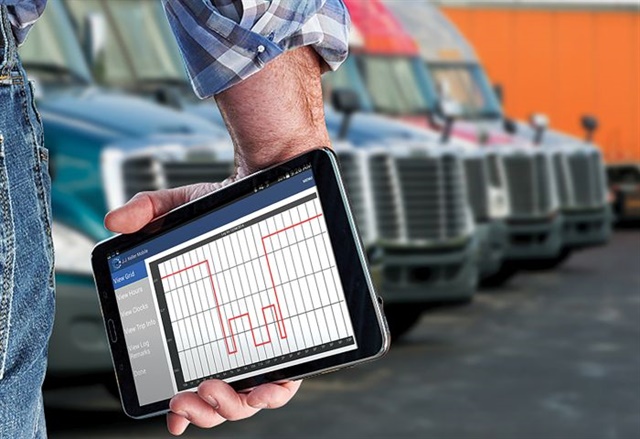
The source of the condition is well known — the initial compliance date for the Federal Motor Carrier Safety Administration's final rule known as the electronic logging device mandate. By December 18, 2017, all non-exempted interstate drivers will be using some form of electronic logging device to track hours of service. Either the affected driver will already be using a device that meets the current electronic logging requirements of §395.15, or will use a device that meets the new technical ELD standards.

Existing exemptions

The mandate does not impose any new record of duty or logging requirements on a driver who is already exempt from the hours of service rules of Part 395. Drivers who are completely exempt from HOS due to a general exemption in §390.3(f), engaged in emergency support relief under §390.23, or are excused completely from Part 395 by an exemption in §395.1, will not need to use an ELD while in an exempt status.

The mandate offered a few limited exemptions, outlining when some drivers could continue to use paper logs instead of an ELD. Last December, Congress intervened on behalf of a specific industry to grant a fourth exemption. This exemption has since been added to §395.8(a)(1)(iii)(A). The four exemptions are:

Drivers who log eight or fewer days out of any 30-day period;Drivers operating a vehicle that is part of a driveaway/towaway shipment;Drivers operating or towing a recreational vehicle (RV) that is part of a driveaway/towaway ...Read the rest of this story

Volvo’s SuperTruck Demonstrates the Art of the Possible

<img width="150" src="http://www.automotive-fleet.com/fc_images/articles/m-volvost-1.jpg" border="0" alt="

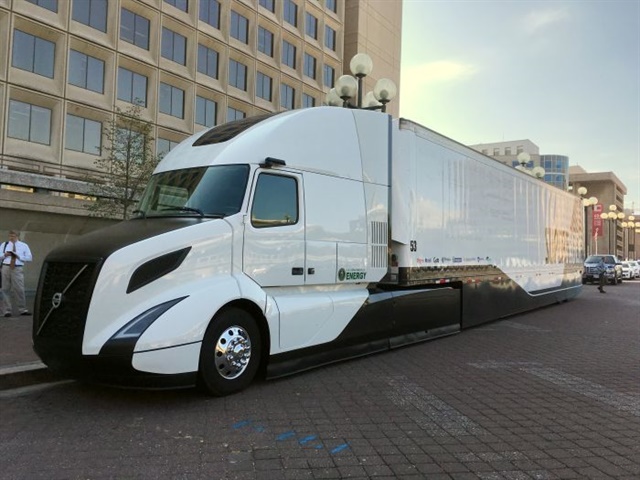
Volvo Trucks North America's SuperTruck project boasts a freight efficiency improvement of 88%, a 40% reduction in aerodynamic drag and 12-13 mpg. Photo: Jim Park

">

Volvo Trucks North America's SuperTruck project boasts a freight efficiency improvement of 88%, a 40% reduction in aerodynamic drag and 12-13 mpg. Photo: Jim Park

">

It's amazing what $40 million will buy you these days. If that seems like a lot to spend on just one truck, consider what truck makers typically spend on R&D for a new model, or even just a significant upgrade. The $40 million Volvo Trucks spent on its SuperTruck project was an investment in near- and distant-future truck technology that will begin paying dividends for the truck maker and its customers as early as 2017.

That figure, by the way, represents a joint investment by the U.S. Department of Energy and Volvo Trucks North America. Volvo matched the DOE funding grant dollar for dollar. The goal of the entire SuperTruck project is to build vehicle prototypes that push the boundaries of both fuel and freight efficiency to levels beyond where today's normal OEM R&D budgets would normally take them. These are concept vehicles, science projects if you will, that pull forward ideas and technologies that in the normal course of vehicle development might languish on bottom shelves and on computer hard drives because the immediate payback just isn't there.

Like the two SuperTruck projects that were revealed in previous years from other OE-led teams, the Volvo team managed some astonishing gains:

a freight efficiency improvement of 88% (the initial target was 50%),a 70% improvement in fuel economy (12-13 mpg) over a base model 2009 Volvo VNL 670 (7 mpg)a net weight reduction of 3,200 pounds after adding the new mechanical and aerodynamic technology,a 40% reduction in aerodynamic drag, anda 20% gain in powertrain thermal efficiency from 42 to 50%.

Göran Nyberg, president of Volvo Trucks North America, called the SuperTruck project a “knowledge accelerator.”

“We wanted to see what we ...Read the rest of this story

Whose Infrastructure— Ours or Theirs?

<img width="150" src="http://www.automotive-fleet.com/fc_images/blogs/m-dotheavytrucktrafficlargeimage-2.jpg" border="0" alt="

The Trump infrastructure plan calls for spending $1 trillion-- but how much on what remains to be explained. Photo: U.S. Department of Transportaion

">

The Trump infrastructure plan calls for spending $1 trillion-- but how much on what remains to be explained. Photo: U.S. Department of Transportaion

">

Listen carefully when you hear a politician or a lobbyist speak of “infrastructure.” To really mean anything, that big ugly word has got to be qualified. “Gone are the days when federal infrastructure spending was measured in highways, bridges and ports,” as Steven Mufson, a reporter for The Washington Post, rightly points out.

For that matter, gone also are the days when no one much used the word “infrastructure” at all to refer to roads and bridges (and, yes ok, ports, too).

I looked it up. A decade ago, many of us in the industry press we're writing feverishly about what was needed to fix America's crumbling roads and bridges. Or, because writers don't like to repeat themselves, what was required to repair the country's broken highways. Back then, “infrastructure” was still a decidedly wonky term, appearing mostly in think tank reports and uttered at insider conferences.

The word isn't at issue. Its vagueness is. Roads and bridges and ports are components of transportation infrastructure. Note the qualifier: “transportation.” That modifier is crucial because “infrastructure” bandied about unadorned is a murky term that can cover everything from roads and bridges to public water supplies and high-speed data networks.

President-elect Trump made it known right after the election that he aims to spend big on infrastructure--- stating he would send a $1 trillion plan up to Capitol Hill in his first 100 days. “We are going to fix our inner cities and rebuild our highways, bridges, tunnels, airports, schools, hospitals,” Trump said in his victory speech.

Much less clear is what that Trump infrastructure plan will spend on what. Also nebulous is how much of it will be funded by public dollars ...Read the rest of this story