Despite higher trailer orders for October, net numbers down from 2015

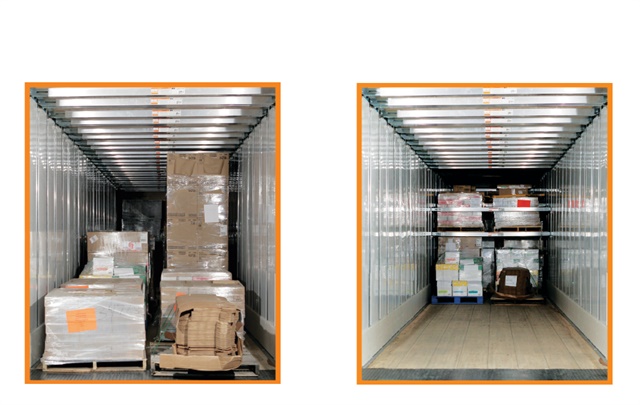
Loading cargo in a traditional fashion would elave trailers half empty. Cargo loaded with the Kaptive Beam adjustable decking system improves trailer utility without the risk of damaging customers' freight. Photos: Kinedyne
">Loading cargo in a traditional fashion would elave trailers half empty. Cargo loaded with the Kaptive Beam adjustable decking system improves trailer utility without the risk of damaging customers' freight. Photos: Kinedyne
">Dan Vander Pol hates to see his trailers leaving terminals half empty. He also hates thinking about potential damage to his customers' freight caused by double-stacking pallets. So Oak Harbor Freight Lines invested in cargo racks that could effectively allow double-stacking, but they presented a logistics nightmare. Over time, the racks would accumulate at certain terminals and they would have to be redistributed to where they were needed. That involved time, trucks, drivers and non-revenue miles.
They found a better solution in the Kaptive Beam Decking System from Kinedyne. According to Vander Pol, the company's maintenance director, Kaptive Beam essentially adds an additional floor within the trailer.
“The second floor allows us to maximize the load capacity of each trailer without risk of cargo damage or the trouble of gathering the bars and equipment needed to deck the freight,” he says. “The bars push up out of the way when they aren't needed and they stow up at ceiling height. We just pull them down when we need them and push them up out of the way while we're working inside the trailer.”
Oak Harbor uses the Kaptive Beam system strictly on terminal-to-terminal linehaul loads, so all the work is done by experienced dock hands. Route drivers and customers generally do not see the system, nor do they have to learn to work with it. Vander Pol says his outbound loads now average about 12,000 pounds per trailer, a significant increase in capacity from the days they used the racks — with a lot less hassle.
By increasing the utility of each trailer as well as the labor savings and the reduction in damage ...Read the rest of this story
Screenshot via Chevin
">Screenshot via Chevin
">Chevin Fleet Solutions has integrated its FleetWave enterprise-level fleet and asset management software with the National Automotive Parts Association Integrated Business Solutions point-of-sale system to help fleets efficiently process, manage, and track parts.
The integration between FleetWave and NAPA IBS has been developed to allow for a more effective parts management capability for customers of both companies.
“By integrating NAPA IBS with our FleetWave fleet management software, we are providing a new way for mutual clients to streamline inventory management, including purchasing and accounting practices,” said Ron Katz, Chevin senior vice president of North American sales. “The integration also helps eliminate wasteful paper-based processes, lower administrative burden by ensuring all parts are assigned to work orders and improve shop and technician productivity.”
A three-way connection between fleet management, technicians, and parts personnel has been created through the new integration, according to Chevin. A direct link with the proprietary point of sale system is used to electronically send parts requests from work orders within FleetWave.
The automated process drives inventory replenishment, helping maintain correct stocking levels from multiple vendors. The integration also streamlines management processes by automatically recording parts usage, warranty, and returns, without the need for redundant data entry.
By linking parts used to a particular vehicle, the IBS integration ensures accurate data is available in FleetWave for cost and specification analyses as well. With IBS, an on-site parts room staffed by NAPA provides customized and dedicated inventory for fleets.
NAPA IBS currently manages nearly 400 parts rooms across the U.S. for government, construction, and utility fleets.
“Public and private fleets that use FleetWave have found our integration with Chevin Fleet Solutions to be of tremendous value in managing their operations,” said Jett Kuntz, vice president, NAPA IBS. “Fleet customers make important commitments when they select management software, so it's important that we have business ...Read the rest of this story