Webinar offers look at how online platform can boost used sales

read more
...Read the rest of this storyread more
...Read the rest of this storyCompany: Huntsville Independent School District, Huntsville, TX
Operation: Using 100 school buses and 50 to 60 service vehicles to support 6,300 K-12 students
Efficiency is the name of the game when it comes to school fleet operations, as every dollar saved in terms of fuel expenditure, including maintenance and repair costs, is a dollar that can be spent more directly on the educational needs of students.
read more
...Read the rest of this storyPhoto: FMCSA
">Photo: FMCSA
">A very long-awaited final rule on national minimum training standards for entry-level applicants seeking to obtain a commercial driver's license or certain endorsements was announced on Dec. 7 by the Federal Motor Carrier Safety Administration.
The agency had been working on this rulemaking since 2007, but efforts to advance such a rule date back to the 1980s. The effective date of the new rule is February 6, 2017 and the compliance date is listed as February of 2020.
The final rule does not include a requirement for 30 hours of behind-the-wheel training for new drivers, which had been included in the notice of proposed rulemaking that FMCSA issued in March of this year. That NPRM also called for a minimum of 10 hours of training on a “driving range” as well as an unspecified amount of time driving on a public road.
FMCSA noted that the final rule retains “many” of the recommendations of a negotiated rulemaking committee that was comprised of 25 industry stakeholders and agency representatives.
Per the final rule, applicants seeking a CDL will have to demonstrate proficiency in knowledge training and behind-the-wheel training on a driving range and on a public road. But there are no required minimum number of hours for the knowledge or behind-the-wheel portions of any of the individual training curricula. However, training providers must determine that each CDL applicant demonstrates proficiency in all required elements of the training to successfully complete the program.
In addition, the driver training must be obtained from an instructional program that meets qualification standards set forth in the final rule. FMCSA said it expects that “many entities currently providing entry-level driver training, including motor carriers, school districts, independent training schools, and individuals will be eligible to provide training that complies with the new requirements.”
Mandatory, comprehensive training in ...Read the rest of this story
read more
...Read the rest of this storyNew drivers to the trucking industry seeking to obtain a commercial driver's license (CDL) will be required to show proficiency in both knowledge training and behind-the-wheel training on public roads under the new entry-level driver training final rule to be published tomorrow by the U.S. Dept. of Transportation's Federal Motor Carrier Safety Administration (FMCSA).
read more
...Read the rest of this storyPhoto: Jack Roberts
">Photo: Jack Roberts
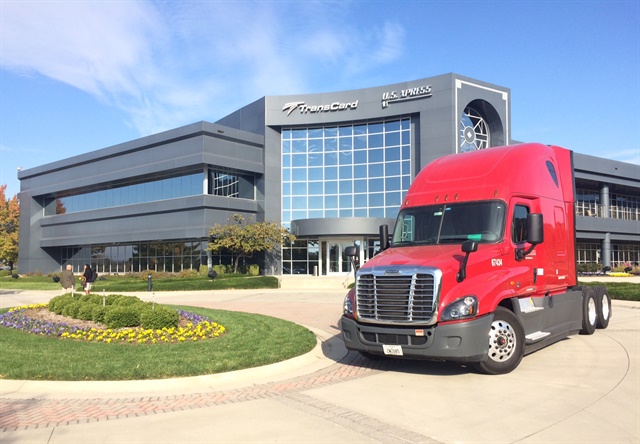
">U.S. Xpress has accepted an invitation to join the Alliance for Driver Safety & Security, also known as The Trucking Alliance, beginning in 2017.
The Chattanooga, Tennessee-based carrier is one of several transportation companies to join The Trucking Alliance in recent months, joining the refrigerated carrier KLLM, Cargo Transporters, and truck insurance brokerage company Aeon Transportation & Risk Solutions. U.S. Xpress is one of the largest privately owned trucking companies in the country.
The Trucking Alliance is a small coalition of carriers and allied business that support common operating principles and safety reforms to reduce large truck accidents and improve the working environment of drivers. It supports technologies and procedures such as electronic logging devices, truck speed limiters, hair testing for driver pre-employment drug screening, forward collision warning/mitigation systems.
“U.S. Xpress is one of the nation's top freight carriers because its co-founders, Max Fuller and the late Pat Quinn, created a culture that a company can be efficient for customers without sacrificing drivers' safety,” said Craig Harper, executive vice president and chief operations officer of J.B. Hunt Transport Services, and a member of the Alliance board of directors. “U.S. Xpress continues to exhibit these characteristics under Max's leadership, and the Trucking Alliance will benefit from their membership.”
As part of agreeing to join The Trucking Alliance, U.S. Xpress president and chief operating officer Eric Fuller will join the organization's board of directors. Lisa Pate, chief administrative officer for U.S. Xpress, will serve on the Alliance Advisory Group, a committee that assists the board of directors with analysis and recommendations on safety regulations and proposals.
“The Trucking Alliance is advancing safety reforms that can improve highway safety and the quality of life for truck drivers,” said Fuller. “Training, education, and safety are core values at U.S. Xpress, and we look forward to working with ...Read the rest of this story