Speed limiters: State agencies question federal role, safety, roadside details

read more
...Read the rest of this storyread more
...Read the rest of this storyThe end of the year seems like a good time to reflect, so I will take this opportunity to talk about why I am so proud of the trucking industry.
Those of us in the trucking industry already know how vital we are to the economy, but I think we all need to do a better job of reminding the general public about our place. All you have to do is tell to someone to look around their home or office at all the things in it and then ask them how those things got there. Of course the answer is on a truck.
read more
...Read the rest of this storyThe National Transportation Safety Board (NTSB) recently came out with its 2017-2018 Most Wanted List of Transportation Safety Improvements. It includes things like reducing fatigue related accidents, increasing the use of collision avoidance technology and eliminating driver distractions.
The NTSB list represents the top safety improvements that can be made across all modes of transportation with the goal of preventing accidents and saving lives.
read more
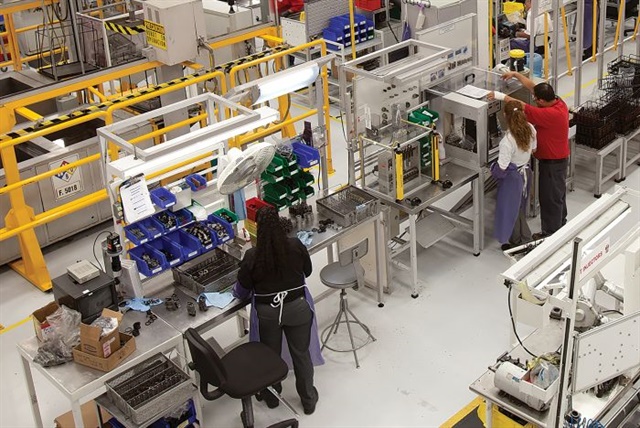
...Read the rest of this storyElectronics have added complexity and driven the reman industry to invest more in technician training and special equipment. Photo: Cummins
">Electronics have added complexity and driven the reman industry to invest more in technician training and special equipment. Photo: Cummins
">The increasing complexity of today's heavy-duty diesel engine has added complexity to the remanufacturing process.
Stringent tolerances and finishes for components such as high-pressure fuel pumps, exhaust gas recirculation valves, diesel particulate filters, diesel exhaust fluid pumps and after treatment devices require “significant investments in state-of-the-art equipment,” says Amanda Snyder, vice president, engineering and business development, Detroit Reman.
The basic engine remanufacturing process hasn't changed, she notes. “It involves disassembling cleaning, testing and recovering components or replacing them with new parts, as needed.” What has changed is the testing process, which now requires more sophisticated methods.
Clay Conn, production manager at U.S. Diesel Remanufacturing LLC, agrees that the complexity of engines has changed the process in many ways. The company had to adapt its assembly rooms. “What was considered a clean room for engine assembly is no longer clean enough to be assembling anything that is Tier 4 emissions,” he explains. “Very small particles, even as small as 20 microns, can be known to create issues in the newer fuel systems.”
He adds that assembly rooms have to be cleaned and maintained in a meticulous fashion, which he considers to be on par with most doctors' offices.
Another way the reman process has changed, according to Conn, is in the machining process. “Tolerances are becoming a lot tighter on the newer engines. The honing process for the cylinders requires special plateau finishes that make it so the engines no longer have a break-in period. The second you turn the key on, your new engine is broken in and meeting the required emissions. These different finishes and tighter tolerances have required us to update a lot of our machines,” he says.
Investment in technicians is needed as well. ...Read the rest of this story
Rolf Lockwood
" >Rolf Lockwood
" width="185" height="247">What are the differences between trucks and trucking in North America versus Europe? Our trucks have become increasingly similar, but there are limits.
I've been flying across the pond for decades and I've written stories about trucks and engines and the highest of electronic technologies. I've done dozens of plant tours, spent many hours on test tracks, and driven quite a few miles on roads both urban and rural.
Once, after driving north from Stockholm, across the Arctic Circle, and then down the length of Finland, I even got lost in downtown Helsinki while piloting a Volvo Globetrotter with a full trailer behind. Long before the days of GPS.
In a nutshell, the differences between here and there are countless, yet there are also similarities. Trucking is trucking in some senses, no matter where you are, and nowadays technology walks across the water in both directions every day.
My very first transAtlantic trucking trip was to Finland in the winter of 1985, and it illustrated the wandering technology point a lot earlier than you'd expect. Hosted by Nokia, I was the lone journalist amongst a group of tire dealers. The company set me up to drive with a logger in the boonies outside the city of Tampere. Great! Told that he drove a made-in-Finland Sisu cabover, I was excited to try it out.
Imagine my surprise when I found a Cummins 400 under my right foot and a Fuller 13 in my right hand! I wanted something far more exotic. Still, those 8 hours going from forest to mill plus a truckstop lunch in the middle – with a driver who spoke no English and a meal I couldn't identify – were fascinating. Among the lessons: Drivers are drivers and, despite a distinctly Finnish configuration in that Sisu, trucks are trucks.
Except they're ...Read the rest of this story
The U.S. Chamber of Commerce Foundation's Hiring Our Heroes group, in partnership with Kenworth Truck Co. and Fastport, awarded U.S.
read more
...Read the rest of this story