PacLease Opens 10 New Locations in North America

PacLease Opens 10 New Locations in North America

<img width="150" src="http://www.automotive-fleet.com/fc_images/news/m-paclease-3.jpg" border="0" alt="

Photo via PacLease

">

Photo via PacLease

">

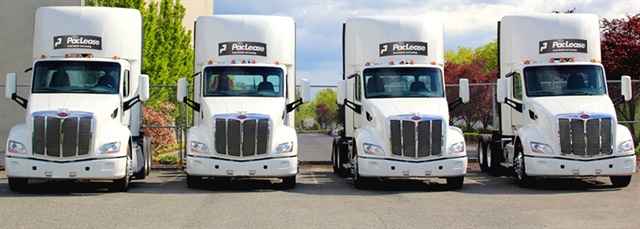
PacLease expanded in 2016 by adding 10 new locations in the U.S. and Canada, offering the full line of Kenworth and Peterbilt trucks.

“PacLease had another strong year and we're finding increased demand for those wanting to rent and lease Kenworth and Peterbilt trucks,” said Jake Civitts, director of franchise operations for Paccar Leasing Company. “With the opening of our new PacLease locations, including three in the major markets of the Detroit and Philadelphia areas, along with Birmingham, we're well situated for continued growth.”

The company says it was responding to increased demand for rental and leasing services and it now operates 454 locations in North America. Civitts cited a recent study from the National Private Truck Council that showed 66% of respondents expected to add equipment and drivers over the next five years.

“That paints a very bright picture for our business, and leasing as a whole, as private fleets remain our main customers,” said Civitts. “And, PacLease continues to expand service offerings to its customers, with even more planned in 2017.”

The new PacLease locations are:

PacLease of Alabama – Birmingham, AlabamaAllstate Leasing – Clear Lake, IowaAllstate Leasing – West Salem, WisconsinPalmer Leasing Group – Effingham, IllinoisSouthland PacLease – Monroe, LouisianaPacLease of Detroit – Romulus, MichiganPacLease of Philadelphia – Conshohocken, Pennsylvania Inland PacLease – West Kelowna, British Columbia, CanadaPeterbilt Pacific Leasing – Lantzville, British Columbia, CanadaPeterbilt Pacific Leasing – Delta, British Columbia, Canada

Related: Peterbilt Adds PacLease Trucks to Red Oval Program

Follow @HDTrucking on Twitter

...Read the rest of this story

LED Headlight Meets Top NHTSA Guidelines

J.W. Speaker has developed the Model 8800 Evolution 2, a new 4-inch by 6-inch LED headlight for the heavy-duty trucking market.

The headlight meets the National Highway Transportation Safety Administration's guidelines for a 5-Star NCAP-compliant low beam design, according to J.W. Speaker. The headlight is an upgrade to the previous Model 8800, exceeding the proposed FMVSS 108 standard in three criteria: light output, glare reduction, and light placement.

"We are pleased to deliver the industry's first heavy-duty headlight that is not only ideally suited for this market, but it also meets NHTSA's proposed requirements for a lighting as part of their safety rating system,” said Michael Stoeckel, director of aftermarket sales for J.W. Speaker. “This gives the vehicle operator unparalleled performance in terms of visibility, for maximum safety and comfort.”

The Model 8800 Evolution 2 will include both heated and non-heated versions. The heated version combines electronic intelligence and a thermally conductive grid system to dynamically de-ice the lens on a real time basis without requiring any involvement from the driver. The headlight also offers improved sealing, better condensation management, and a wider operating voltage than the previous model.

Follow @HDTrucking on Twitter

...Read the rest of this story
HDT’s Most Popular News Stories of 2016

<img width="150" src="http://www.automotive-fleet.com/fc_images/news/m-cat-truck-program-1.jpg" border="0" alt="

Photo: Tom Berg

">

Photo: Tom Berg

">

In 2016, the trucking industry saw several major news stories play out on a near daily basis. Major updates to emissions regulations, the end of Cat Truck, and, of course, the presidential election all caught the attention of our readers in a big way this year.

Here are the most-read news stories of 2016:

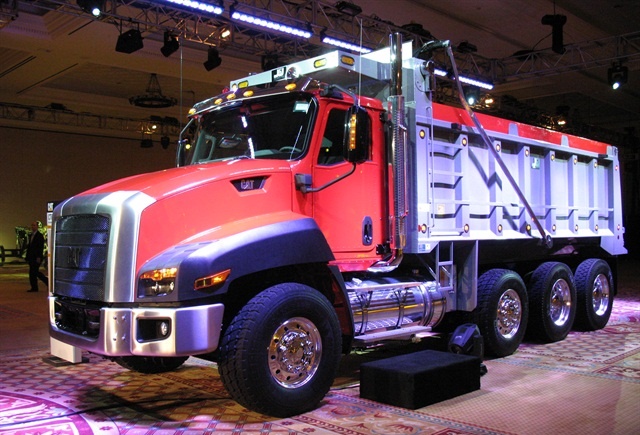
1. Caterpillar to End Cat Truck Program

Caterpillar Inc. will discontinue production of its Cat Truck on-highway vocational trucks, blaming "the current business climate in the truck industry" for its withdrawal from the market.

2. Phase 2 GHG Rules to Curtail Use of Glider Kits

Starting in January of 2021, under the new greenhouse gas regulations, glider kits will be allowed mostly for their original purpose, which was reclaiming late-model powertrains from wrecked trucks.

3. Caterpillar Reaches Settlement in EPA Emissions Lawsuit

Caterpillar has reached a settlement in a class action lawsuit over allegedly defective ACERT EPA 2007-compliant engines, with owners of these engines eligible to receive $500 to $10,000 per engine.

4. EPA Not Backing off GHG Rules for Trailers, Glider Kits

EPA and NHTSA have again indicated they intend to regulate truck trailers and glider kits under their Phase 2 proposal for limiting the GHG emissions and fuel consumption of on-highway trucks.

5. Volvo's SuperTruck Exceeds EPA Freight Efficiency Goals

Volvo Trucks North America's SuperTruck demonstration rig combined advanced aerodynamics, vehicle and powertrain technologies to achieve a freight efficiency improvement of 88%, averaging 12 mpg in road tests.

6. Trump Picks Chao to Head DOT

No stranger to the Executive Branch, Chao served as secretary of labor throughout President George W. Bush's two terms and as deputy secretary of transportation under President George H.W. Bush.

7. Nikola One Fuel Cell Electric Truck Promises High Fuel Economy, Low Maintenance

If enthusiasm ensures ...Read the rest of this story

Service Body Options Allow for Customizations

The Norstar SD Service bed is a service body with a gloss black powder coating designed for single- or dual-wheel work trucks.

The SD offers multiple standard tool boxes and several options to customize the service bed for different applications. The bed comes with two vertical cabinets, two angled boxes, two top boxes, two rear underbody boxes, and a locking rear shovel compartment for storage.

The body's doors are gas shock equipped, and locking T-latches are standard. The receiver allows for the addition of a hitch for bumper-pull cargo, and a gooseneck ball is standard. Cabinet drawers are also available to store more parts and tools. There are options for multiple lighting choices and cast housings.

Follow @HDTrucking on Twitter

...Read the rest of this story

HDT’s Most Popular Articles of 2016

<img width="150" src="http://www.automotive-fleet.com/fc_images/news/m-l-x15-1-1.jpg" border="0" alt="

Photo: Jim Park

">

Photo: Jim Park

">

In 2016 Heavy Duty Trucking magazine covered several major issues affecting the trucking industry including the ELD mandate, Overtime Rules, Driver Retention and many others.

Here are some of the most-read stories from the past year:

Commentary: The Dark Side of Electronic Logging Devices

The law is one thing, company policy another, but the relationship between driver and dispatcher is where reality happens. - by Rolf Lockwood.

Quick Spin: Sneak Peak of the Cummins 2017 X15

Equipment Editor Jim Park gets behind the wheel of the newest fuel-efficient version of the Cummins ISX and finds there's much to look forward to.

What the Labor Department's New Overtime Rules Mean for Trucking

In May the United States Department of Labor published new regulations that will affect who may be paid a salary and who must be paid by the hour. The changes, which take effect December 1, 2016, dramatically change the landscape for employers.

5 Things You Need to Know About ELDs

Fleets prepared to make the necessary changes to every facet of their operation will be more successful transitioning to e-logs.

A Look at the California-Compliant Trailer

There's a California-compliant trailer in your future, whether you want it or not. But what's not to want?

7 Technologies That Will Affect Trucking and the Aftermarket

The trucking industry aftermarket is being bombarded with technology, and that trend is not likely to go away anytime soon, according to industry analyst Derek Kaufman.

Truck Platooning, Past, Present, and Future

The platooning idea has been around for ages, though you could be excused for thinking it's a new development, given all the attention it's been getting lately. It's not even close to being new.

Catching Hours-Of-Service Cheaters

A false log was No. 10 in the list of top 20 driver violations ...Read the rest of this story

The Future Revealed

<img width="150" src="http://www.automotive-fleet.com/fc_images/blogs/m-15c466-022-2.jpg" border="0" alt="

Photo courtesy of Freightliner

">

Photo courtesy of Freightliner

">

I turned 50 in 2016. I suppose that's the first thing that comes to mind when I look back on the year past… I mean, for me personally, that was a pretty big deal. In the grand scheme of things, it was also a definitive year in many ways. The consensus seems to be that it was a horrible year – although many people I know look upon it as divide in the sand. To them, the year marks a turning point and they are excited and optimistic looking ahead into 2017. Which means that in many ways, the final chapter on 2016 hasn't been written yet, and won't be some time.

Narrowing the focus, and looking at 2016 through my Trucking Lens, it seems that this was a year that confirmed that a new wave of technology is, in fact, going to sweep through the North American trucking industry. And this wave of newness will be more sweeping, and happen quicker than most American Truckers are prepared for.

Two events during the course of the year convince me of this notion:

The first happened early in the year, when I flew to Dusseldorf, Germany to see Daimler Trucks unveil its Highway Pilot Connect truck platooning technology. Of equal importance was the fact that the Daimler launch dovetailed with a larger demonstration event in which multiple European truck OEMs ran multi-truck platoons into Rotterdam, The Netherlands, to demonstrate the reliability of their own platooning capabilities.

Industry experts, notably Peloton, have been working on platooning technology for some time now, which is essentially using modern vehicle-to-vehicle communications systems and integrated safety systems to run trucks safely in convoy formations. Doing so offers impressive fuel economy boosts that engineers say are simply beyond any vehicle design or powertrain enhancements available today.

But what ...Read the rest of this story

Drivers Must Get New Medical Certificates After Chiropractor Charged with Faking Exams

Chiropractic doctor Anthony Lefteris of Atlanta, Georgia, a certified Department of Transportation medical examiner, is being charged with falsifying documents and results related to medical examinations of commercial drivers.

As a result, the Federal Motor Carrier Safety Administration is notifying drivers who were given medical examinations by Lefteris that they have 30 days from the date of the letter sent to the driver to obtain a Medical Examiner's Certificate from a medical examiner with valid certification on the National Registry of Certified Medical Examiners. Lefteris, who operated from a Petro truckstop on Hollowell Parkway off of I-285 in Atlanta, was removed from that registry on Dec. 2.

It is estimated that more than 6,600 drivers are impacted. Drivers are from 48 states, although the vast bulk are from Georgia.

The U.S. DOT was tipped off to Lefteris's conduct when it determined that he was conducting far more medical certification examinations than were reasonable. An undercover investigation conducted by the Georgia Department of Public Safety revealed that Lefteris was conducting incomplete examinations and falsifying the test results, including not conducting urinalysis, vision or hearing tests.

The investigation was conducted with three undercover agents posing as drivers in need of DOT Medical Examiner's Certificates. In exchange for cash payments, Lefteris provided documents to the agents indicating that the proper medical examinations had been conducted when they had not. Lefteris then made false statements regarding the completion of the examinations and entered false documents and information into the driver records system.

Lefteris is officially being charged with making false statements and making a false entry in U.S. DOT records.

Drivers who do not obtain medical requalification within the 30-day time period will be medically disqualified from operating a commercial motor vehicle in interstate commerce. Drivers and carriers with further questions should contact USDOT/FMCSA via email at [email protected] ...Read the rest of this story