HDT’s Most Popular Videos of 2016

HDT’s Most Popular Videos of 2016

<img width="150" src="http://www.automotive-fleet.com/fc_images/news/m-heritage-video-1.jpg" border="0" alt="

Photo: Tom Berg

">

Photo: Tom Berg

">

For 2016, we expanded our video coverage to bring you even more truck and equipment reviews, previews, and test drives as well as some coverage from the biggest events of the year.

Here are our most viewed videos for 2016:

1. On the Spot: Drive the Future With Volvo's SuperTruck

Volvo Trucks unveiled its fuel-conscious SuperTruck concept vehicle, squeezing every ounce of efficiency out of a truck that can achieve 12 mpg. Equipment Editor Jim Park explains the innovative systems behind Volvo's most efficient concept to date.

2. Navistar's Las Vegas LT Series Launch Presentation

Navistar International unveiled its new LT (for Linehaul Transport) Series trucks in Las Vegas recently. Senior Editor Tom Berg was at the event to witness a production that was worthy of the town.

3. Test Drive Preview: Freightliner's 2018 Cascadia

In this preview of our Ultimate Test Drive on the 2018 Cascadia, equipment editor Jim Park reviews the latest improvements that Freightliner has made to its next-generation truck.

4. Focus On... Peterbilt 567 Heritage

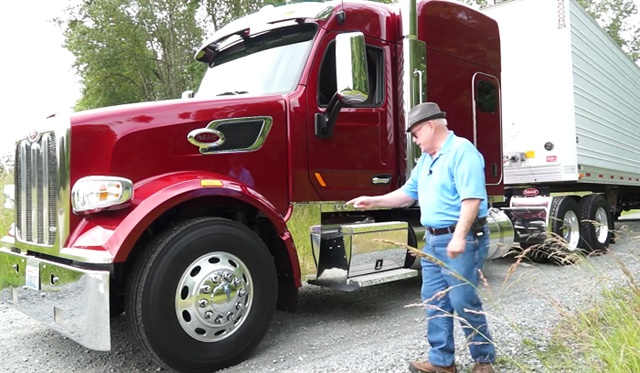
Sometimes a trim package is enough to constitute an almost-new model. So it is with the Heritage version of Peterbilt's vocational 567, as Tom Berg reports in the latest Focus On video.

5. Ultimate Test Drive Video: Caterpillar CT680L

The new axle-forward CT680L version of Caterpillar's Cat Truck is a work truck, make no mistake – but Cat's approach is obviously that drivers shouldn't suffer for their craft. In this Ultimate Test Drive video, Equipment Editor Jim Park shares his impressions.

6. Highlights From ATA Management Conference & Exhibition

American Trucking Associations' new president introduces himself to members, plus scores of product introductions and a lot more, those are just some of the highlights at this year's annual ATA Management Conference & Exhibition.Business Editor Evan Lockridge ...Read the rest of this story
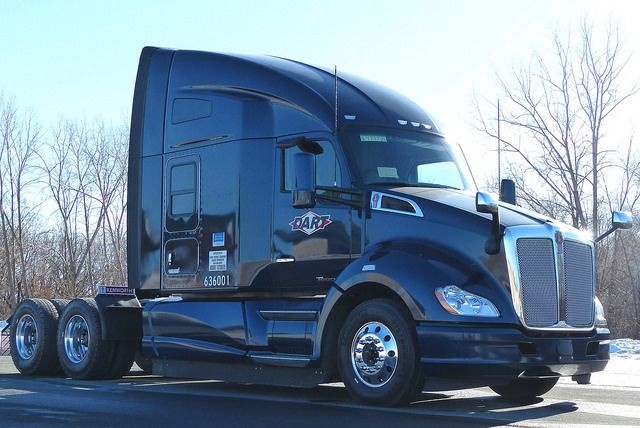

Remote Diagnostics Add Up for Dart Transit

<img width="150" src="http://www.automotive-fleet.com/fc_images/articles/m-dart-kw-1.jpg" border="0" alt="

Photo courtesy of Kenworth

">

Photo courtesy of Kenworth

">

Dart Transit says it has had improved uptime and fewer tows on its fleet of 300 Kenworth T680s running the remote diagnostics program Kenworth TruckTech+.

The Eagan, Minnesota-based truckload and intermodal carrier began implementing TruckTech+ at the beginning of 2016. Since then the company has had better visibility on the health of its Kenworth trucks.

“Before, the truck could be de-rated if a driver overlooked an alert or waited too long to clean the emissions system – especially after the truck had been sitting over a rest period,” says Paul Mages, head of Dart's company efficiency team. “Now, we get an email notification when the soot level gets to a critical level and can call the driver and get action taken before a de-rate takes place.”

The system has also taken some of the guesswork out of fleet maintenance for Dart, the company says, sending codes and detailed information to Dart remotely allowing the company to make informed decisions.

“We are transitioning from being reactive – where calls come in from drivers – to one where we are proactive,” Mages says. “We're now calling drivers and telling them what course of action to take based on the severity of the issue, with some even directed to continue driving and address the issue during the next scheduled maintenance period.”

Dart also uses the Paccar Solutions Portal to further track the health of its Kenworth trucks in real time. The portal lets TruckTech+ users view a map with pins indicating the health of each truck in the fleet equipped with the remote diagnostics system. This allows Dart personnel to click on individual trucks and drill down to identify any health issues.

“While we haven't rolled out all the processes yet to fully utilize all the capabilities of the portal, we are using it to dig ...Read the rest of this story

7 Rules to Watch in ‘17

<img width="150" src="http://www.automotive-fleet.com/fc_images/blogs/m-trumpcampaigncwximcrxgaaldsg-donaldjtrump-1.jpg" border="0" alt="

President-elect Trump speaking during the election campaign. Image: DonaldJTrump.com


">

President-elect Trump speaking during the election campaign. Image: DonaldJTrump.com


">

Donald Trump has yet to be sworn into office as the 45th President of the United States, so it's still far too soon to confidently predict how his stated goal of reducing the federal regulation of American business will be met in 2017.

Trump has already pledged to issue a temporary moratorium on new agency regulations that are “not compelled by Congress or public safety.” He has also stated that all department heads will “submit a list of every wasteful and unnecessary regulation which kills jobs, and which does not improve public safety, and eliminate them.” So, he is not clearly not expecting Congress to roll over on its authority to mandate rulemakings. What's more, Trump's policy statement does not define what constitutes “public safety,” which could well include rules aimed at improving highway safety.

Even if a presidential moratorium is put in place, major lobbies, such as the American Trucking Associations, will keep pushing their respective agendas on Capitol Hill. Any new safety-related rules sought by the trucking industry, such as hair-testing for driver drug use, legislated into law as Congressional mandates will have to be enacted by the Trump Administration.

The other main avenue for regulatory rollback is the rarely used Congressional Review Act. Although enacted in 1996, it has been leveraged but once. In March, 2001, CRA was used to overturn an OSHA ergonomic rule issued the year before in the last months of the Clinton Administration. CRA is an oversight tool, but no magic wand.

CRA is of limited use because it has a critical time clock built into it. Under CRA, a resolution can be used to overturn an executive rule only if the rule was enacted within 60 “legislative days,” which in this case covers only rules that were ...Read the rest of this story
Report Finds Fleet Telematics Adoption Steadily Increasing

<img width="150" src="http://www.automotive-fleet.com/fc_images/news/m-telematics-adoption-1.jpg" border="0" alt="

Western states saw the highest telematics adoption rates in the survey. 

">

Western states saw the highest telematics adoption rates in the survey. 

">

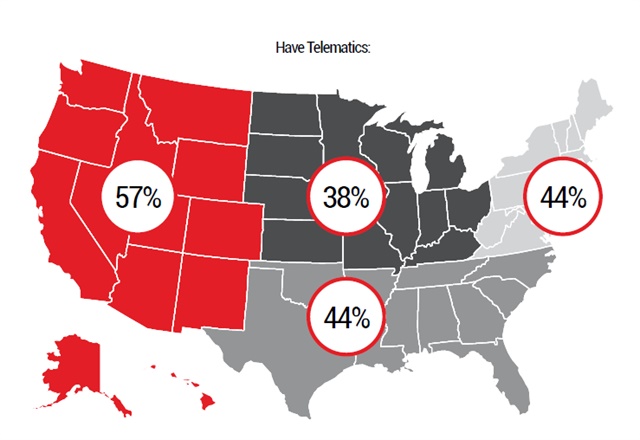
Telematics adoption has crept up to 44% and is as high as 78% in the utility fleet industry, according to a new report by Heavy Duty Trucking magazine publisher Bobit Business Media and sponsored by GPS Insight.

The Fleet Management Technology Report sent out a survey asking a series of questions to Bobit fleet subscribers pertaining to fleet management and telematics to examine the current state of the marketplace. The survey received a total of 614 respondents and provided insight into the key areas of telematics adoption, providers, benefits and return on investment.

The telematics industry is continuing to grow steadily as fleets are finding more valuable insights within different applications. Comparing the numbers to a previous Fleet Management Technology Report survey done in 2013 shows that the most significant increase in adoption over the three-year span was in fleets with 26-350 vehicles.

Fleets in western states also tended to have higher adoption rates than in other regions at 57%. The Midwest had the lowest adoption rates at just 38%.

The report also asked fleet managers why they have decided not to implement telematics, with budgetary concerns being the top reason at 31% of respondents.

Among fleets that do use telematics, better integration was the most wished for feature from a telematics provider. When choosing a telematics provider, fleets put a higher value on services that provided ease of use, customer service, and better cellular service coverage.

In the end, the report found that most fleets that used telematics tended to feel that the systems benefitted their fleet overall, and most felt that the benefits were greater than they expected before implementing telematics.

Bobit's fleet publications, in addition to HDT, include Automotive Fleet, Work Truck, Business Fleet, Green Fleet, and Government Fleet.

The entire report is ...Read the rest of this story

Montana Suspends Hours of Service Ahead of Winter Storm

On Dec. 28, Montana Gov. Steve Bullock issued an executive order suspending hours of service regulations in the state due to harsh weather and propane demand, according to the Flathead Beacon.

The order was issued in anticipation of a storm arriving in the area on Jan. 1, which is expected to bring snowfall, low visibility, and temperatures as low as 40 below zero by Monday morning. The freezing temperatures will stay in the area all week and could see near-record lows in some areas.

Hours of service regulations were suspended for carriers that transport propane, heating oil, and diesel fuel in order to meet the high demand for fuel before and during the storm.

The Flathead Beacon quoted Bullock saying, “Montana's winter weather can pose a serious threat to the livelihood of Montanans who depend on propane and heating oil. This order will ensure the timely and necessary delivery of petroleum products so that Montanans keep warm in their homes and continue to work, even in the harshest of winter conditions.”

Related: Safe Winter Driving Tips

Follow @HDTrucking on Twitter

...Read the rest of this story

Toll Bridge Offers New Routing Option for Truckers Crossing Ohio River

<img width="150" src="http://www.automotive-fleet.com/fc_images/news/m-lewis-and-clark-bridge-1.jpg" border="0" alt="

The Lewis and Clark Bridge Photo: Louisville-Southern Indiana Ohio River Bridges Project

">

The Lewis and Clark Bridge Photo: Louisville-Southern Indiana Ohio River Bridges Project

">

A new routing option has opened for truckers in the Midwest with the State Road 265 bridge across the Ohio River, known formerly as the East End bridge and now renamed the Lewis and Clark Bridge.

The Lewis and Clark Bridge will provide options for truckers looking to link up multiple routes through Kentucky and Southern Indiana.

The bridge connects Utica, Indiana, and Prospect, Kentucky, and was the final major piece of the $2.3 billion Louisville-Southern Indiana Ohio River Bridges Project to open to traffic. The project also included the North Abraham Lincoln Bridge and the South Kennedy Bridge in downtown Louisville, Kentucky.

The three new routes will reportedly double the cross-river capacity downtown. All three bridges will be tolled, and tolling is scheduled to begin on Dec. 30. All vehicles on the bridge must have a transponder to pay the lowest rates; customers with E-ZPass, PrePass, and BestPass toll accounts that include E-ZPass, may use their existing transponders.

The tolling is provided through RiverLink and is all-electronic, with no stopping, slowing, lines or coin machines. RiverLink will offer local transponders for use on the three bridges.

Related: Whose Infrastructure — Ours or Theirs?

Follow @HDTrucking on Twitter

...Read the rest of this story