Post Earnings Coverage as J.B. Hunt Operating Revenue Increased 6%; Raised Quarterly Dividend by 4.5%
Photo: Jim Park
">Photo: Jim Park
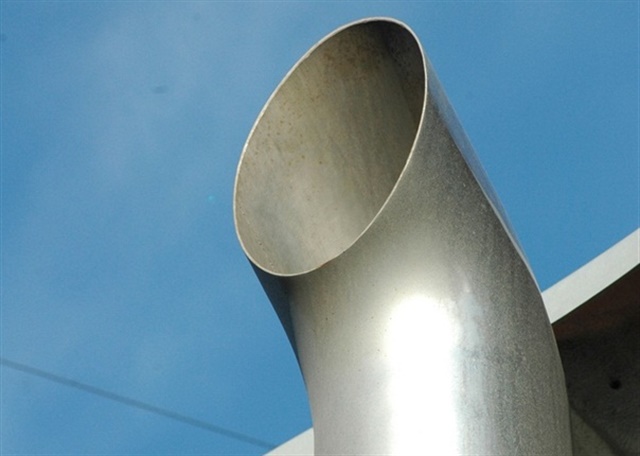
">This probably will not come as a big surprise to most fleets, but emissions-related components are the fastest growing sector of the heavy-duty aftermarket, according to John Blodgett, vice president, sales and marketing for market-research firm MacKay & Co.
Speaking at the recent Heavy Duty Aftermarket Dialogue event in Las Vegas, Blodgett said that since 2010 aftermarket demand for these components has increased 254%. In addition, he and David Kalvelage, manager of IT and database services at MacKay & Co., expect that by 2021 that demand will increase another 42%.
In their presentation “Structure and Trends of the Current Heavy Duty Aftermarket,” the duo recapped what happened in the aftermarket in 2016 and offered some thoughts on what might occur in the future.
Another emissions-related trend they are seeing is the shift from fleets getting diesel particulate filters cleaned on a local level toward switching to factory-remanufactured products.
However, they are also seeing a shift from remanufactured parts to new products for starter and alternator replacement based largely on the price equity of the new parts, which are primarily coming from offshore sources.
Looking back to 2016, the U.S. heavy-duty aftermarket was down 1.5%, mostly as a result of lower utilization and pricing adjustments. The Canadian aftermarket grew 7.4%, but Blodgett was quick to point out that this did not mean unit sales were higher. Rather, exchange rates accounted for most of the increase.
Turning to the service side of the aftermarket, MacKay's data shows 68% of first owners of vehicles are performing their own service, with dealers doing 18% of service and independent garages doing 14%.
However, while subsequent owners still do much of their own work, when they outsource they use dealers less often compared to first owners. Independent garages are the ones getting the additional work from fleets. ...Read the rest of this story
Photo: Cargo Transporters
">Photo: Cargo Transporters
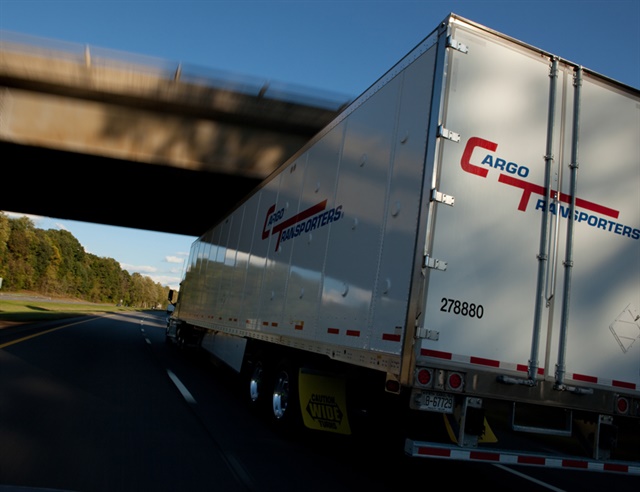
">LAS VEGAS. “Truckable Economic Activity,” that chunk of the Gross Domestic Product that spends time in trucks, looks to be getting off to a strong start in 2017, according to Robert Dieli, president of RDLB, Inc., a Chicago-based economic research and management consulting firm.
Speaking at the Heavy Duty Aftermarket Dialogue event here, Dieli said he expects the expansion phase of the business cycle to continue through 2017. “Domestic events, mainly those surrounding fiscal policy are expected to have the most effect on TEA over the course of 2017 and 2018.”
The main components of TEA are consumption, investment, exports, imports and government. Dieli said the composition of TEA growth will continue to change. “We expect improvements in Truckable Fixed Investment and Truckable Exports. The adjustment to structural transformation will continue; of special concern is the implementation of electronic logging device regulations.”
Currently, 45% of TEA is consumption, 24% investment, 14% exports, 10% imports (imports are counted as a plus in TEA because they spend time on trucks) and government 7%.
Dieli said we are still in the expansion phase of the business cycle, but at some point there will be a boom and “we will begin to see economic instability.”
He uses something called the Enhanced Aggregate Spread, which is a nine-month forward forecasting model. “It is saying we should have expansion continue through the third quarter of 2017.”
Dieli spent some time during his presentation talking about how hiring patterns are a reliable indicator of trucking activity. General freight accounts for 69% of trucking hires while specialized freight (reefers, tanks, flat beds, moving companies, etc.) account for the other 31%. “Early in 2016 we saw a decline in trucking employment,” he said, “but that reversed itself and we have had strong increases in trucking employment since.” ...Read the rest of this story
Photo: Stemco
">Photo: Stemco
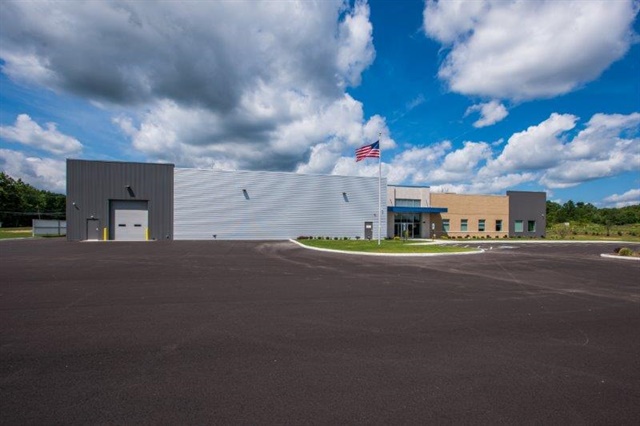
">Stemco has completed construction of a research and development lab built to design and test advances in materials, designs, and technology for commercial vehicle air springs.
The 20,000-square-foot facility was built in response to Stemco's acquisition of the air springs business of the former Veyance Technologies, now part of Continental AG, which produced Goodyear Air Spring products. The new facility was built in Fairlawn, Ohio.
Purchase of the site was first approved in Oct. 2015 and groundbreaking took place in Nov. 2015. The full build schedule took eight months to complete, which included moving, installation, and recalibration of all the test equipment. Stemco engaged with Geis Companies, an Ohio-based design/build company, for all aspects of the construction process.
“Following the purchase of the Goodyear Air Springs business, we were intent on keeping the business in Fairlawn, retaining the workforce and investing where necessary to support our long-term growth,” said David Brinkman, segment business leader, air springs for Stemco. “The new facility features state-of-the-art test equipment for a talented group of engineers that will serve our production facilities and our customers well in the future.”
Related: Stemco Agrees to Buy Veyance Air Springs
Follow @HDTrucking on Twitter
...Read the rest of this storyNavistar's Advanced EGR diesels couldn't meet EPA exhaust limits, but Chairman and CEO Dan Ustian promoted the products anyway, the SEC has charged. Photo: Tom Berg
" >The federal government's securities fraud suit against Daniel C. Ustian, former chairman and CEO of Navistar International, can proceed in spite of objections raised by Ustian's attorneys, a federal judge has ruled.
Ustian had promoted a unique diesel exhaust emissions solution. But the Securities and Exchange Commission has charged in its suit that he knew it couldn't work, with subsequent losses to company investors.
Federal Judge Sara Ellis, of the Northern District of Illinios, made the ruling earlier this week, reported the Springfield (Ohio) News-Sun.
“Because the SEC sufficiently alleges that Ustian's statements were misleading and material to the investing public and that Ustian knew this, the SEC sufficiently states a claim for securities fraud,” wrote Judge Ellis. “The SEC also sufficiently alleges that Navistar violated the securities laws and that Ustian is liable for Navistar's violations.”
Navistar's Advanced EGR diesels couldn't meet EPA exhaust limits, but Chairman and CEO Dan Ustian promoted the products anyway, the SEC has charged. Photo: Tom Berg
" width="240" height="320">From late 2009 and for several years after, Ustian said an approach called Advanced-EGR (exhaust-gas recirculation) would meet federal Environmental Protection Agency standards. But the SEC says continued testing by Navistar engineers showed it wouldn't work. Meanwhile, Ustian led a marketing assault on competitors who used selective catalytic reduction, the exhaust aftertreatment requiring urea (diesel exhaust fluid) injection, as inconvenient and expensive.
Navistar investors revolted when serious problems with A-EGR became known, customers complained, sales sagged, expensive warranty claims caused losses for the company, and stock value fell. Ustian was dismissed in August 2012, and last year Navistar paid a $7.5-million fine to the government for violating emissions rules.
Judge Ellis further wrote that: “The United States Securities and Exchange Commission alleges that Defendant Daniel C. Ustian, Navistar's former CEO and president, was so driven by a desire to produce an ...Read the rest of this story