The Quest for Uptime

The Quest for Uptime

<img width="150" src="http://www.automotive-fleet.com/fc_images/articles/m-uptimes-1.jpg" border="0" alt="

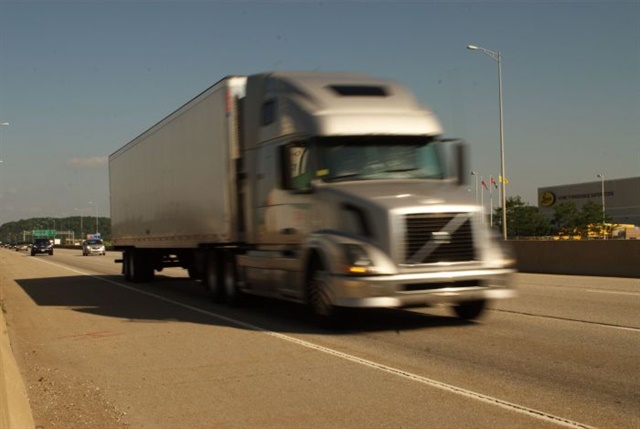
While the complexity is increasing, the reliability of the current generation of trucks and engines is the best we've seen in several years. Photos: Jim Park

">

While the complexity is increasing, the reliability of the current generation of trucks and engines is the best we've seen in several years. Photos: Jim Park

">

We're learning. We're doing a better job at keeping trucks out of the shop and out on the road earning money, but it's been a long, steep learning curve. Ever since the first diesel particulate filters appeared in 2007, fleets have been struggling to diagnose problems and make the necessary repairs. One of the greatest hurdles has been confusing messages and sometimes misleading information. Various sensors are often the culprit, but for the technicians working through the problem, the troubleshooting exercise was at first new and unfamiliar.

Each new generation of engine, and indeed mid-generation updates, brought new fault codes, new troubleshooting trees and more complexity in making the diagnosis. How much more complex? About tenfold.

“If you go back to pre-EPA-07, you'd get about 200-300 codes out of the [electronic control module],” says Gregg Mangione, senior vice president of maintenance at Penske Logistics. “Compare that to an engine [meeting 2014 greenhouse gas emission regs], with over a dozen different controllers. Some trucks are throwing between 2,000 and 3,000 different fault codes.”

However, Mangione says equipment manufacturers have learned to scale back on what information they present and how they present it. Previously, he says, “every time they turned on the dashboard light it created a problem for the driver. And that in turn created a problem for the shop. They had to decide whether the problem was serious enough to force the driver to stop.

“Now, with inexpensive telematics and truck-to-terminal communications becoming commonplace, we can more easily sort through the codes and message the driver accordingly. So while the trucks are throwing off more data than ever before, fleets are learning to use that information.”

One can imagine ...Read the rest of this story
Tried and True Tire Repairs

<img width="150" src="http://www.automotive-fleet.com/fc_images/articles/m-repairs-1.jpg" border="0" alt="

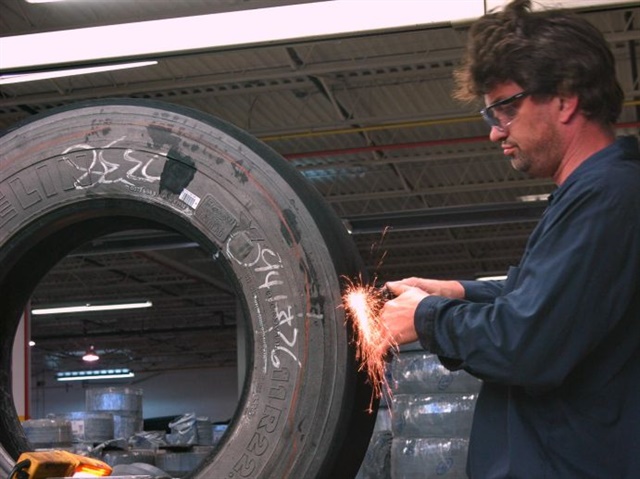
The first, and most crucial step in any tire repair process is to completely remove any foreign material from the damaged area. Photos: Jim Park

">

The first, and most crucial step in any tire repair process is to completely remove any foreign material from the damaged area. Photos: Jim Park

">

The flat tire is arguably motoring's oldest nemesis. Check out any film or photography from the early Automotive Age, and sooner, rather than later, somebody is going to roll their sleeves up and get to work patching a tire.

Early automotive tires were essentially scaled-up versions of bicycle tires. But they evolved quickly to meet the more rigorous demands put on them by early cars and trucks. Improvements to roads and highways made a big difference, too. So today, full-on tire failures are relatively rare compared to those early years behind the wheel.

But flat tires remain a serious threat for fleets today. And, of course, when flats do occur, they rarely happen in front of your local tire dealer's store. And fixing a truck tire is a complicated, safety-focused affair. Unlike an enterprising passenger car driver, pulling out a set of tire plugs and setting to work just isn't going to get the job done.

And, of course, tires aren't cheap. Smart fleet managers understand that wringing every possible mile from a truck tire saves money. Which means that getting tires fixed properly after failures do occur is vital for both vehicle productivity and fleet profitability.

When bubbles bring bad news

As with so many things in fleet operations, your drivers are your first line of defense when it comes to tire repairs. And this defense should begin every day with a thorough pre-trip inspection with a focus on good tire health.

The quickest and surest way to determine if there's a slow leak in a tire is by checking tire pressure with an accurate, properly calibrated tire gauge. Unfortunately, many drivers still believe that whacking a tire with an ax ...Read the rest of this story

SmartDrive Announces 94% Growth In 2016

Driving performance solutions company SmartDrive Systems, announced its business results and operating highlights for its revised fiscal year reporting period that ended Dec. 31, 2016, and reported 94% organic subscription growth year-over-year and almost 400% over the past three years.

According to the company, its Transportation Intelligence Suite, market leading usability, ongoing platform expansion and unmatched customer satisfaction were the key growth drivers.

"As we look at the company growth rate over the last three years, it is clear that fleets are saying 'good enough is not enough,' first by investing in video safety and then by selecting SmartDrive's proactive programmatic approach that brings a new level of transportation intelligence to fleet safety and operations,” said the company's CEO Steve Mitgang.

In the second half of 2016, the company grew its customer base by adding fleets like TMC Transportation, Interstate Distributor Co., Alabama Motor Express, BCP Transportation, Cincinnati Bell Connector, and more. It has also retained 98% of contracted units. The company has been ranked as one of the fasted growing companies by the Deloitte Technology Fast 500 for the past three consecutive years.

Related: Video-Based Safety Systems: Worth A Closer Look?

Follow @HDTrucking on Twitter

...Read the rest of this story

Trucking Alliance Pulls Hard for Hair-Testing

<img width="150" src="http://www.automotive-fleet.com/fc_images/news/m-j-b-huntdcsdriverdrivewyze-1-2.jpg" border="0" alt="

J.B Hunt is among the member companies of the Trucking Alliance seeking an exemption to let them conduct hair-testing for pre-employment drug testing of driver applicants. Photo: Drivewyze

">

J.B Hunt is among the member companies of the Trucking Alliance seeking an exemption to let them conduct hair-testing for pre-employment drug testing of driver applicants. Photo: Drivewyze

">

The Alliance for Driver Safety & Security (a.k.a. “Trucking Alliance”) has submitted a set of detailed comments to the Federal Motor Carrier Safety Administration that strongly support a petition calling for motor carriers to be exempt from having to use urinalysis to test for drug use by CDL driver applicants. Four of the six petitioners are member companies of the Trucking Alliance.

If the exemptions are granted, the petitioning carriers will not have to wait for FMCSA to initiate and complete a rulemaking that would allow hair-testing in lieu of urinalysis or one that would mandate hair-testing instead of urinalysis.

According to a Feb. 16 letter to FMCSA containing the comments (Docket FMCSA-2017-0002) and signed by Trucking Alliance Managing Director Lane Kidd, the petitioners seek to instead use hair analysis to meet federal drug test requirements for commercial driver job applicants.

“Hair-testing is a more reliable (albeit twice as expensive) method for identifying lifestyle drug users, than the less expensive and less reliable urine exam,” states Kidd.

Kidd notes in the letter that the Alliance “concurs with petitioners in their stated reasons for deserving an exemption, but adds that “in the broader context, the petitioners are utilizing a more reliable method [hair-testing] for identifying drug users than the vast majority of U.S. freight and logistics carriers.”

He then contends that the petitioners are “deserving of an exemption and for the following public safety reasons:”

The role drugs play in large-truck accidents. “'Lifestyle drug users' have no place in the commercial truck driver profession. Truck driving is an occupation that exposes the general public to possible safety risks, because motorists share the highways with thousands of commercial ...Read the rest of this story

House Dem’s NAFTA redo would drop cross-border trucking provision

DeFazio 'blueprint' calls for trade renegotiation to begin by June 1 If President Trump wants to rework the North American Free Trade Agreement, a group of House Democrats is ready and willing to provide the blueprint. Led by Rep. Peter DeFazio (D.-OR), the ranking member of the House Transportation and Infrastructure Committee, the resolution introduced Thursday includes a provision that would remove the cross-border trucking requirement—a long-problematic clause in the current trade deal.

read more

...Read the rest of this story