The Dark Side of Autonomous Tech Nobody Wants to Talk About

The Dark Side of Autonomous Tech Nobody Wants to Talk About

<img width="150" src="http://www.automotive-fleet.com/fc_images/blogs/m-otto-1.jpg" border="0" alt="

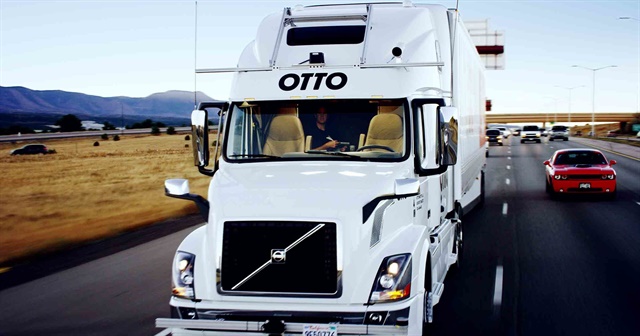
Autonomous trucks have helped spur an emerging conversation on just how far robots can go in taking human jobs and the consequences those lost jobs means for society as a whole. Photo credit: Otto

">

Autonomous trucks have helped spur an emerging conversation on just how far robots can go in taking human jobs and the consequences those lost jobs means for society as a whole. Photo credit: Otto

">

A couple of hundred years ago, things moved a lot slower, but society was actually undergoing a radical and sweeping transformation. The steam engine had kick-started the Industrial Revolution. Factories were springing up. New-fangled ideas such as wage-laborers and a 12-hour working day were starting to take shape. At the same time, great thinkers like Adam Smith and Karl Marx were hammering out the basic concepts of the modern economic systems that shape our world today: Capitalism on one end of the spectrum, Communism on the other.

I was reminded of this today by news that Microsoft founder Bill Gates is under fire for suggesting that companies that displace human workers with robots should pay special taxes for doing so.

Gates' comments were not well received by a number of business and government leaders. But he's one of the leading thinkers of our time, so when he speaks on a topic, I'm inclined to hear what he has to say. While his may not be a popular view, given all the talk about autonomous trucks at the moment – and the corresponding angst that talk has created – I do think it's worth thinking about.

Lessons From History

Back to some history for a moment: Once the ideas of Capitalism, industrialism and labor had all joined forces, factory and business owners started looking for ways to cut or control costs. After all, the whole point of Capitalism is to make money. And, so the theory goes, you have to have help from other people if you want to make a huge pile of money. And you have to make doing ...Read the rest of this story
Electric Trucks Start Arriving at Southern California Freight, Rail Yards

<img width="150" src="http://www.automotive-fleet.com/fc_images/news/m-byd-yard-truck-1-2.jpg" border="0" alt="

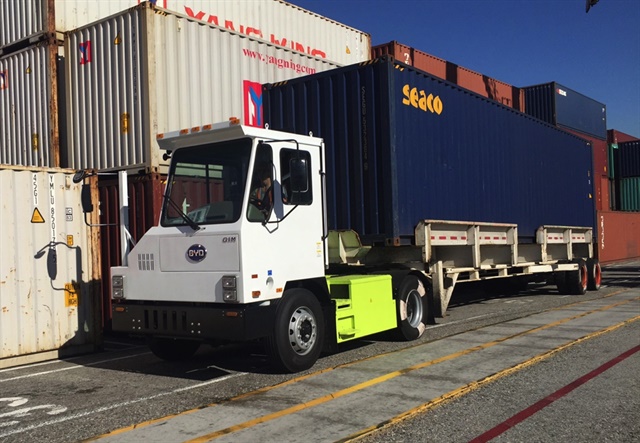
A BYD all-electric yard truck. The typical yard truck burns 2 to 4 gallons of diesel fuel per hour. Photo: CARB

">

A BYD all-electric yard truck. The typical yard truck burns 2 to 4 gallons of diesel fuel per hour. Photo: CARB

">

The State of California, San Bernardino Council of Governments, and partners at Daylight Transport and BYD Motors have announced the arrival of the first of 27 zero-emission electric yard and service trucks in three disadvantaged communities in Southern California.

BYD is providing the 27 vehicles, of which 23 will be battery-electric Class 8 yard trucks and four will be Class 5 service trucks. Three yard trucks and a service truck will be operated by Daylight while the other 23 trucks will operate at two BNSF Railway rail yards in San Bernardino and Los Angeles. BNSF will receive its trucks in the summer.

Funded by the state's cap-and-trade program and other programs, the demonstration truck project is part of California Climate Investments, a statewide program that invests in reducing greenhouse gas emissions, strengthening the economy and improving public health and the environment.

“It's exciting to see the first of these ultra-clean trucks roll off the manufacturing line in Lancaster and get to work moving cargo in Fontana,” said Mary D. Nichols, California Air Resources Board chair. “Electric trucks mean cleaner air for all Californians, especially those who live in neighborhoods close to freight transfer facilities and rail yards.”

The two types of trucks funded by the grant are the most common vehicles at major freight locations in the U.S. and are aimed at providing a model for truck electrification that could be scaled to any facility.

CalStart, a Pasadena, Calif.-based clean transportation not-for-profit, will be evaluating the future potential for commercialization and job creation.

“Daylight Transport is excited to participate in the rollout of zero-emission yard trucks. We are committed to clean energy and sustainability,” said Greg Steele, Daylight Transport executive vice president. “The collaboration with CARB, SBCOG ...Read the rest of this story

CTA applauds vehicle recall legislation

TORONTO, ON – The Canadian Trucking Alliance (CTA) has applauded the federal government's decision to adopt the alliance's recommendation to strengthen management of the vehicle recall process in Canada. The CTA suggested that Canada's vehicle recall system needs to be reinforced in a recent white paper that outlined how the federal government should approach Phase 2 Greenhouse Gas reduction regulation and address equipment reliability issues for new model commercial vehicles. According to the CTA, Transport Minister Marc Garneau's legislation Strengthening Motor Vehicle Safety for Canadians Act (Bill S-2) has taken into account the suggestions of the CTA and will strengthen the management of the vehicle recall management process. ...Read the rest of this story

House Committee to Eye State/Local Rollout of FAST Act

For its first hearing of the 115th Congress, the House Subcommittee on Highways and Transit will delve into how the most recent highway bill-- the Fixing America's Surface Transportation (FAST) Act— is being implemented on the state and local level.

The committee said that during the hearing, to be held March 15 at 10 am EST, it intends to examine “the perspectives of the states and local entities that have been integral to the legislation's success, and who must put into practice the various policies set forth in the law.” The committee is chaired by chaired by Rep. Sam Graves (R-MO).

Slated to present testimony at the hearing will be representatives of the American Association of State Highway Transportation Officials (AASHTO), the American Public Transportation Association (APTA), and the National League of Cities (NLC).

Those witnesses will be:

John Schroer, commissioner of the Tennessee Department of Transportation, on behalf of the American Association of State Highway Transportation OfficialsGary Thomas, president and executive director of Dallas Area Rapid Transit on behalf of the American Public Transportation AssociationKaren Freeman-Wilson, mayor of Gary, Indiana, on behalf of the National League of Cities

“The FAST Act is an example of how Congress can work together to develop multi-year legislation to build a 21st century infrastructure,” the committee said in a statement. “Input from stakeholders will be critical to monitor the implementation of the FAST Act and help inform the development of future infrastructure bills."

The FAST Act, signe dinto law by Presdient Obama in Dec. 2015, is a fully funded $305-billion, five-year reauthorization of federal highway and transit programs. The landm,ark legislation remains the first highway-funding bill to run longer than two years to become law since 2005.

The hearing, entitled: “FAST Act Implementation: State and Local Perspectives,” is scheduled to begin at 10:00 am EST ...Read the rest of this story

Economic Watch: Trucking Helps Boost Overall Employment Ahead of Fed Meeting

Job growth in the U.S. posted another healthy gain in February, according to a new Labor Department report released Friday, leading many analysts to predict an interest rate hike by the Federal Reserve when it meets next week.

A total of 235,000 non-farm jobs were added during the month, better than the 221,000 level expected in a consensus estimate of economists. This pushed the nation's unemployment rate down slighly to 4.7%, as more people entering the labor force and fewer people giving up the job hunt partially offset the gains. Weekly jobless claims remain close to a 44-year low, according to separate Labor Department figures released Thursday.

Job gains for January and December were revised slightly higher for an additional 9,000 more jobs than previously reported, for a total of 393,000 jobs added during the two months.

The report follows one from payroll processor ADP showing there were 298,000 private job gains in February -- again, far better than expected.

According to Friday's jobs report, job gains in February were strong in construction, manufacturing and health care.

There were 10,600 for-hire trucking jobs added last month, while the wider transportation and warehousing sector posted a gain of 8,800. Job losses in warehousing and storage brought down that number.

What This Means to the Fed

Given comments from Federal Reserve officials, including Fed Chair Janet Yellen, it would have taken a significant downside surprise in the jobs report to derail market expectations of an interest rate increase. Even before the jobs report, the market already was pricing in about a 90% probability of a 0.25% hike in the federal funds target range, explained Nathan Janzen, senior economist at RBC Economics Research.

“We continue to expect a 25 basis point rate hike from the Fed next Wednesday,” he said. “With an increase in rates, barring some unexpected shock...attention is ...Read the rest of this story