Earnings Watch: FedEx Reports Mixed Earnings

Earnings Watch: FedEx Reports Mixed Earnings

FedEx Corp. on Tuesday reported increased net earnings in its most recent quarter, but it missed Wall Street expectations.

The parcel and trucking company said revenue in its fiscal third quarter was unchanged from a year ago at $15 billion while net income increased to $562 million, or $2.07 per share, compared to $507 million, or $1.84 per share, a year earlier. While revenue met a consensus estimate from analysts, expected per share net income was greater at $2.62.

Adjusted earnings, which include one-time items such as TNT Express integration expenses, fell to $638 million, or $2.35 per share, down from a year ago when they came in at $692 million, or $2.51 per share, respectively

“Our worldwide FedEx team delivered an outstanding peak season. Even with our highest volumes ever, we achieved record service levels,” said Frederick W. Smith, FedEx Corp. chairman and chief executive officer. “We are confident our strategic investments to expand our global scope and portfolio of solutions position FedEx for greater long-term profitable growth as we adapt to meet the evolving needs of our customers.”

Operating results were impacted by the significantly negative net impact of fuel and one fewer operating day at FedEx Express and FedEx Ground, and network expansion at FedEx Ground, according to the company. These factors were partially offset by the benefits from yield growth at all of the company's transportation segments.

The company's FedEx Express segment saw revenue increase to $6.78 billion in the most recent quarter compared to $6.56 billion a year earlier while operating income fell to $555 million from $595 million.

“Revenue increased 3% as higher base rates and package volume were partially offset by the negative impact from one fewer operating day,” FedEx said. “Operating income declined due to the significantly negative net impact of fuel and one fewer operating day.”

FedEx Freight ...Read the rest of this story
ATA: tonnage slipped in February

However, 2017 is still looking like “a better year” for the industry, according to one analyst.

The American Trucking Associations (ATA) said its for-hire truck tonnage index slipped 0.1% in February following a 2.9% increase in January, with the index down 2.8% on a year-over-year basis when compared to February 2016.

However, year-to-date when compared with the same two months in 2016, the index is only off 0.1%, noted Bob Costello, ATA's chief economist, in a statement.

read more

...Read the rest of this story

The Case for Fuel Filtration

<img width="150" src="http://www.automotive-fleet.com/fc_images/articles/m-fuel-filtration.jpg" border="0" alt="

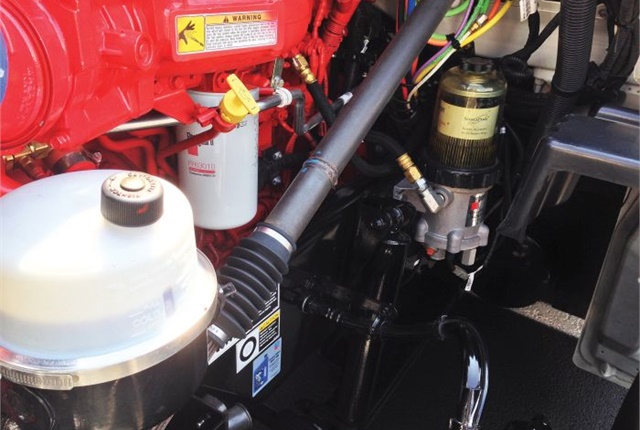
Supplemental fuel processors combine a fuel filter, water separator and heater all in one unit and are designed for severe conditions like extreme cold. Photo: Cummins Filtration

">

Supplemental fuel processors combine a fuel filter, water separator and heater all in one unit and are designed for severe conditions like extreme cold. Photo: Cummins Filtration

">

Where's the value in putting a $40,000 engine at risk just to save a few bucks on a fuel filter?

It's not always clear when a fuel filter is doing its job. You put it on, you change it for another one a few months later, and since nothing bad happened to your engine in the interim you have to believe the filter worked. Few fleets cut them open to see how well they worked. Even if you did, you likely wouldn't see anything alarming, unless you have a serious fuel system or fuel quality problem.

Contamination comes in many forms. There's ever-present water and debris from the bottom of the fuel storage tanks. Microbial growth in fuel tanks can form algae, which can be ingested by the fuel intake line. And poorly maintained fuel systems can contain rust or other particulates.

If you're not satisfied with the life of your fuel filters, it's probably not the filter you need to investigate.

“At times, variability in fuel quality (high contaminant content, additives and additive drop-out, glycerin from biodiesel production) manifests itself in the form of short filter life,” says Scott Grossbauer, global manager for clean solutions at Donaldson. “In reality, the filter is doing its intended job of removing particles of a size range at a particular efficiency and delivering contaminant holding capacity designed for the intended use.”

Today's high-pressure fuel systems, with their extremely close internal tolerances, do not respond well to contaminated fuel.

“The average gallon of fuel can contain over 18 million potentially harmful particles, which can wear down critical components in your engine,” says Cindy Hawkins, global product manager for fuel at Cummins ...Read the rest of this story

Truck Tonnage Drops Slightly After Strong January

<img width="150" src="http://www.automotive-fleet.com/fc_images/news/m-truck-tonnage-feb-1.jpg" border="0" alt="

Source: ATA

">

Source: ATA

">

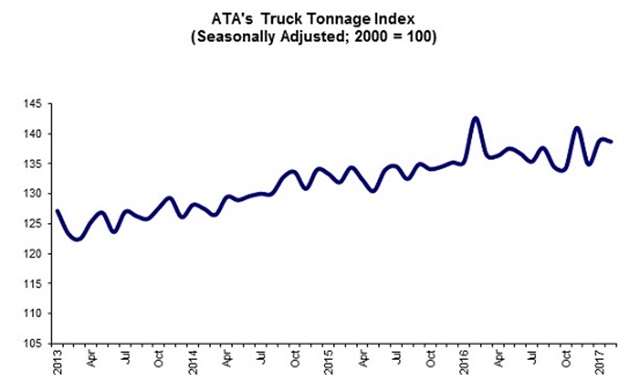
The American Trucking Association's advanced seasonally adjusted For-Hire Truck Tonnage Index declined slightly in February following a solid increase the month before.

In February, the Truck Tonnage Index declined 0.1% to a reading of 138.7, down from 138.9 in January. It was also down compared to last February when the Truck Tonnage Index hit its all-time high of 142.7, a decrease of 2.8%.

“February's numbers, especially the year-over-year drop, might surprise some as several other economic indicators were positive in February,” said Bob Costello, ATA chief economist. “However, I'm not worried about the decline from February last year as it was really due to very difficult comparisons more than anything else: February 2016 was abnormally strong."

Without seasonal adjustment, the February Truck Tonnage Index equaled 125.5, which was down 4.6% from January's 131.7. January's reading saw both monthly and yearly increases by comparison.

“Looking ahead, signs remain mostly positive for truck tonnage, including lower inventory levels, better manufacturing activity, solid housing starts, good consumer spending, as well as an increase in the oil rig count – all of which are drivers of freight volumes,” said Costello.

Analysis: Freight Rate Thaw May Be in the Works

Follow @HDTrucking on Twitter

...Read the rest of this story