ZF Reports Positive 2016 Results

ZF Reports Positive 2016 Results

<img width="150" src="http://www.automotive-fleet.com/fc_images/news/m-zftraxontransprodfriedrichhausen-1.jpg" border="0" alt="

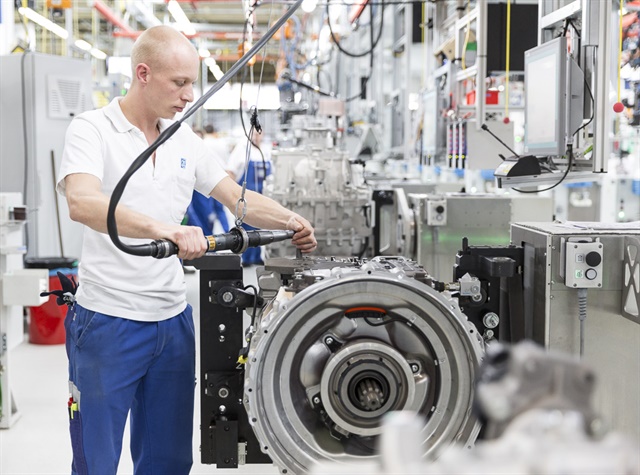
Production of the ZF TraXon heavy-truck automatic transmission in the company's Friedrichshafen, Germany plant. Photos: ZF

">

Production of the ZF TraXon heavy-truck automatic transmission in the company's Friedrichshafen, Germany plant. Photos: ZF

">

Global component supplier ZF Friedrichshafen AG reported on March 30 that it closed its 2016 fiscal year with a “significant rise in profits and a strong improvement in cash flow.” The upshot is the Germany-based company is poised for further growth.

The company said that sales for the fiscal year rose by 20.6% to €35.2 billion ($37.6 billion) while its adjusted EBIT (earnings before interest and taxes) margin rose one percentage point to 6.4% and its adjusted free cash flow totaled €2 billion ($2.1 billion).

ZF said that thanks to being in this strong financial position, it was able to cut its debt from the acquisition of Michigan-based TRW by €1.6 billion ($1.7 billion) while increasing spending on research and development to €2 billion ($2.1 billion).

In 2017, the company said it is targeting sales of approximately €36 billion ($38.4 billion) and an adjusted EBIT margin of more than 6%.

“ZF demonstrated its strength in 2016 with outstanding business figures and innovative products,” said CEO Dr. Stefan Sommer. “This strength gives us a solid foundation to help shape the challenging transformation in the automotive industry through digitalization, electromobility and autonomous driving.”

CFO Konstantin Sauer noted that ZF's “sound income and financial power in 2016 as well as our strong free cash flow of more than €2 billion allowed us to quickly reduce the debt from the TRW acquisition and simultaneously invest in future technologies.”

Sommer stressed that given its current financial position, ZF can “afford to invest heavily in future-oriented technology.” He said that the company is now “grasping the opportunity of transforming itself into a leading technology company in e-mobility and autonomous driving.

“Our strength is our combination of hardware and software,” Sommer added. “So we produce intelligent mechanical ...Read the rest of this story

Clear the Way: Bypass programs perfect carrot to offset enforcement stick

I was introduced to the concept of a hospital triage by watching episodes of MASH in the 1970s and early ‘80s. Centered around the happenings of a Mobile Army Surgical Hospital during the Korean War, the show's TV doctors were regularly seen moving through the latest batch of wounded soldiers, deciding who could wait and who needed immediate attention. (They also looked for new ways to torment Frank Burns, but I digress.) ...Read the rest of this story

Rail Management Services Goes Electric

<img width="150" src="http://www.automotive-fleet.com/fc_images/news/m-t-series-charging-1.jpg" border="0" alt="

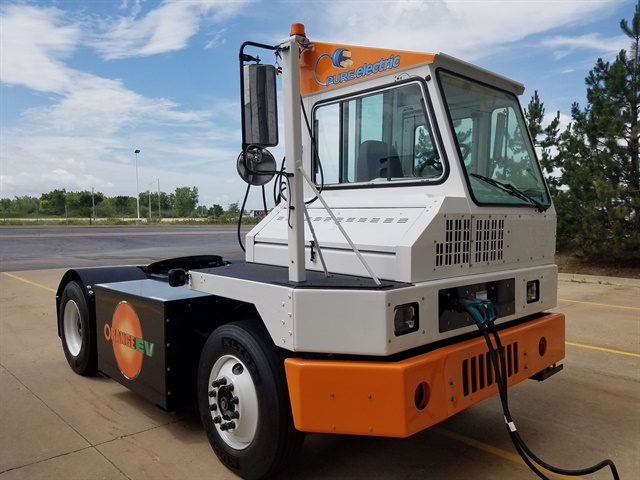
Orange EV's terminal truck. (Photo courtesy of Orange EV). 

">

Orange EV's terminal truck. (Photo courtesy of Orange EV). 

">

Rail Management Services (RMS) has placed a follow-on order for nine additional Orange EV T-Series pure electric terminal trucks. RMS, one of the largest rail intermodal yard operators in the United States, operates a fleet of more than 700 heavy-duty vehicles.

RMS purchased its first Orange EV truck in July 2016 for use at a Class 1 rail yard in Chicago.

"Based on the success of this first truck, RMS initiated a nine-truck reorder in January of 2017. The trucks are being worked into onsite fleets to supplement and replace RMS's diesel trucks. Five of the trucks will be deployed at the same Chicago rail yard while four will be utilized at rail sites in New York," said Mike Saxton, Orange EV chief commercial officer.

The trucks operate around 10 to 12 hours each day of "key on" work. According to Saxton, this is expected to increase as the fleet evolves and incorporates the fast-charging option.

Railyards and other container handling operations are often located in designated nonattainment areas. Switching from diesel yard trucks to electric provides immediate emissions reductions and health benefits for workers and surrounding communities. While figures vary by site, Orange EV estimated the per truck emissions eliminated in rail intermodal hub operations annually can be up to 160 tons of CO2, 1.7 tons of NOx, 1.6 tons of CO, and 80 kg of PM.

Ed Morgenthaler, VP of maintenance, safety, legal and operations for RMS, estimated that the Chicago yard ranks as one of the top five toughest sites of its 40-plus facilities across the U.S.

"We put the Orange EV truck in Chicago at one of our toughest ramps. It's one of the larger facilities in the
country and has been active for decades making the terrain harsh on hostlers," ...Read the rest of this story

IN PRINT — The Quest for Uptime: It begins with Preventive Maintenance checks

We're learning. We are doing a better job at keeping trucks out of the shop and out on the road earning money, but it's been a steep learning curve. Ever since the first Diesel Particulate Filters appeared in 2007, fleets have been struggling to diagnose problems and make the necessary repairs. One of the greatest hurdles has been confusing messages and sometimes misleading information. Various sensors are often the culprit, but for the technicians working through the problem the troubleshooting exercise was at first new and unfamiliar. ...Read the rest of this story