Trucking’s Share of Cross-Border Freight Declines

Trucking’s Share of Cross-Border Freight Declines

<img width="150" src="http://www.automotive-fleet.com/fc_images/news/m-figure-1-crop-1.jpg" border="0" alt="

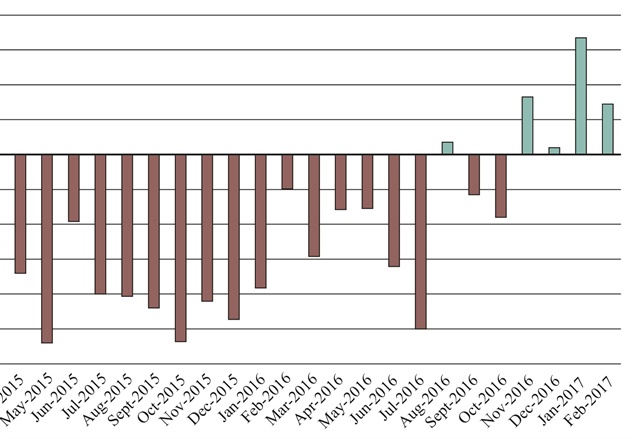
U.S.-NAFTA freight value percent change from previous year over past 24 months. Graphic: U.S. DOT

" >

U.S.-NAFTA freight value percent change from previous year over past 24 months. Graphic: U.S. DOT

" width="375"> Trucking was not a part of the overall increase in the value of freight moved between the U.S. and its North American Free Trade Agreement partners during February, according to new Transportation Department figures.

U.S.-NAFTA freight totaled $86.5 billion for the month, as three major transportation modes, pipeline, vessel and rail, carried more freight by value between the U.S. and Canada and Mexico

The 2.9% rise marked the fourth consecutive month in which the year-over-year value of U.S.-NAFTA freight increased from the same month a year earlier.

The value of commodities moving by pipeline increased 65.2%, vessel by 36.9%, and rail by 7%. Air decreased by 1.6% and truck fell by 3.6%.

The large percentage increase in the value of goods moving by pipeline and vessel was largely due to a 76% increase in the year-over-year price of crude oil, according to the department.

The top commodity transported by truck in U.S.-NAFTA trade, computer related machinery and parts, was down in value by 10.7% in February compared to a year earlier.

Trucks carried 63.2% of U.S.-NAFTA freight and continued to be the most heavily utilized mode for moving goods to and from both U.S.-NAFTA partners. Trucks accounted for $28.1 billion of the $47.2 billion of imports, or 59.7%, and $26.5 billion of the $39.3 billion of exports, or 67.4%.

Rail remained the second largest mode by value, moving 16.2% of all U.S.-NAFTA freight.

U.S.-Canada Freight Moves 4.2% Higher

The value of U.S.-Canada freight flows increased by 4.2% in February to $44.4 billion as the value of freight on three major modes increased from a year earlier. The value of freight carried on pipeline increased by 69.7%, rail by 6.3%, and vessel by 1.2%.

Air decreased by 1.5%, and truck by 2.2%. The increase in ...Read the rest of this story
Driving Volvo’s SuperTruck

<img width="150" src="http://www.automotive-fleet.com/fc_images/articles/m-st-1.jpg" border="0" alt="

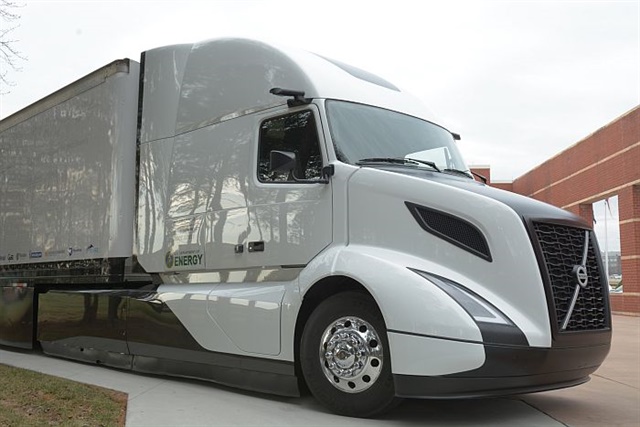
Volvo's SuperTruck uses advanced engine programming to reduce energy consumption and old-fashioned aerodynamics to reduce drag. Photos: Jim Park

">

Volvo's SuperTruck uses advanced engine programming to reduce energy consumption and old-fashioned aerodynamics to reduce drag. Photos: Jim Park

">

What you can see of Volvo's SuperTruck vehicle is pretty spectacular, though fairly plain at heart. It's what you can't see that stirs the imagination.

Volvo opened the doors to its SuperTruck to journalists for the first time in February, and my colleague, Senior Editor Jack Roberts, and I were the first two through the door. This was an usual test drive experience in that we weren't evaluating steering and braking and cab noise or even driver comfort. This drive was about experiencing the advanced technology born of the Department of Energy matching funding and getting a glimpse of what you could be driving two to five years from now.

The dashboard, driver area and sleeper interior are stock Volvo VNL 780. Our tour guide, Keith Brantley, senior project manager for the complete vehicle, says the design team saw no point in revamping the interior because it made no direct contribution to the goals of the project.

However, the exterior of the cab is brand new.

Designers optimized the roofline and the frontal profile of the truck to minimize aerodynamic drag. The cab is 3 inches taller and 8 inches longer than a standard VNL, and narrower at the front than at the back. The custom-made windshield is steeply raked and dramatically curved to match the cab and hood profile. The hood is so severely sloped that it was impossible to see from the driver's seat. It was like driving a cabover.

The trailer is fitted with a boat tail on the back, a gap-reduction device on the nose, and full-length and full-height skirts on the sides. Those skirts were widely criticized, as they have been on other SuperTruck projects, as being completely impractical in the real ...Read the rest of this story

SAF-Holland and ACOFAS Team up for Tech Training Program

<img width="150" src="http://www.automotive-fleet.com/fc_images/news/m-acofas-1.jpg" border="0" alt='

Photo via

Photo via ACOFAS Facebook

'>

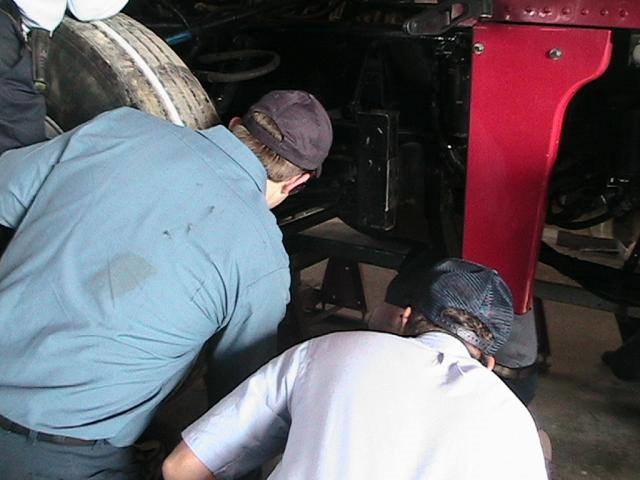
SAF-Holland is teaming up with the American Council of Frame and Alignment Specialists for a technician education program taking place June 27-28 in Muskegon, Mich.

The program will cover proper maintenance and repair procedures on SAF-Holland and Neway products, including the FW35 Holland fifth wheel and the latest lightweight fifth wheel assemblies, Neway drive axle Air suspensions used on heavy trucks and emergency equipment, SAF Holland air suspensions for trailers, and SAF Holland's air disc brakes.

The event will take place at SAF-Holland's facilities located at 1950 Industrial Blvd., in Muskegon. The host for the event is Carl Mesker, SAF-Holland vice president of aftermarket sales.

Instructors and topics will include:

Tony Ryan, SAF-Holland air disc brakesRon Nissen, SAF-Holland fifth wheelMike Edlund, New SAF-Holland and older Neway air suspensionMarc Johnson, liftable and steerable suspensions

The training program is limited to 20 attendees and registration is currently open.

To find out more about the event and register, go to acofas.com or contact Gordon Botts, [email protected] or 815-482-4255.

Related: International RH Truck Offers SAF-Holland Fifth Wheel

Follow @HDTrucking on Twitter

...Read the rest of this story