Trump Comments on Fuel Taxes for Highway Infrastructure

Trump Comments on Fuel Taxes for Highway Infrastructure

<img width="150" src="http://www.automotive-fleet.com/fc_images/news/m-trucks-whitehouselawn.jpg" border="0" alt="

Sounds like Donald Trump was listening when ATA visited the White House. Photo: American Trucking Associations

">

Sounds like Donald Trump was listening when ATA visited the White House. Photo: American Trucking Associations

">

A visit from the trucking community to the White House may have resulted in a comment about fuel taxes by President Trump in an interview that led to widespread reporting that the president would consider raising fuel taxes to help pay for infrastructure. His press secretary later emphasized that the comments did not indicate support for such a strategy.

"It's something that I would certainly consider," Trump told Bloomberg News. A higher gas tax has the support of truckers "if we earmarked money toward the highways," he said.

However, White House press secretary Sean Spicer Monday, when questioned about the interview, emphasized that the president did not express support for a fuel tax.

"What the president said during that interview is that folks from the industry had come to him and expressed to him how the deteriorating roads were affecting their ability to deliver goods and services throughout this country, and that they had expressed a willingness to see something like that as a way to help pay for and repair the roads and bridges.”

While Spicer did not name the “folks from the industry,” American Trucking Associations has formed a highway funding task force and did meet with the president at the White House in late March.

“People ask the president all the time, ‘Please consider this policy,' and he has an open mind,” Spicer said. “And I think that's frankly what the president was doing.”

The federal government has not raised the excise tax on diesel and gasoline since 1993.

In an interview on CNBC, Trump infrastructure advisor and real estate developer Richard Lefrak from The Lefrak Organization admitted that a fuel tax is one of the third rails of politics. “I believe it's ...Read the rest of this story

Trump “considers” truckers’ call for fuel tax increase

Dealmaker-in-chief to keep “open mind” as infrastructure plan develops With potentially conflicting campaign promises to lower taxes and to come up with a trillion dollars to upgrade the nation's infrastructure, President Trump on Monday acknowledged the trucking industry's concern over the deteriorating condition of highways and bridges—and he opened the door to raising the federal tax on gasoline and diesel for the first time in almost 25 years.

read more

...Read the rest of this story

Ancra Launches New, Mobile-Friendly Website for Cargo Products

<img width="150" src="http://www.automotive-fleet.com/fc_images/news/m-ancra-homepage-1.jpg" border="0" alt="

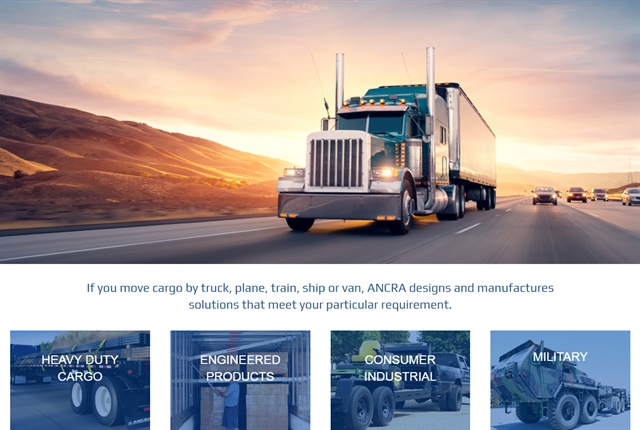
Screenshot of the Ancracargo.com homepage.

">

Screenshot of the Ancracargo.com homepage.

">

Ancra International, which makes cargo handling and restraint systems for the transportation industry, has launched a brand new website for its cargo division with a new design at www.ancracargo.com.

The new website is designed to provide faster and easier access to essential information and features for a more comprehensive look at Ancra's cargo control products and services. The company's previous URL at www.ancra.com will now be exclusively for its aircraft products division.

The website was created with the goal of improving user-friendliness and appeal and to increase the visibility of its products. In addition to the new URL and changes in design and layout, the website will offer more information through new literature and videos, along with a blog that will feature new products and announcements from Ancra related to its cargo control products.

The site is designed to be mobile and tablet friendly, and Ancra will also be focusing on increasing its social media presence.

Related: Acquisition Brings Automatic Truck-Loading Tech to U.S.

Follow @HDTrucking on Twitter

...Read the rest of this story

Senators Ask GAO to Examine Impact of Autonomous Technology on Trucking

<img width="150" src="http://www.automotive-fleet.com/fc_images/news/m-auto-pete-inside-1.jpg" border="0" alt="

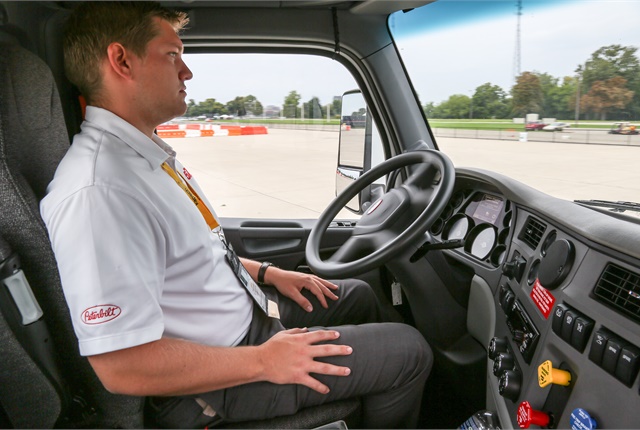
Two U.S. Senators  asked the General Accounting Office to look at the impact autonomous vehicle technology will have on more than 2 million Americans who work in, or support, the trucking industry. Photo: Peterbilt

">

Two U.S. Senators  asked the General Accounting Office to look at the impact autonomous vehicle technology will have on more than 2 million Americans who work in, or support, the trucking industry. Photo: Peterbilt

">

If you're concerned about the potential impact autonomous vehicle technology will have on truck drivers in the future, you're not alone. On April 26, 2017, Senators Susan Collins (R-ME) and Jack Reed (D-RI) sent a letter to the U.S. Government Accountability Office asking it to look into how it will affect truck drivers and the communities where they live. The senators also want to know what steps are being taken now to help American truck drivers who may be unseated from their jobs adapt and retrain.

The senators noted that nearly 2 million people today earn their living operating and repairing heavy trucks and tractor-trailers, at an average salary of over $40,000 per year, according to the Bureau of Labor Statistics. These workers tend to be concentrated in more rural states where employment options may be limited. There is also an entire economic ecosystem of businesses and workers whose employment models depend on truck drivers regularly stopping to eat, drink, rest, and refuel that will also be impacted by the shift to driverless cars and trucks.

In their joint letter, Senators Collins and Reed, who is the ranking member of the Senate's Transportation and Housing and Urban Development Appropriations Subcommittee, asked the GAO to look at three main issues surrounding the adoption of autonomous vehicle technology in the trucking industry:

What is known about the speed at which automated vehicle technology may be adopted by businesses to replace the current fleet of vehicles used to transport goods and deliver services? To what extent is the adoption of this technology expected to affect employment levels in related occupations? What is ...Read the rest of this story