<img width="150" src="http://www.automotive-fleet.com/fc_images/articles/m-snuff-1.jpg" border="0" alt="
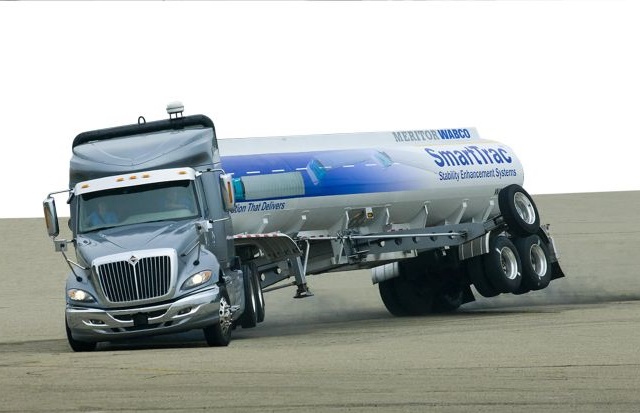
Stability control and collision mitigation systems depend on a fully functioning brake system set to OEM specs. Photo: Meritor Wabco
">
Stability control and collision mitigation systems depend on a fully functioning brake system set to OEM specs. Photo: Meritor Wabco
">With all the advantages provided by today's advanced safety systems, what a shame it would be if they couldn't live up to their potential because of poorly maintained foundation brakes or inadequate friction material.
Stability control systems, for example, use a variety of sensor inputs to figure out what's going on and then use various algorithms to trigger an intervention to mitigate or prevent a rollover or loss of control event. The system will command the brakes to deliver as much power as is needed to change the outcome of the situation — but if the brakes aren't operating as designed, the outcome might not be as you expected.
“By not paying attention to the fundamentals, you're putting at risk the money you invested in those advanced safety systems,” says Fred Andersky, director of customer solutions and marketing, controls division, at Bendix Commercial Vehicle Systems. “Your advanced safety system may not be able to help when you need it most.”
Advanced safety systems, including electronic stability control, roll stability, or the more comprehensive systems such as Bendix's Wingman Advanced or Wingman Fusion, Meritor Wabco's OnGuard or Daimler's Detroit Assurance, are all engineered around a braking system that's in showroom condition. The systems can tolerate normal wear and tear, component degradation, etc., but they can't function as intended if parts are seized, out of adjustment or missing, any more than they can cope with bad electrical connections, corroded wires or a bad air supply.
There's not enough room here to go into everything that can go wrong at the wheel-end with foundation brakes. We all know what those problems are, but it's important to note that they can inhibit performance of your safety system.
Fleets can inadvertently