Why Amazon decided to offer an even cheaper version of Prime

California Carrier Doubles CNG-Powered Fleet Size

<img width="150" src="http://www.automotive-fleet.com/fc_images/news/m-matheson-cng.jpg" border="0" alt="

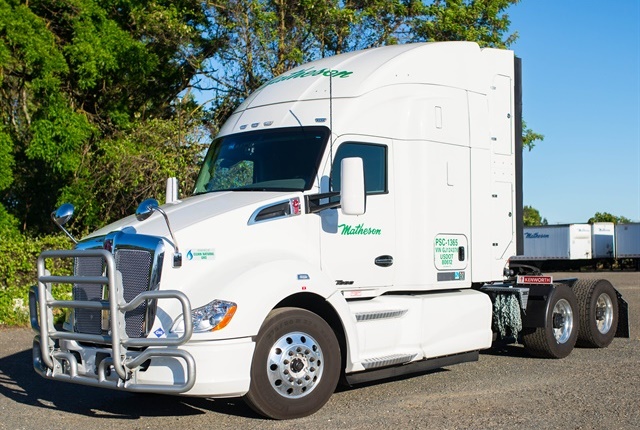
Matheson Trucking has announced it will add 27 new CNG-powered tractors to its fleet this year. Photo: Matheson Trucking

">

Matheson Trucking has announced it will add 27 new CNG-powered tractors to its fleet this year. Photo: Matheson Trucking

">

A Sacramento, California, fleet is adding 27 new compressed natural gas tractors to its clean energy fleet – a move that will increase the company's total to 64 alternative energy vehicles by year's end.

Despite the falloff in interest in CNG-powered trucks after diesel prices returned to “normal” levels, chief operating officer Charles Mellor said Matheson Trucking remains dedicated to a policy of increasing the use of clean energy fuels to improve air quality, decrease diesel fuel consumption and reliance on foreign oil, while helping to preserve the environment. “These new CNG tractors – with more to come – are part of that ongoing commitment," Mellor said.

Mellor said Matheson typically logs approximately 600 trips each day, totaling an average of 98,600 miles per day driven nationwide. And using natural gas-powered trucks helps the fleet reduce greenhouse gas emissions by approximately 30% compared to diesel with significant reductions in sulphur oxide and nitrogen oxide as well as 40% less CO2 (carbon dioxide).

Matheson began converting its fleet to clean energy-powered tractors in 2014. Last year the company had 25 CNG and 12 liquefied natural gas (LNG) tractors for a total of 37. This year 27 new CNG tractors are being added. Fifteen of these already support U.S. Postal Service shipments to and from the Los Angeles basin and Las Vegas, and 12 more will be ordered and placed in service this fall in Denver. They bring the company's alternative energy fleet inventory to 64 tractors, or 26% of its fleet. Across all divisions Matheson's fleet now numbers 286 tractors pulling a mix of 342 trailers.

"Our new CNG tractors display a fresh, contemporary brand identity with a logo symbolizing our growth and transformation, while also celebrating ...Read the rest of this story

California Carrier Doubles CNG-Powered Fleet Size

<img width="150" src="http://www.automotive-fleet.com/fc_images/news/m-matheson-cng.jpg" border="0" alt="

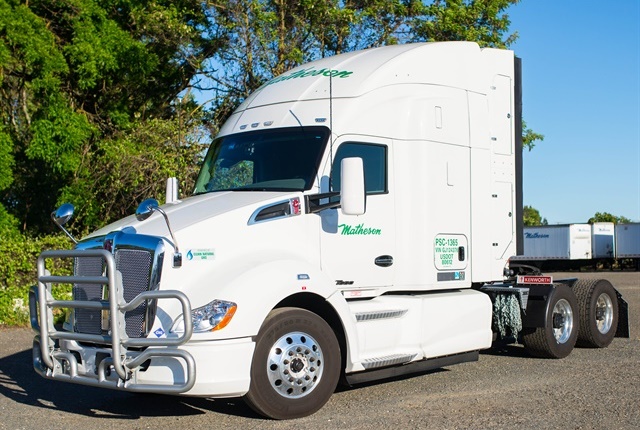
Matheson Trucking has announced it will add 27 new CNG-powered tractors to its fleet this year.

Photo: Matheson Trucking

">

Matheson Trucking has announced it will add 27 new CNG-powered tractors to its fleet this year.

Photo: Matheson Trucking

">

A Sacramento, CA, fleet is adding 27 new compressed natural gas (CNG) tractors to its clean energy fleet – a move that increase the company's total to 64 alternative energy vehicles by year's end.

Despite the falloff in interest in CNG-powered trucks after diesel prices returned to “normal” levels, chief operating officer Charles Mellor, says Matheson Trucking remains dedicated to a policy of increasing the use of clean energy fuels to improve air quality, decrease diesel fuel consumption and reliance on foreign oil, while helping to preserve the environment. “These new CNG tractors – with more to come – are part of that ongoing commitment," Mellor said.

Mellor says Matheson typically logs approximately 600 trips each day, totaling an average of 98,600 miles per day driven nationwide. And using natural gas-powered trucks helps the fleet reduce greenhouse gas (GHG) emissions by approximately 30% compared to diesel with significant reductions in sulphur oxide and nitrogen oxide as well as 40% less CO2 (carbon dioxide).

Matheson began converting its fleet to clean energy-powered tractors in 2014. Last year the company had 25 CNG and 12 liquefied natural gas (LNG) tractors for a total of 37. This year 27 new CNG tractors are being added. Fifteen of these already support USPS shipments to and from the Los Angeles basin and Las Vegas, and 12 more will be ordered and placed in service this fall in Denver. They bring the company's alternative energy fleet inventory to 64 tractors, or 26% of its fleet. Across all divisions Matheson's fleet now numbers 286 tractors pulling a mix of 342 trailers with an average length of 53 feet.

"Our new CNG tractors display a fresh, contemporary brand identity with a logo symbolizing our growth ...Read the rest of this story

A Changing Climate: Is There Still a Case for Greener Trucks?

<img width="150" src="http://www.automotive-fleet.com/fc_images/articles/m-propane-perc-ups-193-hires-2.jpg" border="0" alt="

UPS is among the companies that are committed to exploring alternative fuels and drivetrains. Photo: UPS

">

UPS is among the companies that are committed to exploring alternative fuels and drivetrains. Photo: UPS

">

Black smoke was once the inky signature of diesel engines everywhere. Now it has all but disappeared. A 1998 model year truck actually belched 35 times more smog-producing NOx and 60 times more particulate matter than equipment built to meet 2010 emissions standards, and that's before regulators turned their attention to greenhouse gases.

The trucking industry's environmental gains have not been limited to diesel, of course. Clean-burning fuels from natural gas to propane autogas, and even battery power, are now viable options, especially where medium-duty trucks and predictable operating ranges are involved. Nikola Motors has taken a further leap, pledging to produce electric Class 8 trucks as early as 2020, and Tesla says it will unveil one come September.

Still, there is no mistaking a change in the underlying business climate. Steep diesel prices helped to make the business case for alternative-fueled equipment, which tends to come with premium price tags. Now diesel is relatively cheap. A new administration in the White House, meanwhile, wants to slash funding for the U.S. Environmental Protection Agency, which largely sets the emissions rules.

But don't prepare to burn coal dust just yet. The push for cleaner air continues, even if it originates from a source other than the federal government. California, for example, remains committed to reducing greenhouse gases to 1990 levels by 2020. “In California we are not debating climate science,” said Jack Kitowski, chief of the California Air Resources Board's mobile source division, in a presentation during the Green Truck Summit in Indianapolis earlier this year. “The facts will end up speaking for themselves.”

Then there's the fact that increasingly, truck makers are designing for a global audience, and while President Trump may have just pulled out of the Paris ...Read the rest of this story