No Cab? No Driver? No Problem.

No Cab? No Driver? No Problem.

<img width="150" src="http://www.automotive-fleet.com/fc_images/news/m-tpod-1.jpg" border="0" alt="

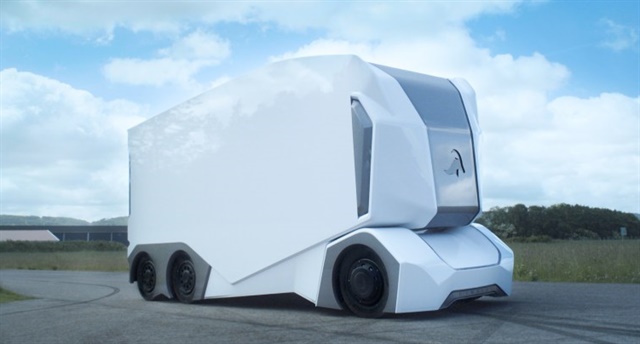
The T-Pod is an all-electric autonomous truck capable of running 124 miles on a single battery charge. Photo: Einride

">

The T-Pod is an all-electric autonomous truck capable of running 124 miles on a single battery charge. Photo: Einride

">

A Swedish automotive startup has unveiled a peek at the future of autonomous trucking-- as of right now. On July 4, Einride rolled out its new T Pod concept truck during the Almedalsveckan Week event in Visby, Sweden. The new truck is a 23-foot long, 4,000-pound straight truck capable of hauling 15 pallets worth of cargo in urban delivery applications.

The T Pod is interesting firstly because it is an all-electric design with an estimated range of 124 miles on one charge, and secondly because it is a fully autonomous design. There is no driver in the T Pod. In fact, there is not even cab for a driver to sit in. Einride has designed the T Pod from the ground up as a completely driverless vehicle.

The company said that, initially, the T Pod can be controlled remotely by human drivers, although it is working to establish the necessary infrastructure and support elements that will eventually allow the truck to operate completely autonomously without any active human input whatsoever.

According to reporting from The Verge, Einride is planning to develop a complete autonomous transport network complete with charging stations connecting the Swedish cities of Gothenburg and Helsingborg by 2020.

Eventually, the company said, it will have as many as 200 T Pod trucks working the route capable of handling up to 2 million pallets of cargo annually. According to Einride, T Pod models on this route would save the equivalent Co2 emissions of 400,000 passenger cars annually.

Related: Global Self-Driving Market Expected to Grow 40% by 2027

Follow @HDTrucking on Twitter

...Read the rest of this story

Daimler “prints” first metal truck part

STUTTGART, GERMANY – Engineers working for Daimler's European truck brand, Mercedes-Benz Trucks, have successfully used a 3D printer to create a metal thermostat cover – proving a process that could reshape the way spare metal parts are produced and distributed. With the potential of decentralizing production, 3D printing could improve parts availability, shorten delivery times, and reduce warehousing and distribution costs, the company notes. Daimler's brands in North America include Freightliner and Western Star. "With the introduction of 3D metal printing technology, Mercedes-Benz Trucks is reasserting its pioneering role among global commercial vehicle manufacturers," said Andreas Deuschle, head of marketing and operations – customer services and parts with Mercedes-Benz Trucks. "We ensure the same functionality, reliability, durability and cost-effectiveness with 3D metal parts as we do with conventionally produced parts." ...Read the rest of this story

Minimizer releases new floor mats for Western Star trucks

Minimizer has released five all-new custom molded floor mat kits to fit 2016-2018 Western Star trucks.

“It's exciting to know that we now have nearly every Western Star truck released over the past couple years covered … literally,” Minimizer CEO Craig Kruckeberg said. “Our Custom Molded Floor Mats are designed to be a perfect fit, which can be tough logistically, but I'm proud to say our R&D team has pulled it off.”

read more

...Read the rest of this story

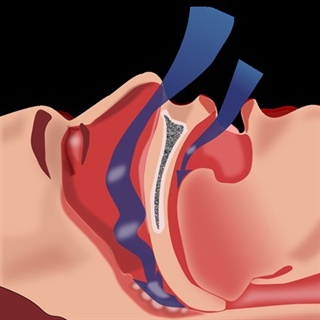
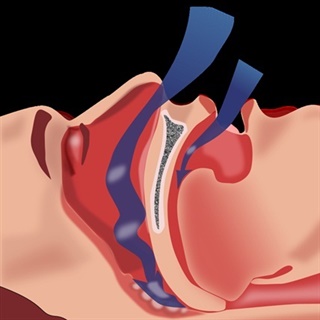
Feds Withdraw Sleep Apnea Pre-Rule

The Federal Motor Carrier Safety Administration and the Federal Railroad Administration have withdrawn their advance notice of proposed rulemaking on obstructive sleep apnea.

The so-called “pre-rule” was jointly issued in March 2016. It was regarded by the two agencies as merely “the first step” in considering whether to propose specific requirements around OSA for commercial vehicle drivers and rail workers in “safety sensitive positions.”

FMCSA and FRA said in an Aug. 4 announcement of the withdrawal that the agencies have “determined not to issue a notice of proposed rulemaking at this time and believe that current safety programs and FRA's rulemaking addressing fatigue risk management are the appropriate avenues to address OSA.”

The agencies did stress that “OSA remains an ongoing concern for the agencies and the motor carrier and railroad industries because it can cause unintended sleep episodes and resulting deficits in attention, concentration, situational awareness, and memory, thus reducing the capacity to safely respond to hazards when performing safety sensitive duties.”

The 2016 pre-rule (RIN 2126-AB88 and 2130-AC52), titled “Evaluation of Safety Sensitive Personnel for OSA,” had sought to obtain “data and information concerning the prevalence of moderate-to-severe obstructive sleep apnea among individuals occupying safety sensitive positions in rail and highway transportation.”

The agencies also had requested information about the potential economic impact and safety benefits associated with “regulatory actions that would result in transportation workers in these positions, who exhibit multiple risk factors for OSA, undergoing evaluation by a healthcare professional with expertise in sleep disorders, and subsequent treatment.”

In its notice of withdrawal published in the Federal Register, the agencies stated they had received more than 700 comments from individuals, medical professionals, labor groups, and transportation industry stakeholders as well as the National Transportation Safety Board.

FMCSA added that it “reminds medical examiners that there are no FMCSA rules or other ...Read the rest of this story