Valeant reports 2Q loss
On a per-share basis, the Laval, Quebec-based company said it had a loss of 11 cents. Earnings, adjusted for one-time gains and costs, were $1.05 per share. The results surpassed Wall Street expectations. ...
On a per-share basis, the Laval, Quebec-based company said it had a loss of 11 cents. Earnings, adjusted for one-time gains and costs, were $1.05 per share. The results surpassed Wall Street expectations. ...
UN Ambassador Nikki Haley on Tuesday slammed an apparent leak of classified details about US...
Sen. Dean Heller of Nevada's tough road to reelection was hit with a new twist Tuesday...
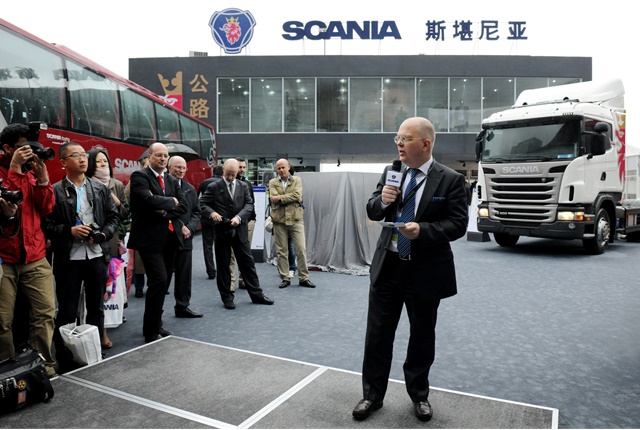
Helping fuel a strong drive toward European trucks is a new emphasis on total ownership costs, the Bain study found. Photo: Scania
">Helping fuel a strong drive toward European trucks is a new emphasis on total ownership costs, the Bain study found. Photo: Scania
">A full 20% of Chinese carriers plan to upgrade their trucks and purchase a European-built model with their next vehicle purchase. That's good news for European truck OEMs, which have spent the better part of the past two decades slowly building their reputations and customer base in the world's most populous nation.According to a report compiled by Bain Insights and published on the Forbes website last month, most Chinese carriers still intend to purchase domestic- or European-Chinese-joint venture trucks the next time they upgrade their fleets. But this does little to dampen the good news for European OEMs, which the study found enjoy significantly higher customer loyalty rankings than Chinese and joint venture (JV) trucks.
Moreover, the findings indicate a substantial number of Chinese fleets are prosperous enough now to pay more for better quality trucks, stay with those brands longer, and generate positive word of mouth about the vehicles. Even better: The majority of respondents who indicated a preference for European-built trucks also indicated they plan to purchase new vehicles in the next three years.
According to the Bain analysts, the study also points to a Chinese trucking industry that is maturing rapidly, as more truck buyers there are increasingly focused on total cost of vehicle ownership, including fuel economy. This dovetails with additional shifts in the Chinese trucking industry identified in the report, which notes that early Chinese fleet operations were focused in construction applications as the country launched a massive infrastructure modernization program. But now they appear to be moving toward more logistics-style long- and short-haul applications.
European OEMs still have work to do, the Bain report noted, including localizing production to further reduce acquisition costs and ...Read the rest of this story
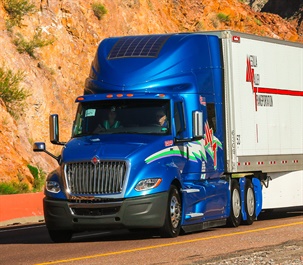
Note the eNow solar panel on the roof fairing of this MVT rig. Photo courtesy MVT.
" >Note the eNow solar panel on the roof fairing of this MVT rig. Photo courtesy MVT.
" width="303" height="265">Mesilla Valley Transportation recently purchased close to 1,000 eNow solar auxiliary energy systems for its fleet of Navistar trucks. It'll be one of the technologies showcased on MVT's entry in the "Run on Less" fuel economy program next month put on by the North American Council for Freight Efficiency.
"We're always looking for innovative, more effective and efficient ways to operate," says Royal Jones, CEO and president of MVT. "Our daily idle time is less than 6% on the whole company fleet and we utilize electric APUs 100%."
The problem is, the electric APUs typically don't last the full rest cycle for drivers, especially in the American Southwest where much of MVT's fleet operates. The solar panels help the electric APUs keep drivers comfortable the entire rest period, Jones explains. In addition, "Over time we had noticed shortened battery life and shortened alternator life due to the demand on batteries and the fact that we run eight batteries."
In testing the solar system from eNow, MVT noted increased daily run time for auxiliary equipment, such as in-cab HVAC; increased battery life from six months to two years; saving approximately 3 gallons of fuel per day from reduced engine idling; and decreased maintenance cost due to reduction in engine idling.
That testing, combined with Navistar's testing of the eNow system on its CatalIST SuperTruck at Navistar Proving Grounds, led to the purchase of the eNow energy systems for the MVT fleet.
This wasn't MVT's first foray into using solar power. MVT had tried making its own system about five years ago, before flexible solar panels were available to the industry, but abandoned the effort when it discovered the loss in aerodynamics created too much of a ...Read the rest of this story
The Latham, New York-based company said it had a loss of 19 cents per share. Losses, adjusted for non-recurring costs, came to 10 cents per share. The results fell short of Wall Street expectations. The ...