CBC story highlights rescue pet trucking network
Deborah Lockridge
" >Deborah Lockridge
" width="226" height="287">It's a matter of physics.
That's what Mark Rosekind, administrator of the National Highway Traffic Safety Administration, said in announcing a proposal to mandate speed limiters in heavy trucks.
“Even small increases in speed have large effects on the force of impact,” Rosekind said in a statement “Setting the speed limit on heavy vehicles makes sense for safety and the environment.”
The proposal, announced Aug. 26 by NHTSA and the Federal Motor Carrier Safety Administration, doesn't call for a specific speed limit. Instead, it outlines the estimated benefits of 60, 65 and 68 mph and asks for comments on the wisdom of those speeds — or what other speeds commenters believe would be best.
The concept of speed limiters on heavy trucks is supported by safety advocacy groups and the American Trucking Associations, although the preferred details differ.
On the other hand, the Owner-Operator Independent Drivers Association has long argued against speed limiters, on the grounds that differentials in speed “increase interactions between vehicles, which increases the likelihood of crashes.”
In reality, many trucks on the road today are speed-limited by their fleet owners for both fuel-saving and safety benefits. In its proposal, the agencies cite a 2012 FMCSA study of 15,000 crashes that analyzed 20 such fleets. Trucks using speed limiters had a ratio of 1.6 crashes per 100 trucks per year, while those without had a ratio of 2.9.
Speed limiters are already a reality in other parts of the world, including Ontario and Quebec (105 kilometers per hour, or about 65 mph), Japan (90 kph/56mph), Australia (100 kph/62 mph, lower for road trains) and the European Union (100 kph/62 mph).
I've been on highways in Germany, where the trucks are speed-limited but in many rural areas of the autobahn there's no speed limit for cars. Plenty of opportunity for big speed differentials ...Read the rest of this story

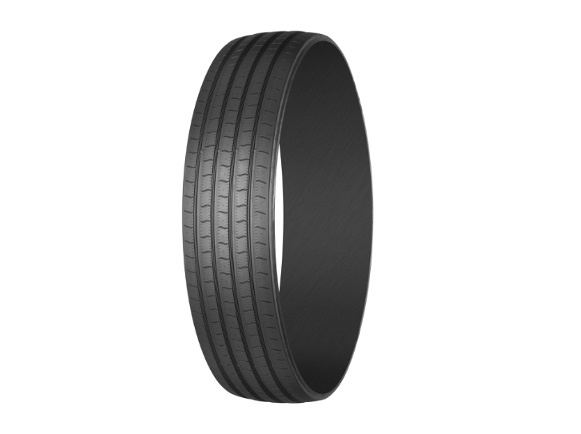
Oliver Rubber Company launched the Orco HS Trailer, a trailer-position retread for regional and long-haul applications designed for cost efficiency.
The Orco HS Trailer makes use of Oliver's tread feature called VDI Plus. The Tread resists stone retention and other road debris and helps enforce any pull point schedule. The retread has a shallow tread depth of 11/32nds for cool running.
The Orco HS Trailer is available in four sizes: 205, 210, 220 and 230. All Oliver retreads carry a national warranty to 2/32nds of tread depth.
"The ORCO HS Trailer delivers a cost-efficient solution for single- and tandem-axle trailers in this new, modern Oliver product," said Adam Murphy, vice president of marketing for Michelin Americas Truck Tires. "It provides a winning combination of long, even wear and excellent wet traction for a variety of trailer applications."
Follow @HDTrucking on Twitter
...Read the rest of this story
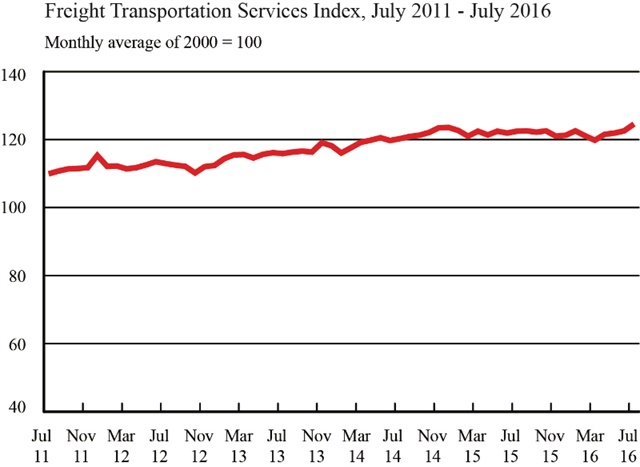
New U.S. Transportation Department figures show the amount of for-hire freight rose 1.6% in July from June, the fourth consecutive monthly gain and a new record high.
The increase places the department's Freight Transportation Services Index (TSI) at a reading of 124.6, while the June measure was revised up to 122.6 from 122.3. Numbers for January through May were also revised up slightly. TSI records go back to 2000.
The gauge measures freight shipments by mode of transportation in tons and ton-miles, which are combined into one index that includes the output of the for-hire freight transportation industry from trucking, rail, inland waterways, pipelines and air freight.
In the first seven months of the year the index is up 2.7% compared to the end of 2015, while it is up 1.7% in July from the same time a year earlier.
According to the report, the July increase of 1.6% from June was due to growth in trucking and rail carloads, while all other modes declined. It was driven by the mining (including oil and gas well drilling and servicing), utility and manufacturing sectors of the economy.
The combined growth in the TSI of 4% percent over the four months through July is the first time the index rose for four consecutive months since December 2014 and is the largest increase over a four-month period since February 2013.
The new high exceeded the previous high of 123.6 in December 2014 by 0.8%. The index has risen 31.6% since the low of 94.7 in April 2009.
Follow @HDTrucking on Twitter
...Read the rest of this story