Groshong to lead Wabash tank business
The American Transportation Research Institute (ATRI), in conjunction with the University of Michigan Transportation Research Institute (UMTRI) and research sponsor ExxonMobil, released results of their investigation of fleet fuel economy and fuel usage.
read more
...Read the rest of this storyThe chart below was just released by ATRI, the American Transportation Research Institute, in A Survey of Fuel Economy and Fuel Usage by Heavy-Duty Truck Fleets.
read more
...Read the rest of this storyDeborah Lockridge
" >Deborah Lockridge
" width="185" height="243">As I write this at the end of September, it's been a dizzying month of technology advances. We're talking a stream of amazing stuff straight out of a science fiction story.
The IAA Commercial Vehicles Show in Germany, for instance, highlighted what in Europe they call “digitization,” along with electric mobility and urban logistics, under the banner of “New Mobility World Logistics.” There were electric vans and autonomous trucks. Heads-up windshield displays with virtual side-view mirrors. Systems that can back up a truck to the dock without a driver at the wheel. Concept urban vehicles with delivery drones and robots and self-loading systems. (We'll have more on what we saw at IAA in next month's issue.)
On the plane trip home, I read a column in the International New York Times suggesting that presidential candidates Donald Trump and Hillary Clinton talk in their first debate about what they're going to do about self-driving trucks.
Then Reuters published an article about Uber's plans to transform the trucking industry, on the heels of its purchase of autonomous truck tech startup Otto. And UPS staged a test using a drone to deliver medication in a hard-to-reach location.
This is all after the Department of Transportation published its first set of guidelines for the development and regulation of autonomous vehicles.
Navistar and Volvo both unveiled their SuperTruck concept trucks, achieving 12 and 13 mpg. The North American Council on Freight Efficiency released a report on two-truck platooning's potential for fuel savings.
And it's not just technology on the truck itself. The TMW/PeopleNet In.Sight conference highlighted how information technology, telematics, the Internet of Things and Big Data can transform the way the transportation industry works, keep the driver connected, and help fleets make better decisions both in real time and for long term strategies.
At FTR's annual conference, along ...Read the rest of this story
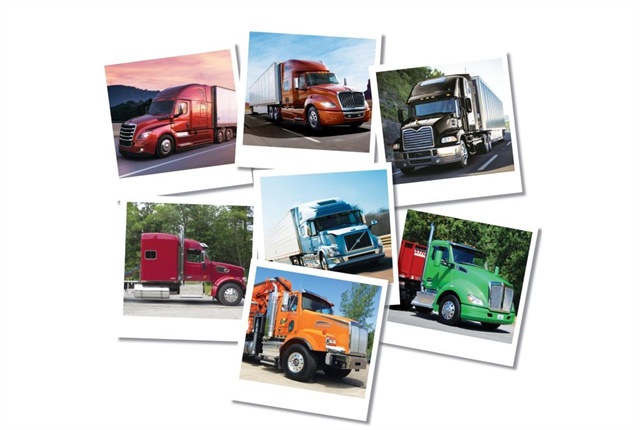
Production cutbacks should reduce heavy truck inventories, but are fleets waiting for new, more fuel-efficient models to appear?
">Production cutbacks should reduce heavy truck inventories, but are fleets waiting for new, more fuel-efficient models to appear?
">Class 8 truck orders have fallen and the truck builders have cut back production, but these are far from bad times for the truck-building industry, and manufacturers say 2016 North American sales should finish up at a respectable 220,000 to 240,000.
“The truck market reflects the good economy and high freight tonnage levels,” says Gary Moore, executive vice president at Paccar, parent of Kenworth and Peterbilt.
John Walsh, vice president, global marketing and brand management at Mack, further explains, “Highway business is off, but construction remains strong, and that's our silver lining, because Mack has always been strong in construction trucks — that and refuse.”
All economic indicators look positive, according to the National Association for Business Economics, whose members predict the gross domestic product will grow 1.5% this year and 2.3% next year. They don't see a downturn until 2018.
Marketers at the truck manufacturers agree: “We still see positive trends in housing construction, automotive sales and in the economy in general for 2017,” says Anthony Gansle, on-highway product manager for Peterbilt. “Next year should also benefit from getting past the election cycle. We would expect the industry to see around the current replacement rate.”
So what's causing the current downturn? Fleet hunger for road-going equipment, to replace worn-out iron run through the Great Recession and beyond, was satiated. But truck builders did not cut back production as soon as they should have.
“Truck inventory is high,” says Walsh. “We were slow to adjust. We had some earlier layoffs, and we're taking down weeks now, one week a month when we're shutting down, through December.”
Steve Gilligan, vice president, product marketing at Navistar International, had another read on the falling orders situation. “In summer the market normally dips,” which ...Read the rest of this story