Category: Trucking News

CVSA Targeting Unsafe Driving During Enforcement/Education Blitz

Law enforcement agencies throughout North America will engage in heightened traffic safety enforcement and education to combat unsafe driving behavior as part of CVSA's Operation Safe Driver Week, taking place Oct. 16-22, 2016.

Enforcement will target specific unsafe driver behaviors this year, including speeding, failure to use a seatbelt while operating or riding as a passenger in commercial vehicles, distracted driving, failure to obey traffic control devices, traveling too closely and improper lane changes.

Last year's Operation Safe Driver Week saw more than 21,000 vehicles pulled over and 19,480 inspections conducted. The most common warnings and citations issued to commercial vehicle drivers last year were for speeding, failure to use a seatbelt, failure to obey a traffic control device and using a handheld phone. Passenger-vehicle drivers were pulled over most often for speeding and were overall pulled over at a higher rate than commercial drivers.

Operation Safe Driver Week is sponsored by the CVSA in partnership with FMCSA and with support from industry and transportation safety organizations.

To find out more about enforcement events going on in your area, contact the agency/department responsible for overseeing commercial motor vehicle safety within your jurisdiction.

Related: Trucks Cited for Size/Weight During Safe Driver Week

Follow @HDTrucking on Twitter

...Read the rest of this story

States Still Dealing With Hurricane Matthew Damages

<img width="150" src="http://www.automotive-fleet.com/fc_images/news/m-flood-damage-nc-1.jpg" border="0" alt="

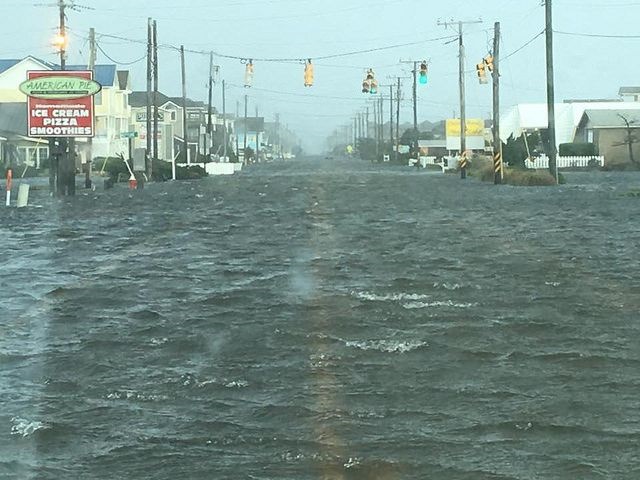
Flooding in Dare County, N.C. Photo: NCDOT

">

Flooding in Dare County, N.C. Photo: NCDOT

">

Hurricane Matthew may be little more than scattered clouds in the Atlantic Ocean at this point, but it left behind damage to highways and other property that could a lot of time and money to clean up.

The storm hit the Southeastern U.S. hard, slamming into Florida as a category 3 storm and dragging along the coast as far north as Virginia before moving out to sea. While the wind and flooding have subsided, state transportation departments are only now fully accessing the damages.

As of Oct. 14, the U.S. death toll from the storm has hit 42 people. Goldman Sachs estimates that when all is said and done, the storm may have caused up to $10 billion in damages, according to a Chicago Tribune report.

In North Carolina a section of southbound Interstate 95 has been washed out by floods and may take as many as three weeks to repair. Until then, NCDOT has diverted traffic to the northbound lanes, creating a two-lane highway detour. Interstate 40 has also been affected by flooding in a 7-mile section near Interstate 95.

The Florida coastal highway A1A may take as long as six months to a year to fix the damage caused by storm surges that washed away large sections of the road. The highway, which follows a thin strip of land adjacent to the main coast, is the primary route to many beaches and towns in the area.

In Virginia's Hampton Roads district, the Virginia Department of Transportation estimated its damages will top the $2 million mark, with at least 44 washed out roads, nine of which will require major repairs. A sinkhole that developed on Route 58 was still being assessed as road crews are waiting for the waters to recede.

Related: Parts of I-95 in ...Read the rest of this story

FMCSA: Utah trucker an ‘imminent hazard’ to public safety

Agency says driver tested positive for methamphetamine and was involved in a crash with a pick-up truck.

The Federal Motor Carrier Safety Administration (FMCSA) has declared Utah-licensed truck driver Eddie D. Price to be an imminent hazard to public safety and has ordered him not to operate any commercial motor vehicle (CMV) in interstate commerce. Price was served the federal order on Oct. 12, 2016, according to the agency.

read more

...Read the rest of this story

After 43 Years, Learning the Other Side of Vapor Recovery

<img width="150" src="http://www.automotive-fleet.com/fc_images/blogs/m-img-20161011-111900303-hdr-1.jpg" border="0" alt="

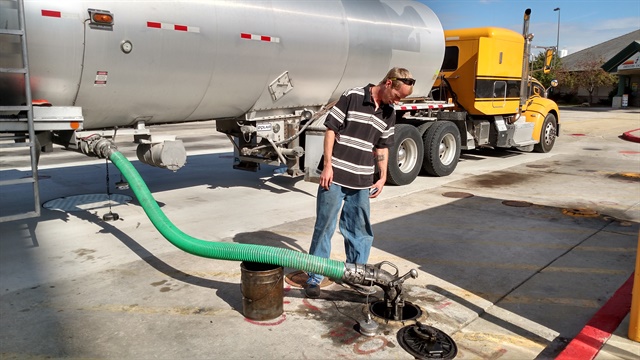
Driver Jeff McMannus checks progress as he delivers a load of biofuel. He was careful to avoid spills. Photos: Tom Berg

">

Driver Jeff McMannus checks progress as he delivers a load of biofuel. He was careful to avoid spills. Photos: Tom Berg

">

It's good to get out on the road and see what's going on. While driving across northern Illinois the other day I pulled off I-80 and into a Flying J truck stop and, after using the facilities and buying a bottle of pop, walked out to the fueling area to photograph some of the more colorful rigs.

In that few minutes, a tanker moved along one side of the complex and stopped. Its driver laid down a hefty hose and connected it to the wet line beneath the tanker. He had put a bucket under the connecting point to catch any spillage. There wasn't any, but I thought, this guy's being careful.

He dropped the hose's nozzle into place where he had removed a cover in the pavement. Then he returned to the tanker, twisted a valve handle, and the unseen product began flowing into the underground tank. I thought was a shipment of diesel fuel.

“Not diesel,” said driver Jeff MacMannus. “Biofuel.”

"You mean biodiesel?" I asked.

“No, just bio,” he said. “They mix it with diesel with equipment they have here.”

"What kind of bio?" I inquired.

“I don't really know,” he said, shrugging. “I just haul it.” He'd been driving for this company, Kane Transport, for just a few weeks and liked it. He'd spent seven years hauling freight containers, and it was a pain dealing with the loads and the customers. While the money was good, too often the containers were too heavy and that led to fines.

“One day I got a fine for $2,700 for being too heavy for the bridge,” he related, pointing to the area between the tractor's and trailer's tandems (that distance is called the inner bridge by authorities). “The container weighed ...Read the rest of this story

Economic Watch: Retail Sales Rebound But Consumers Less Upbeat

Retail sales in the U.S. posted a solid gain in September, indicating consumers remain confident about the economy – but a separate report revealed that certainty is being hit by the race for White House.

According to the Commerce Department, the 0.6% increase in retail sales last month follows a 0.2% drop in August, slightly better than the originally estimated 0.3% decline. This latest figure is in line with expectations from a consensus estimate of economists surveyed by The Wall Street Journal and is the biggest increase in three months.

When compared to a year earlier, September's level increased 2.9%. But the third quarter performance of a 0.7% improvement is not as strong as it was in the second quarter of the year.

Control retail sales, used to calculate the gross domestic product and excluding such categories as autos, gasoline stations and building materials, rose a weaker-than-expected 0.1% after a 0.1% drop in August.

The bounce in overall September retail sales, while encouraging, was not as broadly based as had been hoped, according to Paul Ferley, assistant chief economist at Royal Bank of Canada Economics.

“It will still contribute to third quarter real consumer spending rising a solid 2.6% at an annual rate. Though this will be down from the 4.3% surge recorded in the second quarter, it represents an above-average increase,” he said. “With the third quarter expected to see less of a drag from inventories, this strength in consumer spending should help send overall third quarter gross domestic product growth to an above-potential rate of around 3%."

If this happens with the GDP, this would be double the 1.4% gain recorded in second quarter of the year.

“As the Fed becomes convinced that this stronger growth will be sustained, it will return the central bank to tightening mode,” Ferley said. “Our forecast assumes such is ...Read the rest of this story