Category: Trucking News

Finnish Companies to Develop Hybrid Powertrain For Heavy Trucks

<img width="150" src="http://www.automotive-fleet.com/fc_images/news/m-koeajosisu-1.jpg" border="0" alt="

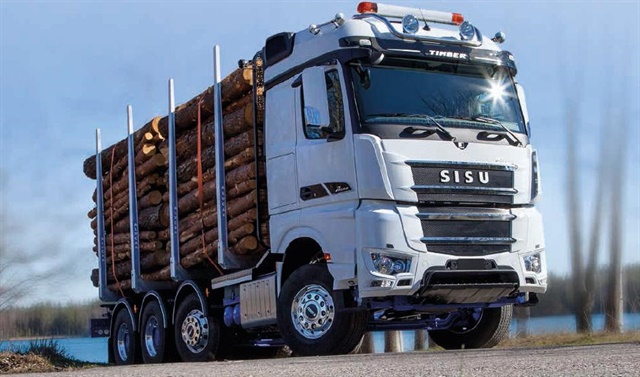
The new hybrid-electric drive system is designed to work with Mercedes Benz diesel-powered Sisu Polar truck models. Photo: Sisu Auto

">

The new hybrid-electric drive system is designed to work with Mercedes Benz diesel-powered Sisu Polar truck models. Photo: Sisu Auto

">

Finland is not usually associated with being a hotbed of cutting-edge automotive design. But Europe is leading the charge on a wide range of new transportation technologies. And the Finns are certainly playing their part in the tech wave sweeping trucking today.

Two Finnish companies, Visedo and Sisu Auto, have developed a hybrid-electric parallel power system they say produces 1,140 horsepower and 3,687 lbs.-ft. of torque. Sisu is a Finnish truck manufacturer. Visedo is a Finnish manufacturer of heavy-duty hybrid and electric power systems that says it developed the electric power system as a proof-of-concept vehicle that integrates the parallel hybrid drive, which draws power from both an electric motor and a diesel engine connected via the same axle.

The new system is designed to work with Mercedes-Benz OM471 and OM473 diesel engines. Diesel is the primary power source, with the electric motor kicking in during peak energy demand periods. When needed, auxiliary power is delivered by a Visedo permanent-magnet electric motor, while the mechanical powertrain is controlled by a Visedo inverter and PowerBoost DC-DC converter. Excess energy is stored in a supercapacitor, with the entire system designed to be customizable with simple vehicle integration to meet customer needs. Additional power and charging requirements are initiated automatically, allowing the driver to concentrate on the road, although an in-cab monitor allows the driver to track of the system's functions and take control of it if needed.

The main objective for Visedo and Sisu was to reduce fuel consumption and reduce emissions, the companies said. However, they noted that the hybrid system also boosts available low-speed torque for heavy duty trucks and also enables the use of the vehicle with or without electric power since the drive ...Read the rest of this story

Kit Designed to Clean Spills Around Large Trucks

Eco-Absorbent Technologies Large Truck Kit includes everything that is needed to quickly and effectively deal with unexpected spills.

Designed to be an effective green spill response kit, the Large Truck Kit includes one bag of Eco-Absorb lightweight absorbent, 10 hazmat absorbent pads, three hazmat absorbent socks, one large and three small wooden plugs, one container of 10-ounce putty, two pairs of latex gloves, and a trash bag for disposal. The Eco-Absorb absorbent is made for indoor spills with a formula that absorbs spills without leaving residue behind.

The Large Truck Kit is designed for use with commercial vehicles, emergency response vehicles, fleet management companies, and maintenance shops.

Eco-Absorbent Technologies' products are designed to be non-toxic to humans and do not contain crystalline silica which is a carcinogen found in clay based products, according to the company.

Follow @HDTrucking on Twitter

...Read the rest of this story

Survey says? Ontario carriers uncertain about future

TORONTO--Deep uncertainty still prevails within the Ontario trucking industry, but at least carriers say they've experienced rebounds in most freight lanes compared to last winter. According to the Ontario Trucking Association's (OTA) second-quarter 2017 business conditions survey for the bellwether sector, the number of carriers who felt good about their overall prospects over the next three months shot back up to 62% from the 49% in the last OTA survey (4Q16), which was the first time since 2013 a minority of carriers said they were optimistic about their businesses. Like the previous two surveys, about one in five carriers (21%) remained pessimistic. ...Read the rest of this story

The carbon-pricing “horse is out of the barn:” Laskowksi

OTTAWA-- A discussion paper released today by Environment and Climate Change Minister Catherine McKenna reveals the federal government's potential strategy for imposing a national minimum price on carbon by the end of 2018 for those provinces that do not have their own system in place. Currently, four provinces – British Columbia, Alberta, Ontario and Quebec – have some form of carbon pricing mechanism, whether that be a carbon tax, a cap and trade system, or, as is the case in Alberta, a combination of the two. The structure announced today by the federal government is similar to the latter. ...Read the rest of this story