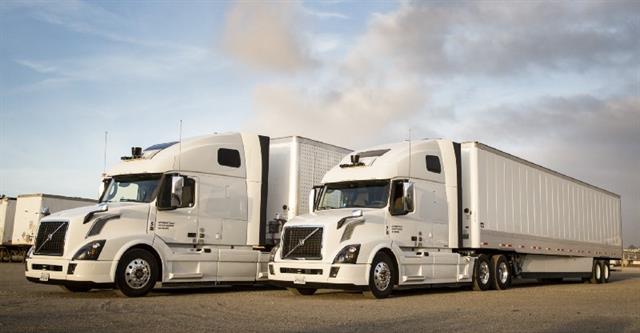
Uber stated in a blog post that it expects self-driving trucks to help the industry deal with higher demand. Photo via Uber
">Mixed fleets with self-driving long-haul trucks and traditional human-driven regional routes could help the trucking industry address the problem of an aging driver workforce, said Uber in a recent company blog post.
In the post, Uber argued that rather than a future of autonomous trucks replacing the humans in the trucking workforce with robots, the technology could be used to both alleviate the driver shortage and help make the existing driving jobs more appealing to younger prospective drivers.
Quoting statistics from American Trucking Associations, Uber stated that the truck driving workforce is currently much older than the average, 49 vs. 42, and as many as 400,000 current drivers are expected to retire in the next decade. Over the same period of time, freight demand is expected to increase and would require an influx of around 900,000 drivers to keep up with demand.
Uber is currently making its foray into the trucking industry through its Uber Freight load matching app, and the company also says it is at the forefront of self-driving vehicle technology. The company states in the blog post that using a system of transfer hubs, the transportation industry could meld mixed fleets of self-driving trucks with more localized traditional trucks in order to meet the growing demand.
Strategically placed around the country, these transfer hubs could receive goods transported by self-driving trucks that are specifically designed for highway driving. The freight would be delivered to and from hubs where regional trucks would distribute the freight to its final destination.
This method would also help accelerate the usefulness of current self-driving technology which is already being tested on open highways but still faces technical hurdles when it