Category: Trucking News

CX North America Adds Digital Proof of Delivery to Driver App

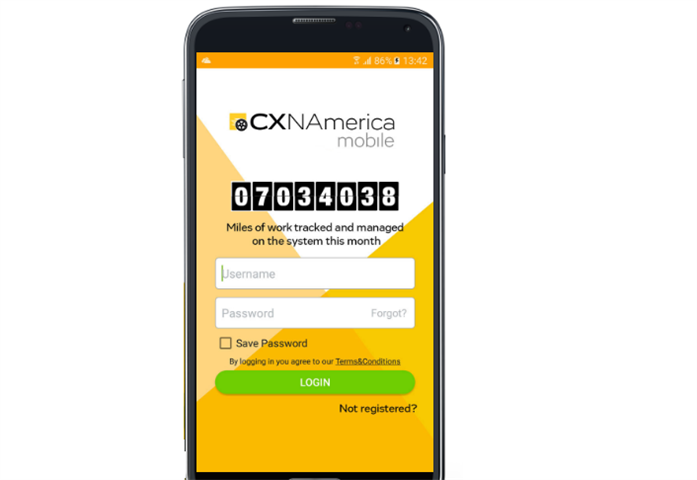
CX North America Information Services has added new digital document creation functionality to the CX North America Driver Mobile App.

The mobile app, designed to enhance visibility and enable communication from booking to Proof of Delivery, now allows drivers to create and electronically send instant, bill of lading documents in PDF format for immediate invoicing.

After a delivery is made and bill of lading signed, drivers are able to take a photo of the document with their smartphone camera to begin the PDF creation process. Designed to optimize photos taken even in unideal, low-light conditions, the mobile app will process the image and adjust for contrast, clarity and orientation.

The driver is able to crop the photo as necessary, removing unwanted background and focusing on the document itself. The app then automatically converts the file to a formally acceptable electronic format, transforming the image from simply a photo of a document to a viable Proof of Delivery. The PDF can then be sent instantaneously to the dispatcher, saving both drivers and carriers time and money by allowing the billing process to begin more quickly.

Intended for collaboration between carriers, drivers, brokers and 3PLs, the mobile app offers a range of information exchange and tracking capabilities for real-time freight management, including up-to-the-minute status updates, automated alerts and two-way messaging for vital job orders. The app allows firms to operate more efficiently by maximizing vehicle utilization, load management, and capacity.

“In the past, drivers have always relied on traditional methods to submit signed PODs, such as faxing or mailing. These processes take hours at minimum, most often days,” said said Simon Bunegar, senior vice president of marketing. “Our new functionality puts all the necessary documentation in the right hands instantly, resulting in faster payment times for carriers and drivers. What was once a time consuming, ...Read the rest of this story
FMCSA Clarifies How to Request a Non-Preventable Crash Data Review

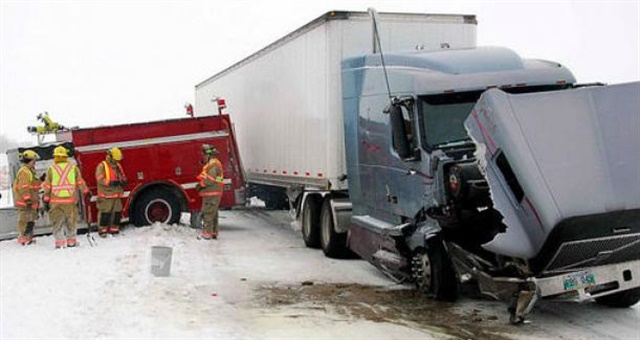
The Federal Motor Carrier Safety Administration has clarified how carriers may go about requesting a data review of certain non-preventable crashes. Photo: FMCSA

">

Although the Federal Motor Carrier Safety Administration launched a demonstration program last summer that invited motor carriers to request a data review of certain non-preventable crashes, only now is the agency releasing “additional information to help submitters and other interested parties understand the demonstration program.”

The crash-preventability demo program began accepting requests for data review (RDRs) on August 1, 2017, for crashes that occurred on or after June 1, 2017. The agency proposed that a crash challenged through an RDR would be found “not preventable” when documentation submitted with the RDR established that the crash was, indeed, not preventable.

In its July 27, 2017 Federal Register notice announcing it would accept the RDRs, FMCSA said it would accept RDRs “to evaluate the preventability of certain categories of crashes” through its DataQs national data-correction system. More specifically, the agency proposed that a crash challenged through an RDR would be found “not preventable” when documentation submitted with the RDR established that the crash was, indeed, not preventable.

Now, per a notice published in the Federal Register for Feb. 7, the agency stated that over 2,500 RDRs have been submitted and that, “based on the experiences operating the program for the first few months,” the agency has identified areas of the program “requiring more instruction and details” including how to correctly submitting eligible crashes to the demonstration program; which specific types of crashes will be reviewed using the RDR process, and the importance of submitting all relevant evidence “in support of the preventability determination” being sought.

In addition to the all the details clarifying how to submit RDRs given within the latest Federal Register notice, the agency noted that additional information on ...Read the rest of this story

Earnings Watch: Better Profits for XPO, Forward Air, Echo Global Logistics

Most trucking companies so far this earnings reporting season are reporting big gains in profits in both the fourth quarter of last year as well as for all of 2017. This is due in large part to tax reform legislation, and numbers released Wednesday were no exception.

XPO Logistics Records $312 Million Profit

XPO Logistics Inc. reported revenue of $4.19 billion for the fourth quarter of 2017 compared with $3.68 billion for the same period in 2016. Revenue increased year-over-year by $555.2 million, excluding fourth quarter 2016 revenue of $37.9 million from the North American truckload unit divested in October 2016.

Net income was $188.5 million for the quarter, $1.42 per share, compared with net income of $27.3 million, or 22 cents per share, a year earlier.

The company said it had $169.9 million in net tax benefit related to tax reform and other tax-related adjustments.

For the full year 2017, the company reported total revenue of $15.38 billion, compared with $14.62 billion for 2016. Revenue increased year-over-year by $1.19 billion, excluding 2016 revenue of $431.9 million from the North American truckload unit divested in October 2016.

Net income was $312.4 million, or $2.45 per share, compared with $63.1 million, or 53 cents per share for 2016.

"I'm pleased that we beat fourth quarter expectations for revenue, earnings per share, adjusted EBITDA, cash flow from operations and free cash flow,” said Bradley Jacobs, chairman and CEO. “We generated outsized organic revenue growth of 10.4%, led by gains in freight brokerage, last mile and contract logistics. A strong holiday peak played directly to our strengths in e-commerce.

He said in XPO's transportation segment, freight broker revenue increased by 33% while also increasing net revenue margin, both during the fourth quarter.

“Our North American less-than-truckload unit increased operating ...Read the rest of this story

CVSA Director Talks ELDs, Enforcement, and the Future

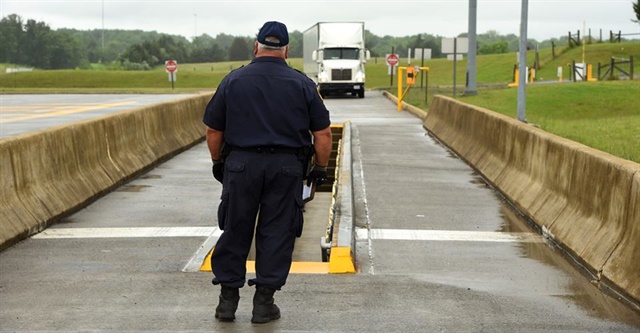
Mooney spoke about the disconnect between how trucking companies view some of the Alliance's enforcement and what the CVSA is actually trying to accomplish. Photo: CVSA

">

Commercial Vehicle Safety Alliance Executive Director Collin Mooney gave a wide-ranging interview with Canadian trucking publication Today's Trucking, talking about how he views the organization's role in improving safety on our roads.

Mooney spoke about the disconnect between how trucking companies view some of the Alliance's enforcement and what the CVSA is actually trying to accomplish. He found that the rollout of the ELD mandate in December from an enforcement perspective has not gone completely according to plan.

“We are disappointed that our implementation process — our delay in implementing Out-of-Service conditions until April 1 — has been taken by many in the industry as the new implementation date. That wasn't the intent,” said Mooney. “I'm disappointed in the handful of people electing to install their ELDs so they meet the regulatory definition, but then still using paper. It's not meeting the regulatory intent.”

<img src="http://www.automotive-fleet.com/fc_images/news/m-collin-mooney-372x400.jpg" border="0" alt="

Commercial Vehicle Safety Alliance executive director Collin Mooney. Photo: CVSA

" width="240" height="320">

On the subject of Out of Service violations, Mooney reflected on how the kinds of violations found during inspections often point to larger problems with carriers and how they might be failing to enforce their own safety rules.

“If we're finding violations and documenting them at roadside, you have a failure within your annual inspection program, your preventive maintenance program, your driver trip inspection program,” he said. “Sometimes [truckers] rely on the roadside inspection program as their preventive maintenance program. We see that a lot, and that's not right. The carriers that invest in a preventive maintenance program are at a competitive disadvantage when you have motor carriers that do not.”

Mooney also discussed the influx of new technologies ...Read the rest of this story