Author: Vitaliy Dadalyan

Poll: 79% of Americans want tougher fuel economy standards

Transportation a growing source for carbon emissions, reports say

Three in four Americans agree that cars and trucks are a leading source of carbon pollution in the U.S., and a new poll by the Natural Resources Defense Council (NRDC) shows that respondents of all political views “overwhelmingly” endorse two Obama Administration initiatives to "put the brakes on" that climate pollutant, according to the non-profit environmental organization.

read more

Webinar: Nine things to know about the new rules for transporting food

The rules of the game changed this spring for carriers, shippers and receivers involved in the transportation of food. It happened with the publication of the final Food and Drug Administration (FDA) rule on Sanitary Transportation of Human and Animal Food, which establishes requirements for transportation equipment, operations, and the training and certification of carrier personnel.

read more

Expedited Carrier V3 Transportation Aiming for More Growth

<img width="150" src="http://www.automotive-fleet.com/fc_images/news/m-v3truck2-1.jpg" border="0" alt="

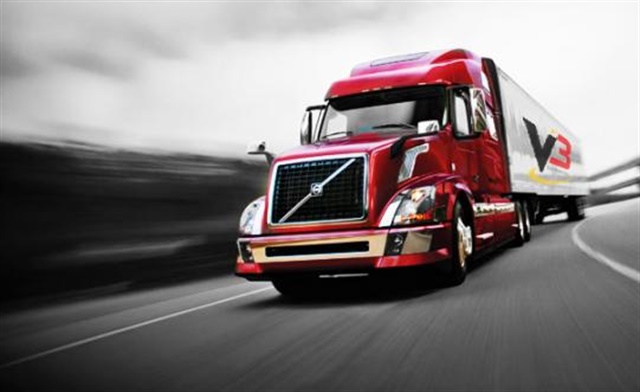
Expedited carrier V3 Transportation has bveen enjoying rapid growth since launching in the first quarter of 2013.

">

Expedited carrier V3 Transportation has bveen enjoying rapid growth since launching in the first quarter of 2013.

">

V3 Transportation held an open house on Aug. 5 to inaugarate its new headquarters facility in Seville, Ohio. The expedited carrier has enjoyed rapid growth since launching its operations with “two laptops and two cell phones” in the first quarter of 2013. Now, according to founding partners Bob Poulos, CEO, and John Sliter, president, the company ranks among the fastest-growing operations in its field and is poised for further growth.

The carrier, which was named an HDT Truck Fleet Innovator earlier this year, currently employs 48 in operational, customer service and other office positions to support a fleet of 153 trucks. Those are piloted by 192 owner-operator expedited drivers. By the end of 2016, the fleet of straight trucks, truckload tractor-trailers and Sprinter vans will number some 200, said Poulos in a media conference call held ahead of the open house.

V3's previous headquarters' location, in Brunswick, Ohio, was limited to 3,500 square feet. The new facility boasts 10,000 square feet of office space and more than 6,000 of shop space.

The Seville HQ was designed to be large enough to support the company's growth over roughly the next three years, said Sliter.

Indeed, the company is looking to add 38 office employees in that time. “Based on our current growth, we'll outgrow this building in three years,” said Poulos. “We're already making plans to move into another building” at that point. “We plan to be a major player [in expedited] in the next three years,” he added.

According to Poulos, V3 has been growing “100% every year” since its launch. “Revenue is running at a rate of about $25 million this year compared to $12 million last year,” said Sliter.

Poulos said that it was “also a milestone year for us as former Panther II Transportation CEO Craig Amato has joined us as a partner.” Serving as senior advisor, Amato is involved primarily in V3's growth initiatives.

“Our growth ahead will be organic as well as cold-start and will potentially include some acquisitions,” said Poulos. He noted that “in an industry dominated by [hauling for] auto manufacturers, we have been successful as well in some other markets, including the chemical and haz-mat space.”

pstrongNew V3 Transportation headquarters in Seville, Ohio./strong/p

Poulos said that V3 is not engaged with e-commerce now, but is “carefully looking” at that sector for the future. “Inventory levels are high right now. But any bump in the road leads to instant demand for our service. Demand for expedited trucking is going to be high.”

“People are getting fed up with freight ending up on a truck with no insurance,” Amato remarked. “We're guaranteeing quality service.”

As for acquisitions, Amato said they are investigating three such deals right now as well as looking into expanding with services for Canada and Mexico freight. “We want the ability to be more of a one-stop solution to our clients. That will definitely help our growth.”

The new V3 facility was built with drivers in mind. It boasts a driver lounge, showers, and 24-hour access to a kitchen. “It's got everything needed to attract and retain owner-operators,” said Sliter, who noted that V3's driver turnover rate is running at just about 36% this year.

Sliter said fleet growth for the balance of the year will focus on V3's “bread and butter” straight trucks, especially those team-driven. “And we'll be adding more haz-mat certified drivers. We pay for that certification. A lot of our competitors don't have hazmat drivers. Offering that service benefits our growth plans.”

Related: Smarter is Faster

Follow @HDTrucking on Twitter

Spot Freight Market Could Be Looking Up

<img width="150" src="http://www.automotive-fleet.com/fc_images/articles/m-spot-commentary-1.jpg" border="0" alt="

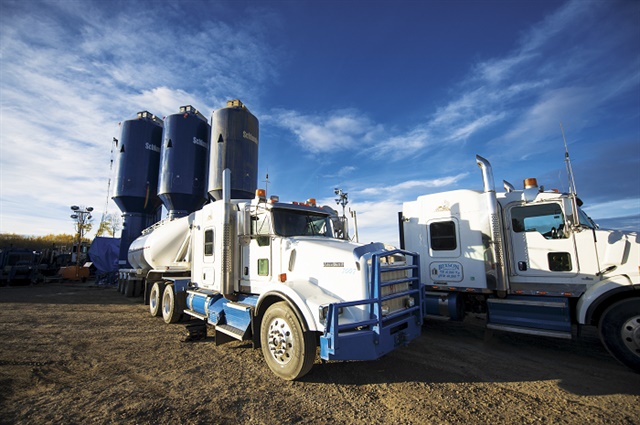
The collapse of oil prices and the resulting pullback from hydraulic fracturing
operations had a major effect on the spot market.

">

The collapse of oil prices and the resulting pullback from hydraulic fracturing
operations had a major effect on the spot market.

">

If you've given up on the truckload spot freight market or have been using it less because of the past year's depressed rates, it might be time to give it a second look. External pressures that pushed rates down appear to be easing and rates are finally starting to improve — although they still have a way to go before returning to last year's levels or the record-setting highs of 2014.

That's according to Mark Montague, industry-pricing analyst with the freight matching and load board services provider DAT Services. In an interview, he said the spot market went to pot in March 2015, with things not showing any real improvement until this spring.

The reasons are some of the same that have caused the economy to sputter along, with one of the biggest being lower oil prices. While cheap crude has led to lower fuel prices, those savings have come with consequences.

“The main driving cause was the oil industry collapse with the end of fracking, the end of moving pipe or steel and all other related commodities, which spilled over into the spot market,” he says. “It took a bite out of flatbed freight first of all, then the next bites were in van freight. On top of that, you had the produce market driven by California going to flop because of the drought.”

With the oil industry throttling back, workers in that sector lost jobs and cut their retail spending, which drives so much of the economy. Energy companies also cut their business investment. Even consumers who were saving money on fuel purchases didn't see a big enough dividend to go out and spend wildly.

However, something happened in April. Retail sales increased by their largest amount in just over a year, with another solid increase in May. Also in May and extending into June, oil and fuel prices started heading higher. And in early June parts of California even saw improvements in drought conditions.

Coincidentally or not, the DAT North American Freight Index came back to life in the spring. The May level was still below that of the previous four years, but higher than it was in the latter part of 2015.

Montague says flatbed rates have “really stabilized over the last few months,” and at the beginning of May “we began to see an increase in freight on the spot market for van and reefer freight” which can help bump up rates.

However, there are still factors at work that will keep them from going as high as the industry might like. Linehaul rates, the portion of the spot rate that does not include the fuel surcharge, remains lower than a year earlier for a variety of reasons, including a “race to cut rates in the first half of the year” and truck capacity added by large fleets in 2015. Also manufacturing remains weak, despite some recent improvements in total activity.

Despite these challenges, even one mega-fleet that traditionally relies little on the spot market is turning to it. Swift Transportation announced in June its “spot market participation has increased somewhat” due to the lack of available freight in certain markets.

The benefit, according to Richard Stocking, president and chief operating officer, is it will “keep our trucks moving”.

So while the spot market may not be your favorite place to get freight, it's better than it has been. More importantly, it beats the alternative of having your trucks sit, generating zero revenue.

Related: The Inventory Thorn in Trucking's Side

Follow @HDTrucking on Twitter

Frito-Lay Fleet Reaches CNG Milestone

Frito-Lay's fleet of compressed natural gas (CNG) trucks and vans have logged more than 100 million miles in the past five years, the PepsiCo division has announced.

The delivery fleet began adding CNG vehicles in 2011 with the addition of 16 Class 8 trucks. The fleet now counts more than 500 CNG vehicles, which now makes up 35% of the company's long-haul fleet. CNG freight trucks emit 23% less greenhouse gas (GHG) tailpipe emissions than the diesel freight trucks they replace.

"Increasing the efficiency of our vehicle fleet is a key component of achieving PepsiCo's overall goal to reduce GHG emissions," said Michael O'Connell, senior director of supply chain. "Alternative fuel solutions like Frito-Lay's use of CNG freight trucks are an important piece of our overall strategy, helping us reduce our environmental footprint, meet changing consumer needs and thrive in today's economy."

Frito-Lay maintains a fleet of more than 22,000 vehicles for sales and delivery. That fleet includes 269 electric delivery trucks, 208 CNG trucks, and Sprinter cargo vans.

"At Frito-Lay, our goal is to be the most fuel-efficient fleet in the country," O'Connell has said. "Our comprehensive fleet sustainability strategy looks at everything from fuel sources to vehicle design."

Frito-Lay has reduced its diesel fuel use by more than 30% from 2008 to 2015, PepsiCo has announced.

Related: Coca-Cola, PepsiCo Expand Fleet Efficiency Efforts

Follow @HDTrucking on Twitter