Author: Vitaliy Dadalyan

Economic Watch: Manufacturing Continues Improving, Construction Falls

Two reports show the nation's manufacturing sector is making continued improvements following a bumpy ride that began last year and early this year.

A survey of the nation's purchasing managers by the Institute for Supply Management shows economic activity in the manufacturing sector expanded in June for the fourth consecutive month, hitting its highest level in 16 months.

The Purchasing Managers Index registered 53.2%, an increase of 1.9 percentage points from the May reading of 51.3%, the highest reading since February 2015.

A reading above 50% indicates that the manufacturing economy is generally expanding; below 50% indicates that it is generally contracting. Early last fall the gauge fell below 50% and was there for five months before rising above it in March.

ISM's New Orders Index registered 57% in June, which is an increase of 1.3 percentage points compared to the 55.7% reported for May, indicating growth in new orders for the sixth consecutive month.

Overall, of the 18 manufacturing industries, 13 reported growth in June, and 12 reported increased new orders.

"The past relationship between the PMI and the overall economy indicates that the average PMI for January through June of 50.8% corresponds to a 2.4% increase in real gross domestic product on an annualized basis,” said Bradley J. Holcomb, chair of ISM's Manufacturing Business Survey Committee. “In addition, if the PMI for June, 53.2%, is annualized, it corresponds to a 3.2% increase in real GDP annually."

"If the PMI for June, 53.2%, is annualized, it corresponds to a 3.2% increase in real GDP annually."

The most recent government figures show the GDP increased at just an 1.1% annual rate in the first quarter, while many analysts expect the second quarter rate to be in the neighborhood of 2.5%.

A separate report, from the financial information services provider Markit, is also encouraging. Its measure of manufacturing activity hit a three-month high, with U.S. manufacturers reporting a slight rebound in production volumes during June, helped by the fastest rise in new work since March.

The seasonally adjusted final Markit U.S. Manufacturing Purchasing Managers' Index registered 51.3 in June, up from 50.7 in May. The earlier, preliminary reading for June was 51.4, with a reading better than 50 indicating expansion.

Higher levels of production, new orders and employment all helped to boost the headline index, while an accelerated fall in stocks of purchases was the only negative influence, according to the report.

A rebound in export sales provided a boost to manufacturers' workloads in June. Moreover, the increase in new orders from abroad was the fastest since September 2014. This contributed to an upturn in backlogs of work across the manufacturing sector for the first time since the start of 2016.

However, Chris Williamson, chief economist at Markit, noted that although the manufacturing PMI ticked higher in June, the latest reading rounds off the worst quarter for goods producers for six years.

“The lackluster performance of the manufacturing economy adds to signs from the flash services PMI surveys that the underlying pace of economic growth in the second quarter remained subdued after a disappointing start to the year,” he said. “The upturn in the employment index suggests that firms may be expecting the recent bout of weak demand to be temporary, though hiring clearly remains subdued amid fragile business confidence."

According to Williamson, producers are struggling in the face of the strong dollar, the energy sector decline and presidential election jitters.

“Heightened tensions between the U.K. and the European Union are likely to unsettle the global business environment further in coming months."

“With companies craving certainty, heightened tensions between the U.K. and the European Union are likely to unsettle the global business environment further in coming months, and therefore risk dampening growth in the U.S. and export markets. The data flow in the next two months will therefore be critical to policymakers in gauging the appropriate outlook for interest rates,” Williamson said.

Construction Spending Falls Again in May

A third report released Friday shows building in the U.S. moved lower in May for the second straight month, falling 0.8% below April's revised level of a 2% drop.

According to the Commerce Department, despite the most recent decline the May level is 2.8% higher than the same time a year ago. Construction spending in the first five months of 2016 is 8.2% better than the pace from the same time in 2015.

The May drop was spread across the different building sectors, with government building down 2.3% and smaller drops in housing and non-residential construction.

Construction has been one of the relatively brighter spots in the U.S. economy, with some analysts saying the sector is feeling the effects of the nation's poor overall performance in the first quarter of the year. While the back-to-back drops took some by surprise, and will likely be a bit of a drag on overall economic activity, the sector is expected to improve in the summer months.

Follow @HDTrucking on Twitter
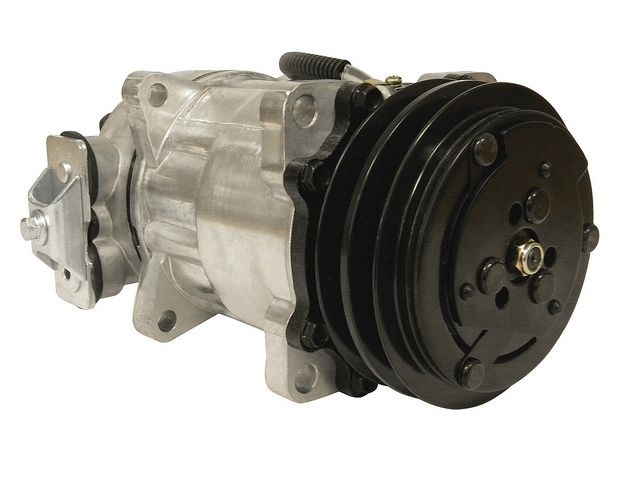
TRP A/C Compressor Rated for 2 Million Cycles

TRP is expanding its line of all-makes truck, trailer and bus parts with TRP Super Heavy-Duty A/C Compressors.

The compressors are designed for demanding applications and feature more than twice the clutch life of comparable heavy-duty compressors and are rated at 2 million cycles, according to TRP. Advanced oil circulation for the shaft bearing and seal ensures smooth, consistent operation.

The Super Heavy Duty A/C Compressors are built with the exact specifications for industry compressors, incorporating a corrosion-resistant stainless steel reed valve designed for longer life.

“The depth of our product line emphasizes the ease of doing business when buying TRP," said Bart Lore, general marketing manager for Paccar Parts. “This addition to our product offerings reinforces our brand as the all-makes leader in providing quality parts and exceptional customer service.”

Follow @HDTrucking on Twitter

VIDEO: ZF-WABCO Evasive Maneuver Assist

As Dr. Gerhard Gumpoltsberger, Head of Innovation Management in ZF's Advanced Engineering unit explains in this video clip, the Evasive Maneuver Assist system allows the components—including the driver—to precisely control an emergency maneuver, delivering the correct amount of braking and steering and preventing crashes and rollovers.

read more

Drive 4G-X OTR

weBoost, the global leader in cell signal boosters, announced the Drive 4G-X OTR, an all-in-one signal booster kit for truck drivers. The Drive 4G-X OTR is weBoost's most powerful mobile booster, enabling up to 32 times stronger signal on the road so drivers with lengthy travels can stay conveniently connected to those they love and on whom rely.

The Drive 4G-X OTR is carrier agnostic, so the booster will successfully amplify signals for Verizon, T-Mobile, Sprint, and AT&T users alike, allowing everyone to stay connected. It simultaneously amplifies voice and data for devices operating on 3G, 4G LTE, or legacy bands. Neither a wired internet connection nor Wi-Fi are needed for the booster to function, and there are no monthly fees.

The Drive 4G-X OTR amplifies existing cell signal from the nearest cell tower to bring extremely capable coverage to truckers anywhere on the road. The result is a reliable cell signal and the capability to receive a dispatch, find a safe rest stop, call home during lunch, stream music or use navigation with ease. Installation is a six-step process and the kit includes the all-new 4G-OTR antenna and mount, the Drive 4G-X signal booster, a slim low profile, secondary antenna, a mounting bracket and a 12V DC power supply.1

The antenna covers cell phone frequencies from 700, 800, 1700 and 1900 to 2200 MHz.

The Drive 4G-X OTR is available for purchase now.

Visit weBoost's commercial truck cell phone signal booster product page to learn more about the Drive 4G-X OTR.

1 Truckers with Cascadia model trucks with molded-style mirrors are recommended to mount the antenna to the top of the cab and may need to purchase additional materials or tools to properly secure.

Follow @HDTrucking on Twitter

Uber, Amazon, and What the Sharing Economy Means for Freight Hauling

<img width="150" src="http://www.automotive-fleet.com/fc_images/articles/m-ubercargo-1.jpg" border="0" alt='

Uber, of course, is part of the move to the "Uber-ization" of freight too.

'>

Uber, of course, is part of the move to the "Uber-ization" of freight too.

'>

Despite all the talk of the “Uberization” of trucking and tons of venture capital poured into startups that promise cheap same-day delivery, companies like FedEx and UPS aren't likely going anywhere soon — but Amazon has been and will continue to be disruptive to the logistics business, according to Richard “Dick” Metzler, chief marketing officer of uShip.

In a conference call hosted by the investment firm Stifel, Metzler looked at the potential impact of the rapidly evolving “sharing economy” in freight transportation and logistics. Although he now works for uShip, one of the first online freight shipping marketplaces, Metzler has a long career at traditional logistics companies such as FedEx Logistics and XPO Logistics.

What is the sharing economy?

Metzler's definition of the sharing economy is where on-demand companies aggregate demand online but fulfill that demand through offline services. The classic example are on-demand ride-sharing services such as Uber and Lyft, where you use an app to get a ride-share instead of a traditional taxi service. If you've bought items directly from individuals online, bought tickets from an online reseller, used online home-sharing services like AirB2B, those are all examples of the sharing economy.

Today, we are seeing the “Uber of everything,” he said, from companies such as Amazon, Google and Walmart to less-well-known operations such as Deliv, TaskRabbit, and Shyp. You can get a hot meal, even a private jet. “You name it, someone has Uberized it.”

In the past couple of years, a lot of venture capital has poured into dozens of startups that aim to take the low-tech business of arranging cargo shipments online. Metzler called it the “fear of missing out” effect and said most of these companies are unlikely to get second rounds of financing.

Metzler pointed out that the “sharing economy” and the “on-demand” economy are not necessarily one and the same, although the two often overlap.

Fast, free, or both?

Uber and Amazon both tapped into “latent demand” — a demand for something that consumers sort of didn't even know they had until someone pointed out it was possible.

“I think Amazon Prime will go down in history as one of the most brilliant combinations of marketing and logistics ever,” Metzler said. “They created the need for speed that leaves others trying to catch up.”

The e-commerce giant Amazon, with its Amazon Prime subscription service that includes free two-day shipping, has helped make the notion of free, fast shipping “table stakes” Metzler said. He questioned how much consumers really want same-day or even one-hour delivery from their e-commerce purchases — or if they want it enough to pay enough for delivery companies to be able to turn a profit doing it.

Metzler cited a "Future of Retail” study that found free shipping was two times more important to consumers than same-day shipping — 88% vs. 49%. Those who shopped online more frequently, however, had higher expectations for delivery speed.

Another survey found that in general, when shipping is free, people don't expect to get it as quickly — but Amazon Prime members are not as patient. When paying for shipping, people expect to get it faster.

The real world

The problem facing companies offering on-demand logistics, and the reason he believes many start-ups won't make it, are low route density and low revenue per stop, Metzler said.

How does on-demand shipping work? Sort of like Uber. A customer orders shoes online, the order is routed to the nearest stores that sell that style. A driver nearby accepts the order via a smartphone app, goes to the store, buys the shoes, then drives to the customer location, maybe for a $5 delivery charge.

It's just costs too much to the provider to offer same-day or one-hour delivery. He offered the case study of one company, Bloom, that was struggling to survive due to one-hour delivery cost economics. They cut service back to next day, didn't lose business and cut their costs by 25%.

“When it comes to delivering stuff there are only two ways to be productive,” Metzler said. One is massive route density, like FedEx, UPS, or Amazon. Or you get much higher revenue per stop, like Cargomatic or uShip. Most of the on demand startups have neither, he contends.

“Amazon built a massive infrastructure and almost has an unfair advantage over every other retailer out there,” Metzler said. “There doesn't seem to be anybody in the e-commerce world that's happy with their e-commerce channel because they're trying to out-Amazon Amazon.”

On the other hand, he said, although Amazon has been investing in planes, trailers and even trucks of its own, “I also think they have a long way to go to compete with UPS and FedEx.”

Nevertheless, he said, “If I was still sitting in Memphis [at FedEx], I would have a nuclear plan on the shelf just in case – and I'm sure they do.”

Looking ahead

When the dust settles what are the likely outcome? Metzler outlined five distinct possibilities.

  • The Amazon effect. Buyers come to expect 1-2 hour service via a high-level Amazon Prime subscription level and can't live without it.
  • Reality sets in. Delivery times become more reasonable and largely free, consistent with consumer demands and expectation.
  • Go big and go home. Large format online e commerce is beginning to grow at a runaway rate — things like gun safes, large appliances, pieces of furniture. Right now consumers essentially have “white glove” service where such items are delivered and installed, or what Metzler dubbed “brown glove,” with LTLs delivering items. He believes we will see more cost-effective solutions in between these two.
  • Bundle of joy. Carriers and consumers collaborate to have everything they ordered this week delivered this weekend, instead of worrying about being home for a delivery window during the week.
  • Drones and driverless trucks. This is not a question of if, but when and how, he said. It's easy to get your mind around drones for super urgent items like organ transplants. It's harder to imagine how a fleet of Amazon drones will work in the real world, but “I think there will be a role for [drones.]” And the same with driverless trucks.

Follow @HDTrucking on Twitter

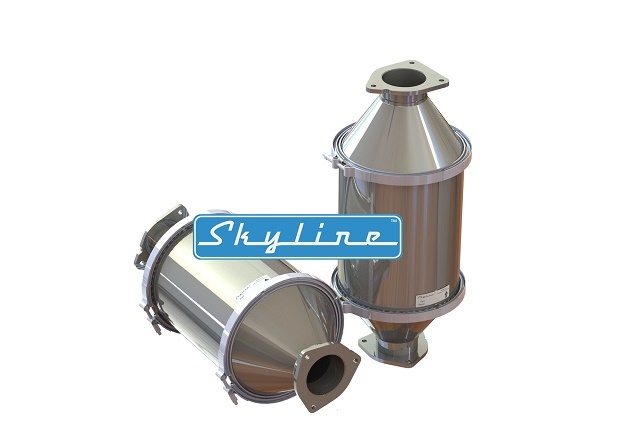
FSX to Distribute Skyline Aftermarket DPFs

<img width="150" src="http://www.automotive-fleet.com/fc_images/news/m-skyline-1.jpg" border="0" alt="

Photo: Skyline Emissions

">

Photo: Skyline Emissions

">

FSX Equipment will distribute Skyline aftermarket diesel particulate filters nationally after entering into a mutual agreement with Skyline Emissions.

Skyline's DPFs are designed to be original equipment manufacturer part replacements and FSX says that it studied different manufacturers to determine the quality of Skyline's parts and technology.

“We want to offer a new, high quality OEM replacement DPF to fill a need in the market place for a cost saving alternative”, said Cole Waldo, president of FSX.

The Aftermarket DPFs are currently not available for sale or use in California.

Skyline Emissions specializes in retrofit and aftermarket heavy-duty diesel emissions, manufacturing, distribution and emission testing services.

Related: Keeping DPFs Clean

Follow @HDTrucking on Twitter