Author: Vitaliy Dadalyan

Earnings Watch: ODFL, Heartland, P.A.M. See Lower Earnings

Trucking companies in both the less-than-truckload and truckload sectors reported lower second quarter profits on Thursday morning due in part to the sluggish economy during the period as well as downward pressure on freight rates.

ODFL Sees First Revenue Drop in Years

Less-than-truckload carrier Old Dominion Freight line (NASDAQ: ODFL) announced its earnings fell while also reporting its first year-over-year decline in revenue since 2009.

Net income dropped 4.9% to $81.4 million, or 98 cents per share, compared to $85.6 million, or $1 per share, in the 2015 quarter for the North Carolina-based fleet.

The fall in revenue was only slight, 0.9%, hitting $755.4 million as operating income slid 5.3% to $133.4 million.

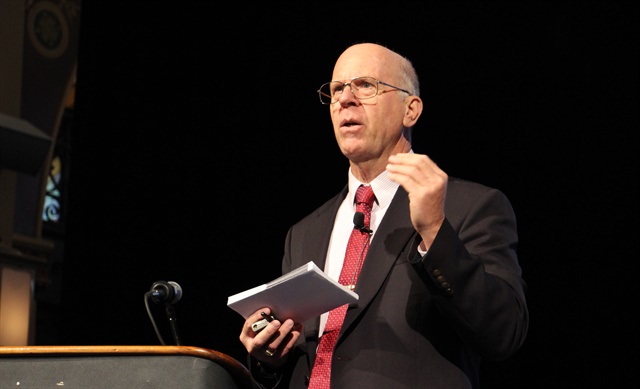
According to David S. Congdon, vice chairman and CEO, quarterly revenue was negatively affected by reductions in both fuel surcharges and non-LTL revenue. “These factors, combined with a domestic economy that remained sluggish, resulted in our first quarterly year-over-year decline in revenue since the fourth quarter of 2009.”

The second quarter results show an 0.8% increase in LTL revenue per hundredweight that was partially offset by a 0.3% decrease in LTL tonnage per day, according to the company. Excluding fuel surcharges, LTL revenue per hundredweight increased 2.7% during the second quarter as the pricing environment remained relatively stable.

“We have not changed our pricing philosophy or commitment to price discipline, but changes to our weight per shipment and mix of freight continue to impact our yield metrics,” he said.

Despite this, Congdon described ODFL's financial results for the second quarter as “solid, considering the challenging operating environment” and the company should not only be able to weather the current economic environment, but also has the capacity for future growth.

For the first half of the year, ODLF reported net income of $141.7 million, down 4.3% from a year earlier, while revenue inched higher by 0.3% to $1.46 billion.

Heartland Express Hit By Lower Freight Volume

Meantime, on the truckload side, Heartland Express Inc. (Nasdaq:HTLD) saw its profit fall to $16.4 million, or 20 cents per share, from $23.3 million, or 27 cents per share in the second quarter of last year.

Likewise, revenue declined to $160.8 million from $191.7 million for the Iowa-based fleet.

“Throughout the first half of 2016 we continued to experience downward pressure on freight rates due to the softness in freight volumes resulting from the available capacity in the industry,” said Michael Gerdin, CEO. “Typically, freight volumes improve during the second quarter as compared to the first three months of the year but that has not been our experience during 2016 as freight volumes didn't improve until mid-June.”

Heartland said operating revenues decreased 12.4% excluding fuel surcharge revenue, primarily due to lower miles driven due to softer freight volumes in the second quarter compared to the same period in 2015.

For the first six month months of 2016, the company recorded net income of $30.7 million, compared to $40.9 million in the same period of 2015 as earnings per share fell to 37 cents from 47 cents.

P.A.M Transportation Profit Lower Despite Higher Revenue

The results follow dry van carrier P.A.M. Transportation Services Inc. (NASDAQ:PTSI) reporting a steep decline in net income for the second quarter, totaling nearly $4 million, or 61 cents per share. That compares to $7.04 million or 94 cents per share in the 2015 second quarter.

The Arkansas company said the lower profit came as total revenue minus fuel surcharges increased 8.6% from a year ago to $98.9 million a year earlier, while fuel surcharge revenue fell 25.8% to $12.6 million. As a result, total revenue moved higher to $111.5 million from $108 million.

“During the second quarter of 2016, we continued to experience some weakness in the market for our services but were able to continue our positive trend of revenue growth,” said Daniel H. Cushman, president. “Our base revenue growth on a year-to-date basis is approximately 11% for our trucking division, resulting primarily from an increase in our overall fleet size and to growth in our dedicated and Mexico divisions.”

He noted fuel surcharge revenues continue to be lower on a year-over-year basis as fuel prices remained lower in 2016. “Our lower margins are not necessarily the result of less profitable freight selection but are primarily related to an increase in our normal operating costs, which cannot currently be passed on to customers, and to entry costs as we expand into new markets we wish to add to our service profile.”

Cushman also said the company saw in the second quarter tremendous downward rate pressure in the marketplace, which he said was both challenging but provided P.A.M with new opportunities.

“In the automotive sector, where we have a significant presence, we have seen shippers test the market for lower rates and have experienced rate drops as a result of new carriers entering that sector,” he said. “We knew that testing would also be happening in the retail and manufacturing sectors where there could be opportunities for us to gain market share.”

According to Cushman, as a result of the market tests, shippers in these sectors were also adding to their carrier base, which provided an opportunity for P.A.M. to gain entry. “The entry costs would come at a higher price due to increased driver costs, however, we wanted to maintain our current customer base and build around that base with more capacity. We believe this positions us for exponential improvement when the general freight market rebounds and capacity begins to tighten, but also provides us with the flexibility to downsize quickly should a freight recovery take longer than anticipated.”

During the first six months of this year, P.A.M. saw net income fall to $6.9 million from %12.4 million a year ago as revenue increased to $215.1 million from $207.5 million.

Follow @HDTrucking on Twitter

Mack Trucks debuts virtual reality

To help demonstrate the power and operating characteristics of its mDrive HD 13-speed automated manual transmission, Mack Trucks has introduced a virtual reality experience using headgear, Google Cardboard or a smartphone.

When using the virtual reality component, users will see what it's like to sit in the cab while on the jobsite.

read more

Ford ups its towing power

New 2017 F-450 Super Duty has increased torque, enhanced driveline and powertrain, and can tow up to 30,000 lbs.

DENVER, CO. The traffic light turned green as Ford's 2017 F-450 Super Duty approached an 8% downhill grade on one of Colorado's canyon roads. The truck, which was towing a 29,900 trailer filled with paving stone and cinder blocks, began to pick up speed until the driver lifted his foot off the gas and gently tapped the brakes. The truck came to a smooth, quiet stop, and Ford powertrain engineer Scott Paddy credited the truck's new brake enhancements.

read more

New U.S. factory planned for Sprinter vans in four years

Mercedes Benz Vans LLC investing around $500 million to build dedicated U.S. Sprinter manufacturing plant in North Charleston by 2020.

NORTH CHARLESTON, SC. Mercedes-Benz Vans LLC, a division of global truck maker Daimler AG, plans to invest around $500 million and creating potentially up to 1,300 jobs to build a new manufacturing facility in North Charleston, SC, for its Sprinter van as it seeks to capitalize on growth in the commercial van segment.

read more

Sprinter Plant Groundbreaking

Mercedes-Benz Vans LLC is investing around $500 million and creating potentially up to 1,300 jobs as it builds a new manufacturing facility in North Charleston, SC, to build Sprinter vans for the North American market. The first U.S.-built Sprinter is expected to roll out of the new plant sometime by the end of this decade, noted Volker Mornhinweg, head of Mercedes-Benz Vans, during a groundbreaking event at the construction site for the new factory; an event attended by Nikki Haley, Governor of South Carolina. (All photos by Sean Kilcarr/Fleet Owner)

It’s Not Really About the Name on the Box

<img width="150" src="http://www.automotive-fleet.com/fc_images/articles/m-denise-rondini-2013-3-21-1.jpg" border="0" alt="

Denise Rondini

" >

Denise Rondini

" width="200" height="192">

Fleets have so many more options today when it comes to parts for their trucks. There has been a proliferation of private label, all makes, price point, aftermarket parts and on and on. Things can get confusing when a truck is down and a part is needed to complete a repair. Which part is right in a given situation can be hard to tell, and often it has nothing to do with whose name is on the box the part comes in.

For one thing, the same part made by the same manufacturer can show up in multiple boxes. “The company that built the OE or ‘standard' part is probably also building parts for the aftermarket,” explains Bill Wade, managing partner of Wade & Partners, marketing consultants to the aftermarket. “The part may go from a component supplier to a distributor [or dealer] as a branded component. It may also go to the distributor under the distributor's private label, but it is still the same part. However, the distributor's private label may be a will-fit part from China or Europe. And it also may go through an all-makes program from the OE.”

In short, it can be difficult to determine whose part is actually in the box.

Plus, which part you want may change based on things such as the age of the truck, when you expect to trade it in or sell it, and the duty cycle. It is important to continually “evaluate the requirement of the part for your application,” according to John Blodgett, vice president of sales and marketing at MacKay & Co., a management consulting and market research firm focusing on the heavy-duty aftermarket.

Every truck parts manufacturer offers some kind of field sales support, and fleets should leverage the knowledge of those professionals to make sure they have the information they need to select the part that is right for their application.

However, Wade contends that it's not the fleet manager's job to do due diligence on the products that are available. He sees that as the job of the dealer or distributor selling the part. Jim Pennig, vice president, business development at Vipar Heavy Duty, agrees, saying, “Fleet managers should make sure they are partnered with the right people who can guide them to purchase the right parts for their needs.”

There are distributors and dealers who have a great deal of knowledge about the options available. “Having a critical source of supply is critical in today's marketplace,” Pennig says.

Wade says dealers and distributors talk to lots of fleets on a regular basis so have a keen understanding of what's actually working and what isn't. His advice is to look for a supplier that “can talk quality, can talk about the design of parts. You want to find real parts people, not just people who are selling an SKU. There is a difference.”

While a big-box seller of automotive parts may carry some heavy-duty parts, do they really know enough about the heavy-duty market to ensure you get the part you need? Wade thinks not. “But if you go to someone like a Midwest Wheel … or if you go to someone like a Rush Peterbilt, you are buying a part because they know about that piece of metal or plastic you are buying. The automotive retailer knows the part number, which can be kind of like someone being able to tap the picture of the cheeseburger on the cash register when someone says that is what they want.”

In short, the key to getting the part you need is to find a supplier you can rely on. You care about unit availability and uptime; therefore you have to count on your supplier — whether that is a dealer or a distributor — to assist with that. If you can't count on that company for product selection, then you need to get a new supplier, because sometimes it is hard to know exactly what is in the box — and the wrong choice can cause big problems.

Related: Independent Aftermarket Getting Poised for the Future

Follow @HDTrucking on Twitter