Author: Vitaliy Dadalyan

Economic Watch: Manufacturing, Leading Indicators Rebound

New preliminary numbers suggest U.S. manufacturers started the fourth quarter in a strong fashion, and other numbers point to an improving overall economy in the final three months of the year -- with manufacturing and housing, two key areas related to truck freight, helping lead the way.

The Flash U.S. Manufacturing Purchasing Managers' Index from the financial information services provider IHS Markit rebounded to a level of 53.2 in October, from a three-month low of 51.5 in September. With the rate of improvement the fastest since October 2015, the report signaled a solid upturn in overall business conditions.

Stronger output and new business growth were the key factors boosting the headline PMI, which helped offset a drag from softer job hiring in October. A rebound in business conditions contributed to greater input buying among manufacturing firms and renewed pressures on capacity. At the same time, manufacturers sought to boost their stocks of inputs, with pre-production inventories rising for the first time since November 2015.

Manufacturing production has now increased for five months running, following a slight dip in May.

Manufacturing production has now increased for five months running, following a slight dip in May. Survey respondents cited an accelerated pace of new business growth and, in some cases, efforts to boost production in anticipation of stronger client demand in the months ahead.

To that end, incoming new orders picked up at the fastest pace for 12 months. Anecdotal evidence suggested that new product launches and stronger domestic demand resulted in greater sales volumes. However, some firms continued to report delayed decision-making among clients, linked to uncertainty ahead of the presidential election.

New export orders increased only slightly in October, but this was an improvement on the fractional decline seen during the previous survey period.

“Manufacturing showed further signs of pulling out of the malaise seen earlier ...Read the rest of this story
Trucking safety: It’s getting harder to make improvements

The “low hanging fruit” in terms of making relatively easy safety improvements is largely picked, says one expert.

Rob Abbott will tell you that if you look at long-term motor carrier safety trends over the last 30 years, you'll note that there's been a steep decline in the crash rate for large trucks. But if you narrow that focus to the last decade or so, you'll note that the decline hasn't been as steep.

He told Fleet Owner the reason for this “leveling off” is simple: much of the “low hanging fruit” in terms of safety improvements, especially when it comes to vehicle technology, has already been picked.

read more

...Read the rest of this story

Purkeys Partners with AutoMeter on Electrical Repair Tools

<img width="150" src="http://www.automotive-fleet.com/fc_images/news/m-purkeys-autometer-1.jpg" border="0" alt="

Photo: Purkeys

">

Photo: Purkeys

">

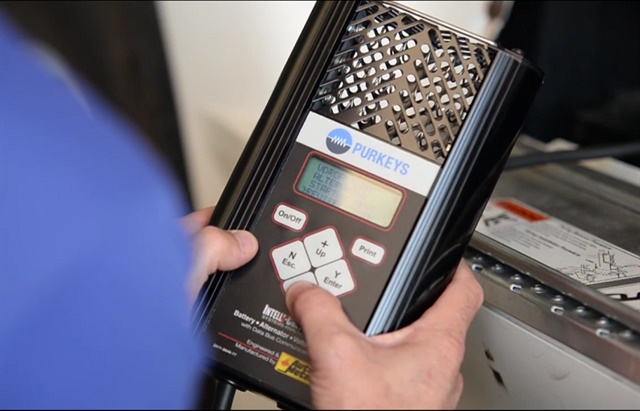
Purkeys has announced a new partnership with AutoMeter aimed at supplying fleets and technicians with the necessary tools to diagnose and repair electrical issues.

AutoMeter is a designer and manufacturer of heavy-duty electrical system testing equipment and battery maintenance products.

The products available through this partnership include:

Handheld Electrical Analyzer: Purkeys'/AutoMeter Handheld Electrical Analyzer is an automated tester that guides technicians through a series of tests for heavy-duty electrical systems.Benchtop Electrical Analyzer: Purkeys'/AutoMeter Benchtop Electrical Analyzer is an automated tester that reduces the time and effort needed to identify and troubleshoot electrical issues. It can conduct preventative maintenance checks, voltage drop tests, battery tests, and more.6-Station Battery Charger: Purkeys'/AutoMeter 6-Station Battery Charger is a multi-station, automatic, 5 amp battery charger for AGM batteries.

"We are thrilled to be able to take our partnership with Purkeys to the next level,” said Scott Crerar, vice president of sales and marketing for AutoMeter. “They are a proven leader in the heavy-duty market and their experience only serves to strengthen AutoMeter's category leadership.”

Related: Purkeys Offers Products Through Fontaine PartSource

Follow @HDTrucking on Twitter

...Read the rest of this story
Engine Stop-Start System Saves Fuel for New York’s Trash Trucks

<img width="150" src="http://www.automotive-fleet.com/fc_images/articles/m-start-stop-1.jpg" border="0" alt="

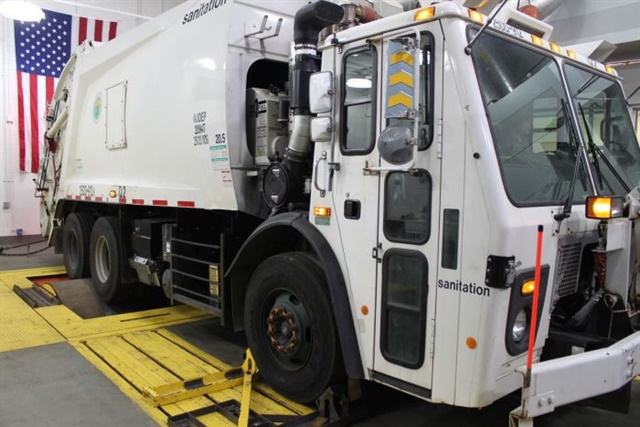
DSNY's dyno-equipped evaluation facility in Queens, N.Y., proved the engine stop-start system's concept was sound, and it's saving substantial fuel in real operations.  Photos: Effenco

">

DSNY's dyno-equipped evaluation facility in Queens, N.Y., proved the engine stop-start system's concept was sound, and it's saving substantial fuel in real operations.  Photos: Effenco

">

New York City's Department of Sanitation has been testing an engine stop-start system with impressive fuel savings.

DSNY has been testing hybrid-drive powertrains in its trash-collection trucks. But the anticipated fuel savings have not materialized as they have in other locales. Savings are only 10-15% with hydraulic hybrids, probably because speed between the many stops is not great enough to build kinetic energy that can be recaptured during braking.

But with the extensive amount of time the fleet's trucks spend idling at stop lights and in traffic backups, a new stop-start technology is showing a 30-40% improvement in fuel efficiency, says Rocco DiRicco, DSNY's deputy commissioner, support services. “It's simple, with almost no weight. We think it's close to being the silver bullet for our front-line trucks.” One is now being tested and DiRicco anticipates buying more.

The impressive fuel savings accrue from the system's cutting of engine hours by 40 to 50%. The system's maker, Effenco, in Montreal, Quebec, calls it Active Stop-Start, and says it can be retrofitted to existing trucks or installed on new ones. It's explained on its website:

“Because of the high stopping frequency of vocational trucks, the system is equipped with a powerful electric hybrid starter linked to the engine through a constant mesh PTO connection. The system uses this starter to restart the engine and does not add any load or wear to the existing electric starter and batteries. On releasing the brakes, the PTO-mounted electric hybrid starter takes less than half a second to take the engine from a stop to idle speed making the vehicle as responsive as it would have been if the engine had been running.”

A power pack consisting ...Read the rest of this story

Does Clean Equal Green?

<img width="150" src="http://www.automotive-fleet.com/fc_images/articles/m-whiting-systems-1.jpg" border="0" alt="

Thanks to automation advances, modern drive-through truck washes can clean and wax a vehicle in 10 minutes or even less.  Photo: Whiting Systems

">

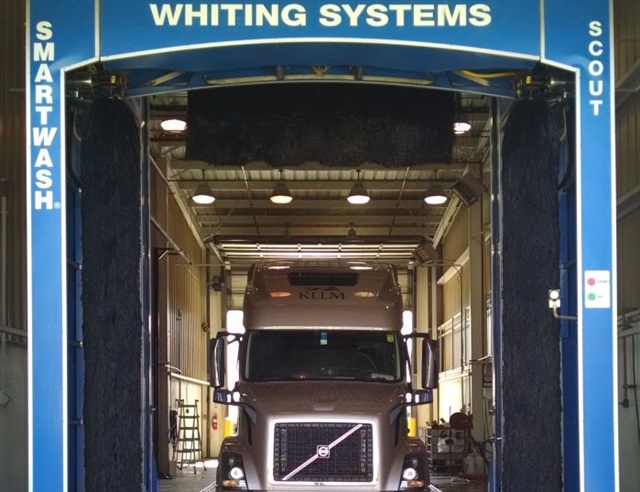
Thanks to automation advances, modern drive-through truck washes can clean and wax a vehicle in 10 minutes or even less.  Photo: Whiting Systems

">

A truck is a rolling billboard, and companies have taken advantage of that to advertise their wares since Theodore Roosevelt was president and goods were as likely to be delivered by horse-drawn wagons as by a clattering, coughing, new-fangled motor vehicle.

Colorful, clean trucks can offer a gleaming, positive image of a fleet and the services it provides or the products it carries — but the opposite can also be true, with dirty, muddy, scarred-up trucks sending a far less positive message.

And it's not always just the public (or prospective drivers) taking note.

“A dirty truck is a rolling bullseye,” says Darry Stuart, CEO of DWS Fleet Services. “There is no question that DOT officers take note of dirty trucks. Because they know that a truck that hasn't been washed probably hasn't been well maintained, either.”

Russ Whiting, owner of the Whiting Systems nation truck-washing chain, agrees. “You'll never get that on record” from the DOT he says. “But it's true. If a truck looks sloppy, then odds are its maintenance program is sloppy.”

According to Todd Mathes, technical expert at 3M Automotive Aftermarket Division, there are three considerations when investing in fleet maintenance — brand appeal, safety and resale value. And vehicle appearance directly affects all of those goals. “Showing a trucking company's brand in the best light is a main reason to keep the fleet exteriors looking good,” Mathes says. “But there are other positive payoffs, too.”

Mathes says if a truck's finish is not properly maintained, the clarity of paint image will fade over time, decreasing the resale value. Additionally, if the truck has damage and is not maintained, it could cause additional issues such as rust or structural integrity. ...Read the rest of this story