Author: Vitaliy Dadalyan

Trump again touts infrastructure plan during campaign-style speech

Chao tells Senate details will be available before the end of September.

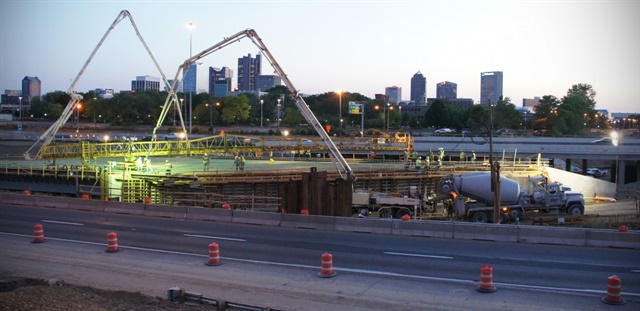
President Trump delivered a campaign-style speech June 7 in Cincinnati to again tout his $1 trillion infrastructure plan that remains under development.

“The promise of a safe, reliable and modern infrastructure hasn't been kept, but we're going to keep it,” Trump said. He spoke hours after Transportation Secretary Elaine Chao told a Senate panel a detailed proposal should be finalized before the end of September.

read more

...Read the rest of this story

Trump Sticks to Vague Infrastructure Script

<img width="150" src="http://www.automotive-fleet.com/fc_images/blogs/m-dotcolumbuscrossroadsbridge-1.jpg" border="0" alt="

Photo: U.S. DOT

">

Photo: U.S. DOT

">

President Trump took his infrastructure show on the road June 7, talking up the trillion-dollar investment that he first spoke of the day after the election to a campaign-style rally event at a riverside venue in Cincinnati.

While Trump again touted that big, bold proposal, he revealed little more of what the initiative will consist of when it is eventually presented to Congress.

Only a broad outline of the $1 trillion plan has yet come into focus— the federal government would invest $200 billion in cash and tax credits that would stoke an additional $800 billion in private investment.

In Cincinnati, the president made a pitch for bipartisan action on infrastructure, asking “Democrats and Republicans to work together, if that's possible,” to pass his package.

On the other hand, he also revisited old battles, claiming for example, per his published remarks, that “the Obama Administration's attempt to rebuild the country's infrastructure was an expensive waste that saw little money actually go to infrastructure.”

Speaking at the Rivertowne Marina on the Ohio River, Trump limited his remarks on his infrastructure plan to the importance of rebuilding the nation's inland waterways. Published excerpts note, for example, that inland waterways support more than 270,000 jobs and $30.9 billion in economic activity and that “our inland waterway system requires $8.7 billion in maintenance and the maintenance backlog is only getting worse.”

But it was the president's continued insistence in Cincinnati on the overwhelming importance of private investment to fix what he called America's “crumbling infrastructure” that garnered outright rebuke from the Alliance for Toll-Free Interstates. “Privatizing our infrastructure through public-private partnerships will not solve our nation's transportation problems,” said Stephanie Kane, ATFI spokesperson, in a statement.

“To be clear,” she continued, “when President Trump spoke today [June 7] about ‘private dollars' in infrastructure, specifically ...Read the rest of this story

DOL Withdraws Controversial Obama-Era Independent Contractor Guidance

<img width="150" src="http://www.automotive-fleet.com/fc_images/news/m-img-2461.jpg" border="0" alt="

Photo: Deborah Lockridge

">

Photo: Deborah Lockridge

">

Trucking companies that use independent contractors could be breathing a sigh of relief after the Department of Labor Wednesday withdrew an Obama-era guidance that some viewed as an attack on the owner-operator model used in trucking.

The 2015 Obama administration guidance on independent contractors expanded the definition of employees as part of a crackdown on so-called “misclassification” of employees as contractors.

That guidance said the department would consider most workers to be employees under the Fair Labor Standards Act. It told employers to use an “economic realities test” in determining whether workers are employees.

At the time, the American Trucking Associations called it "an aggressive departure from prevailing classification standards," saying it "no doubt signals an attack on industries like trucking that rely significantly on contractors."

The “economic realities” test has been used by several courts and regulatory agencies for years and includes factors such as:

The extent to which the work performed is an integral part of the employer's business; The worker's opportunity for profit or loss depending on his or her managerial skill; The extent of the relative investments of the employer and the worker; Whether the work performed requires special skills and initiative; The permanency of the relationship; and The degree of control exercised or retained by the employer.

At the time that guidance originally was issued, Rob Moseley, transportation attorney with Smith Moore Leatherwood LLP, called it “problematic” for the industry, noting, ”A trucking company is not going to be able to say having truckers move your freight isn't an integral part of your business.”

Wednesday's brief announcement on the DOL website said “removal of the administrator interpretations does not change the legal responsibilities of employers under the Fair Labor ...Read the rest of this story

Navistar Pins Q2 Loss on New Vehicle Sales, Used Trucks

<img width="150" src="http://www.automotive-fleet.com/fc_images/news/m-international-rh-series-web-1-2.jpg" border="0" alt="

International RH Series Photo: Navistar

">

International RH Series Photo: Navistar

">

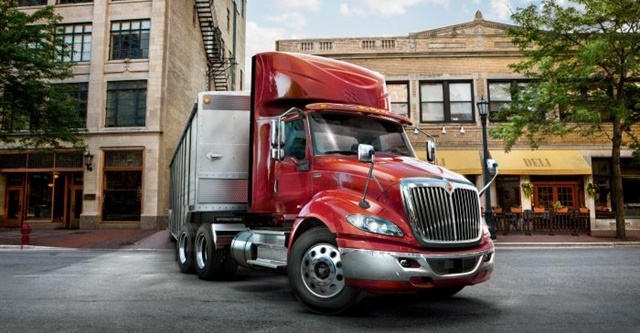
Navistar International Corp. (NYSE: NAV) reported a second quarter 2017 net loss of $80 million on revenues of $2.1 billion. The truck and engine maker attributed those results to lower U.S. and Canada sales of its trucks and buses and to heightened used-truck losses.

Revenues in the quarter were down 5% (compared to $2.2 billion in Q2 2016), according to the company's June 7 earnings release. Navistar said that decrease “primarily reflects lower volumes in the company's core (Class 6-8 trucks and buses in the United States and Canada) market, where chargeouts were down 5%, but [were] higher than industry core market volumes, which were down 13% year-over-year.”

Navistar also reported that higher used truck losses led it to take a $60 million charge in the second quarter, pointing out that its inventory of “legacy” MaxxForce-13-powered used trucks was the largest contributor to the year-over-year decline.

As a result, the company stated it is changing its sales strategy for these units, trying to sell more units into export markets, "a move it expects will accelerate efforts to reduce its inventories of these trucks.”

The Q2 results also included $18 million in adjustments, primarily from pre-existing warranties, asset impairment charges, restructuring of manufacturing operations, and debt financing charges.

“We are on track to improve on last year's results, but still have quite a bit of work to do in the second half,” said Troy A. Clarke, Navistar chairman, president and CEO. “However, the work we've done in the first six months growing share, building our backlog, and managing costs, combined with improving industry conditions, positions us to deliver a stronger second half.”

Navistar reported that Q2 EBITDA was $47 million, compared to $135 million a year earlier. It also said that it ended Q2 with $949 million in consolidated cash, cash equivalents, and ...Read the rest of this story
Navistar: Legacy EGR issues coming to an end

Export plan should pare down inventory of 7,000 trucks with MaxxForce 13-liter engines by end of 2018.

An industry-wide surplus of used trucks in the U.S. is driving down the “price gap” between domestic and export valuations, which is spurring Navistar to shift sales of its bulging 7,000 unit inventory of trucks equipped with its discontinued MaxxForce 13-liter exhaust gas recirculation (EGR) only engine overseas.

read more

...Read the rest of this story

Navistar Pins Q2 Loss on New Vehicle Sales and Used Trucks

<img width="150" src="http://www.automotive-fleet.com/fc_images/news/m-international-rh-series-web-1-2.jpg" border="0" alt="

International RH Series Photo: Navistar

">

International RH Series Photo: Navistar

">

Navistar International Corporation (NYSE: NAV) has reported a second quarter 2017 net loss of $80 million on revenues of $2.1 billion. The truck and engine maker attributed those results to lower U.S. and Canada sales of its trucks and buses and to heightened used-truck losses.

Revenues in the quarter were down 5% (compared to $2.2 billion in Q2 2016), according to the company's June 7 earnings release. Navistar said that decrease “primarily reflects lower volumes in the company's Core (Class 6-8 trucks and buses in the United States and Canada) market, where chargeouts were down 5%, but [were] higher than industry Core market volumes, which were down 13%t year-over-year.”

Navistar also reported that higher used truck losses led it to take a $60 million charge in the second quarter, pointing out that its inventory of “legacy” MaxxForce 13-powered used trucks was “the largest contributor to the year-over-year decline.”

As a result, the company stated it is changing its sales strategy for these units “to take advantage of additional opportunities to sell more units into export markets, a move it expects will accelerate efforts to reduce its inventories of these trucks.”

The Q2 results also included $18 million in adjustments, primarily from pre-existing warranties, asset impairment charges, restructuring of manufacturing operations, and debt financing charges.

“We are on track to improve on last year's results, but still have quite a bit of work to do in the second half,” said Troy A. Clarke, Navistar chairman, president and chief executive officer. “However, the work we've done in the first six months growing share, building our backlog, and managing costs, combined with improving industry conditions, positions us to deliver a stronger second half.”

Navistar reported that Q2 EBITDA was $47 million, compared to $135 million a year earlier. It also said that it ended Q2 ...Read the rest of this story

New Economic Indicators for Truck Freight Use DAT Truckload Data

Broughton Capital, an independent financial research firm, has unveiled a set of tools for truckload industry market watchers called DAT Freight Barometers.

Based on data from DAT Solutions' truckload freight marketplace and the company's DAT RateView database, Broughton has developed proprietary econometric algorithms that provide “predictive value in determining the magnitude and direction of trends in both spot and contract market rates, as well as predictive value for the overall economy,” said Donald Broughton, managing partner of Broughton Capital.

DAT's load board network expects to host 141 million posted loads and trucks in 2017, about 485,000 loads per business day, and its truckload rates database houses more than $33 billion of spot and contract freight payments.

“We have long considered DAT the equivalent of the NYSE and NASDAQ of trucking,” said Broughton, who focuses on financial performance of companies in the transportation sector and the underlying goods flow and economic factors driving that performance. Freight barometers based on DAT data have been developed for the three major equipment types: van, flatbed, and refrigerated vans.

For more information on DAT Freight Barometers, contact [email protected].

DAT data also will be used by Transfix for its upcoming Truck Futures Exchange. The indexed data, which will be drawn from a limited number of high-density trucking freight lanes, will form the foundation for the company's hedge contracts.

“We're delighted to see that the data integrity processes we've spent years developing for our freight exchange and rates databases are enabling new business opportunities based on the data,” said Don Thornton, DAT senior vice president.

Follow @HDTrucking on Twitter

...Read the rest of this story