Author: Vitaliy Dadalyan

FA-4: Oil Worth Waiting For

<img width="150" src="http://www.automotive-fleet.com/fc_images/articles/m-oil-checking-1-1.jpg" border="0" alt="

The new API FA-4 oil-service category was developed specifically to work in concert with the new generation of more fuel-efficient heavy-duty diesels starting to come on the market. Photo: Shell Oil

">

The new API FA-4 oil-service category was developed specifically to work in concert with the new generation of more fuel-efficient heavy-duty diesels starting to come on the market. Photo: Shell Oil

">

It's too early in the game to officially say that the fuel efficiency promise of the newly rolled out API FA-4 oil-service category has been met. On the other hand, there is enough research already in the bag to state with a high degree of certainty that this spec formulation will give a noticeable boost to mpg — and do so without any effort or even decision-making on the part of many fleets.

FA-4 is one of two new API donuts that started appearing on heavy-duty engine oil packaging late last year; the other being CK-4. CK-4 oil is the one the vast majority of fleets are now using (or will be using once their stocks of CJ-4 oil are used up.) CK-4 oil is backward-compatible for applications that originally required the use of CJ-4 oil.

Both CK-4 and FA-4 oils are formulated to improve resistance to aeration and to increase shear stability to ensure engines are protected from wear and tear. FA-4 is distinguished because the category was developed specifically for formulating oils to work in concert with the new generation of heavy-duty diesel engines — starting to come on the market this year — to improve fuel mileage.

An example of third-party research attesting to the fuel economy benefit expected of FA-4 oils comes by way of a recent Confidence Report issued by the North American Council for Freight Efficiency and Carbon War Room. The report focuses on the general benefit to mpg to be had by switching to a lower-viscosity CJ-4 or CK-4 oil, but also shows how moving all the way to FA-4 will up the increase.

The report shows ...Read the rest of this story

Commentary: Complacency Is a Killer

<img width="150" src="http://www.automotive-fleet.com/fc_images/articles/m-rolf-lockwood-20-1.jpg" border="0" alt="

Rolf Lockwood

" >

Rolf Lockwood

" width="185" height="248">

Every time I write about wheel security, I get e-mails from technicians complaining about the complacency they see in their own shops when it comes to wheel care. So I know it's an ongoing issue. Informal chats here and there always confirm it, and people are forever telling me to keep on pushing. So I do.

There will be those of you who say, “Not again,” but I make no apologies for harping on this. I wrote about wheel-offs in this space just over a year ago, and previously in 2014. Fact is, I've been addressing it since the 1990s when wheels seemed to be falling off trucks all the time — and killing people in the process. They still are, though maybe not so often because we understand more these days. But we all know they happen, and I don't need iffy statistics to prove it.

I'm writing now because of a disturbing e-mail I had not long ago from a veteran technician at a large fleet, which he described as “so-called leaders in preventive maintenance.”

Not so, apparently.

“I can assure you complacent thinking is the norm around here,” he wrote, requesting anonymity.

“Sure we had the new procedures and some training thrown at us when wheel-offs were in the news, but that is not the case now. Of the 12 technicians working in my shop, there is only one installing wheels correctly, one comes close, and the others aren't even in the ball park. Management does nothing and will do nothing until a wheel-off occurs. And when that does happen they will review the procedures taken, and when they find the tech who didn't do it right they will fire him and remind those that are left of the proper procedures. A week or two later, things will be ...Read the rest of this story

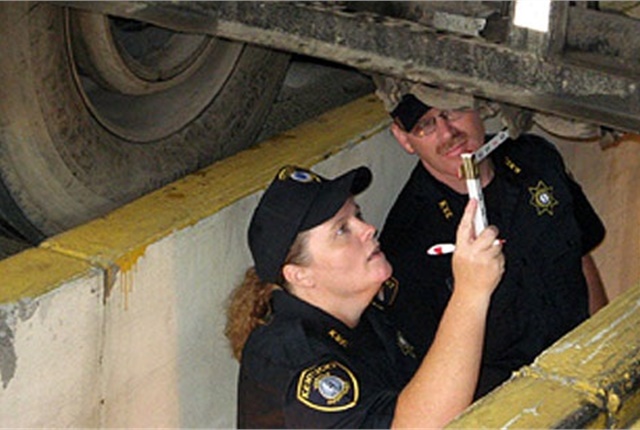
CVSA Brake Safety Day Scheduled for September

The Commercial Vehicle Safety Alliance announced that its Brake Safety Day is taking place on Sept. 7 this year across North America.

Law enforcement agencies will conduct inspections on large trucks and buses to identify out-of-adjustment brakes, and brake system and antilock braking system violations, as part of the CVSA's Operation Airbrake Program. This year's Sept. 7 Brake Safety Day follows up on CVSA's May 3 unannounced Brake Safety Day and replaces the seven-day Brake Safety Week campaign from previous years.

The goal of Brake Safety Day is to reduce the number of accidents caused by poorly maintained brakes on commercial vehicles by conducting roadside mechanical fitness inspections and identifying and removing vehicles with critical brake violations from the road.

The event will also feature outreach and educational efforts by inspectors, carriers, and others. Brake Safety Day activities seek to educate drivers, mechanics, owner-operators, and others on the importance of proper brake maintenance, operation, and performance.

On Brake Safety Day, inspectors will primarily conduct the North American Standard Level I Inspection, which is a 37-step procedure that includes an examination of both driver operating requirements and vehicle mechanical fitness. Inspections conducted will include inspection of brake system components to identify loose or missing parts, air or hydraulic fluid leaks, worn linings, pads, drums or rotors, and other faulty brake system components. ABS malfunction indicator lamps are also checked. Inspectors will measure pushrod stroke, where applicable. Vehicles with defective or out-of-adjustment brakes will be placed out of service

In the 10 jurisdictions using performance-based brake testing equipment, vehicle braking efficiency will be measured. PBBT systems include a slow speed roller dynamometer that measures total vehicle weight and total brake force from which braking efficiency is determined. The minimum braking efficiency for trucks is 43.5%, required by U.S. federal regulation and the CVSA out-of-service criteria.

Brake-related violations made ...Read the rest of this story

FTR: The Economics of 33′ Trailers Only Benefit a Few Markets

<img width="150" src="http://www.automotive-fleet.com/fc_images/news/m-twin-33s-1.jpg" border="0" alt="

Photo: Tom Berg

">

Photo: Tom Berg

">

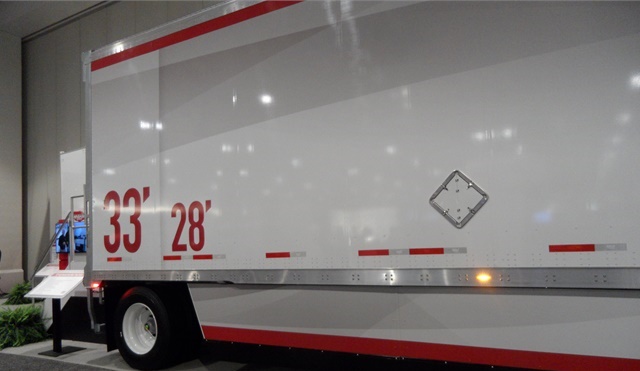
FTR released a new report detailing the economics of using twin 33-foot trailers compared to twin 28-foot trailers and standard 53-foot trailers, showing that in only specific cases would the extra capacity lead to a benefit.

The change from 28-foot to 33-foot double trailers has primarily been based on safety concerns, but newer technologies have allowed for the safe operation of larger trucks since the last expansion of length limits in the early 1990s, according to FTR. Regulators have been debating a proposal to increase the federal maximum length, which would lead to an overall increase of 10 feet for the entire rig.

The thinking behind such an increase is that it would increase capacity per truck. But in reviewing the economics of the change, FTR found that adoption of double 33-foot trailers would likely be limited. It would benefit primarily less-than-truckload and parcel carriers and more niche operations such as the movement of caskets or insulation. Based on its own research, FTR expects load conversion in just the 1-2% range.

While double trailers present increased capacity in space and weight over a single trailer, for shippers of low-density freight the gain in loading capacity is only 4%. The main reason that carriers choose twin trailers over a single trailer is what the industry calls "unit" loading, a common practice in LTL and parcel operations. Since the cube advantage over 53-foot trailers is relatively small, the main reason for a carriers' preference for doubles is to avoid the re-sorting required to consolidate many customer shipments as the freight moves across the hub-and-spoke terminal networks.

FTR found that for the segments most directly affected by increasing the allowable trailer length, they would see as much as a 10% increase in cost savings. It also expects the longer trailers to decrease the number of ...Read the rest of this story

FedEx Delivers Quarterly Profit of More Than $1 Billion

Parcel delivery and trucking company FedEx Corp. on Tuesday reported it turned its finances around dramatically in the most recent quarter as it also wrapped up its fiscal year.

It reported fiscal fourth quarter net income of $1.02 billion, or $3.75 per share, compared to a loss of $70 million a year earlier, or 26 cents per share. Revenue increased to $15.7 billion from $13 billion.

Operating results benefited from higher base rates, increased package volume, and the inclusion of TNT Express results, according to the Tennessee-based company.

“Net income and earnings per share reflect tax benefits of $104 million, or 37 cents per diluted share, related to the implementation of new foreign currency tax regulations, the adoption of a new accounting standard for share-based payments, and certain transactions related to the TNT Express integration,” FedEx said in a statement.

For fiscal 2017, FedEx reported net income skyrocketed to $3 billion, or $11.07 per share, compared to $1.82 billion, or $6.51 per share, during its 2016 fiscal fourth quarter. Revenue for fiscal 2017 surged to $60.3 billion from $50.4 billion a year earlier.

Despite the better overall results, the FedEx Freight Segment saw operating income fall by 3% to $133 million in the fiscal fourth quarter as revenue increased 6% to $1.7 billion.

“Revenue increased due to higher base rates and fuel surcharges. Average daily shipments were flat as the company focuses on improving revenue quality,” FedEx said. “Operating results decreased slightly as higher salaries and wages and increased information technology expenses offset the benefit from higher base rates.”

The FedEx Express Segment saw operating income improve 14% to $863 million. Revenue climbed 7% to $7.18 billion, primarily due to increased package volume, driven by international export growth of 5%, and higher base rates, according to the company.

The company's TNT Express segment reported ...Read the rest of this story

Date and Location Set for Pilot Fuel Rebate Fraud Trial

<img width="150" src="http://www.automotive-fleet.com/fc_images/news/m-pilot-jim-park-1.jpg" border="0" alt="

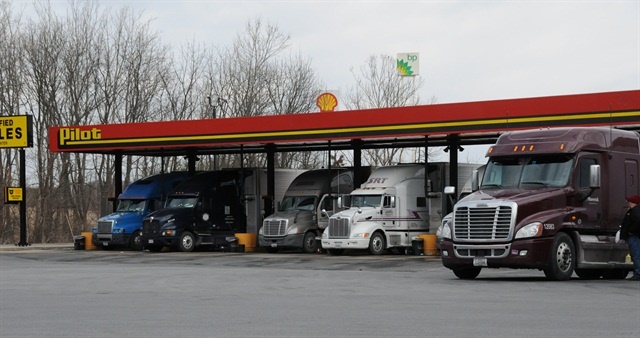
Fleets were allegedly bilked out of rebates, prosecutors say. Photo: Jim Park

">

Fleets were allegedly bilked out of rebates, prosecutors say. Photo: Jim Park

">

A date and location have been set for the trial of former Pilot Flying J executives in a fuel rebate scandal alleging a conspiracy and scheme to defraud customers, according to a report in the Knoxville News Sentinel.

Prosecutors and defendant lawyers agreed to hold the trial in Chattanooga, Tennessee, on Halloween of this year. However, a district judge is reportedly exploring moving the trial farther away from Pilot's headquarters in Knoxville.

Ex-Pilot Flying J president Mark Hazelwood and seven other company executives are being accused of defrauding customers of millions of dollars by cutting the amount of rebates they received for buying certain amounts of fuel. Pilot owner and CEO Jimmy Haslam was not among those indicted in the case and he has denied any knowledge of the fuel rebate scheme.

Federal investigators found that Pilot promised fuel rebates to trucking customers but never actually paid them out, defrauding the 5,500 customers of more than $56 million. In 2014, the company reached a $92 million settlement with authorities and promised to help with the ongoing investigation. Pilot also settled with trucking customers that sued the company for $87 million.

In addition to fraud charges, Hazelwood has also been charged with witness tampering, and former vice president of direct sales Scott Wombold has been charged with lying to agents with the FBI and IRS. Ten former Pilot employees have already pleaded guilty to the scheme.

Related: 8 Indicted in Pilot Flying J Fuel Rebate Scam

Follow @HDTrucking on Twitter

...Read the rest of this story

Firestone Launches All-Position Wide Base Radial Tire

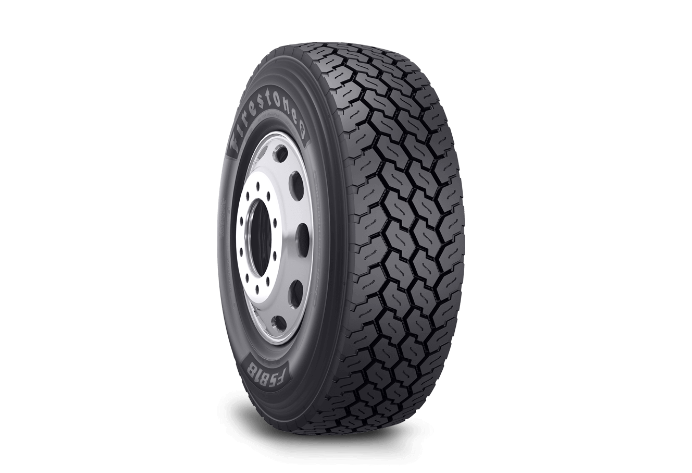
Bridgestone Americas has launched the Firestone FS818 wide base radial truck tire for on- and off-highway applications.

Designed for all-position use, the Firestone FS818 utilizes has a tread compound that resists cuts, chips, tearing and irregular wear. The tire is designed with a deep, self-cleaning tread pattern for better traction and longer mileage. It also features stone rejector platforms in every groove to increase durability.

“We recognized a need for a durable, hardworking tire that is versatile enough to perform in on-and-off-highway environments,” said Sanjay Nayakwadi, director of product strategy, Bridgestone Americas Tire Operations. “The Firestone FS818 tire does just that, enabling fleets to haul higher payloads and tackle challenging service environments.”

Key features of the Firestone FS818 tire include:

Block sipes to slice through water and provide solid grip on wet roads;Four steel belts to extend casing life while providing protection from cuts and punctures;Sidewall protector ribs to fight against cuts, snags and abrasions; andBlock design and edges optimized for the performance required in on/off-highway environments.

The Firestone FS818 is available in the following sizes: 385/65R22.5, 425/65R22.5, and 445/65R22.5.

Follow @HDTrucking on Twitter

...Read the rest of this story