Author: Vitaliy Dadalyan

Accuride Launches ProFinish Steel Wheel Refinishing

<img width="150" src="http://www.automotive-fleet.com/fc_images/news/m-profinish-wheels-1.jpg" border="0" alt="

Photo: Accuride

">

Photo: Accuride

">

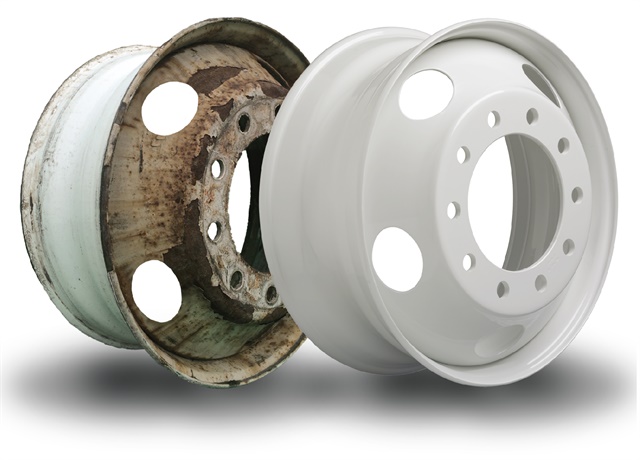
Accuride has introduced the ProFinish steel wheel refinishing service for the North American commercial vehicle market. Now in full operation, ProFinish will refinish all steel wheel makes with Accuride's Steel Armor coating that protects the wheel from corrosion and comes with a 12-month warranty against rust damage.

The wheel-coating process is critical to ensuring the correct paint thickness on the mounting surfaces of wheels because of a correlation between wheel nut torque loss and excessive paint thickness, according to Accuride.

The ProFinish process achieves consistent filiform coating thickness under the 3.5 mils required by OEM standards, said Accuride. The wheel-refinishing service operates at the company's Henderson, Ky., steel wheel production facility using the same coating line that applies the Steel Armor powder coating to its original-equipment wheels.

The company said there is demand from large fleets for a standardized wheel refinishing process that is more consistent.

“Accuride launched ProFinish in response to the concerns fleet and aftermarket customers had with the coating quality and durability of their refinished wheels,” said Scott Hazlett, Accuride Wheels president. “ProFinish gives them the advanced corrosion protection of Steel Armor coating on their refinished steel wheels. Our ProFinish refinished wheels will stand up to the toughest road environments in North America and deliver a level of quality and performance other wheel refinishers simply can't match.”

The ProFinish refinishing process begins with a quality inspection to weed out wheels containing cracks and other flaws that compromise structural integrity. The wheels then undergo a shot-media blast that removes all the paint, regardless of coating type.

The clean wheels then undergo Accuride's proprietary three-phase Steel Armor coating process:

Zinc Phosphate – The process begins with the application of tri-metal zinc phosphate to prepare the metal for maximum adhesion.Epoxy E-coat – Next, Accuride applies its proprietary formula ...Read the rest of this story

J.D. Power Revises May Used Truck Numbers

<img width="150" src="http://www.automotive-fleet.com/fc_images/news/m-pete-579.jpg" border="0" alt="

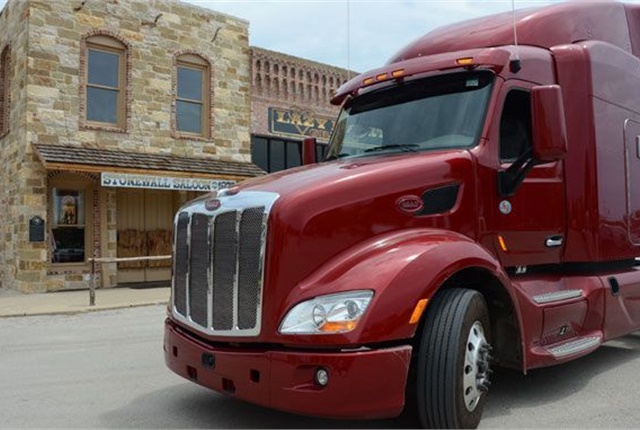
According to J.D. Powers' latest Used Commercial Vehicle Report, the Peterbilt Model 579 is the market leader, due to a larger-than-normal number of 2015 models entering the market. Photo: Jim Park

">

According to J.D. Powers' latest Used Commercial Vehicle Report, the Peterbilt Model 579 is the market leader, due to a larger-than-normal number of 2015 models entering the market. Photo: Jim Park

">

The North American used commercial truck market returned to normal levels of activity in June, following a significant slump in May of this year.

That's according to a new report issued by J.D. Powers & Associates on July 17, which states that Class 8 auction levels in June stabilized considerably, with volume up and prices dropping mildly. Retail sales prices also returned to more normal levels, with prices holding steady and minimal depreciation.

The report, which can be downloaded here, notes that average prices of used commercial trucks in the first five months of 2017 is running 6.8% lower than the same period in 2016.

The average sleeper sold in wholesale in May of this year was 5 years old, with 513,859 miles on the odometer and selling for $28,442. On the retail side of the equation, the average sleeper tractor sold in May was 72 months old with 448,696 miles, bringing $48,929. Compared to April 2017 figures, these trucks, on average, were 2 months newer, had 3,785 fewer miles on them, and brought in $460 more.

The report said that retail sales prices for 3- to 5-year-old trucks dropped by an average of 1.7% per month this year, an improvement over 2016, which saw prices falling by an average of 2.4% per month in the same period.

Average pricing by age shows 3-year-old trucks bringing in an average of $81,728, which was $6,677, or 8.9% higher than April. Four-year-old trucks brought an average of $60,675, which was $92, or 0.2% higher than in April, while 5-year-old trucks brought in an average of $44,900, which was $3,849, or 8.4% lower than the previous ...Read the rest of this story
Evaluating Options for Outside Service

More than 15 cents per mile. That's what it costs a fleet on average for maintenance and repair, according to the American Transportation Research Institute. That equates to about 10% of a fleet's vehicle-based operating costs.

Currently fleets are conducting 75% of their maintenance in house, according to Molly MacKay Zacker, vice president of operations at MacKay & Company, a market research company for the trucking, construction and agricultural equipment industries. However, when her firm surveys fleets every four years in its Truck and Trailer Service Study, fleets indicate they want to outsource more of their service work — yet the percentage of in-house service continues to remain steady. MacKay's predictions are that in 2020, 68% of the 672 million service labor hours will be handled in house.

According to MacKay Zacker, “The reason fleets cite for not outsourcing more is they can't afford the turnaround time.” Quality of work and cost of repairs are the other items that top the list of fleet concerns about outsourcing their service work. “Concern about downtime and turnaround time is a huge issue,” she explains, “and it is not just getting the truck where it needs to be to get the service done, it is how long is it going to take to fix it once it gets there.”

She adds, “Fleets consider that to be a deep dark hole. The truck goes to [a shop] and they have no idea when it is coming out.”

CK Commercial Vehicle Research's Fleet Productivity Study found that 36.8% of the fleets surveyed (mostly fleets with fully staffed maintenance facilities) improved productivity over the past several years by performing more maintenance in house. Chris Kemmer, consultant at CK Commercial Vehicle Research, a market research company focusing on the trucking industry, says the average productivity gain was 14.5%. “It comes from ...Read the rest of this story

Large and Small, Fleets Focus on the Driver

<img width="150" src="http://www.automotive-fleet.com/fc_images/articles/m-deborah-lockridge1-20-1.jpg" border="0" alt="

Deborah Lockridge

" >

Deborah Lockridge

" width="185" height="244">

When your drivers nickname you the “vice president of happiness,” you must be doing something right.

Debbie Landry's official title at Wisconsin-based Halvor Lines is director of driver services. After spending many years heading up recruiting, a couple of years ago she shifted her focus entirely to driver retention.

“Basically I'm here for the drivers,” Landry says, from overseeing orientation and handling truck assignments to simply being there for drivers to come talk about problems or questions. Some even ship things to her office when they're on the road.

In her previous role, she had gradually been focusing more and more on retention rather than recruiting. So with the opening of a third terminal, the growing family business decided to create a new position to make that her official role and hired someone else to manage recruiting.

Landry says Halvor's turnover actually increased a bit last year, from 27% in 2015 to 35% in 2016, but she says that's largely due to the company hiring more new-to-the-industry trainees in a period of growth. She believes if it hadn't been for the company's driver retention efforts, that turnover would have been higher.

The company has 425 trucks and has been honored multiple times in the Truckload Carriers Associations' Best Fleets to Drive For competition. Halvor runs new equipment with lots of comforts, including satellite TV and exercise steppers. Drivers are home weekly or every other weekend. There's a health and wellness program, a passenger program, and a pet program.

But perhaps the open communication is one of the biggest reasons drivers stay. They are introduced during orientation to the people they'll deal with in various departments and are always welcome to talk to them. And if they don't feel comfortable going to their driver manager or the person who handles their paycheck, there's always ...Read the rest of this story

Geotab Brings J.J. Keller, TMW Software to Marketplace

<img width="150" src="http://www.automotive-fleet.com/fc_images/news/m-geotab-marketplace-1.jpg" border="0" alt="

Screenshot via Geotab

">

Screenshot via Geotab

">

Geotab has announced the launch of Driver DataSense from J.J. Keller & Associates and integrations to TMW Suite and TMW TruckMate from TMW Systems, through its online Marketplace.

To address the needs of mutual customers, J.J. Keller and TMW Systems are joining the Geotab Marketplace of mobile apps, software add-ins, and hardware add-ons, allowing Geotab customers more choice in customizing and extending fleet management capabilities.

The J. J. Keller Driver DataSense service helps fleets manage hours of service compliance based on data coming from the Geotab device, paper logbooks, and driver time records. A dedicated client service specialist interprets fleet data and provides compliance guidance and DOT audit support. Additionally, customers can gather Business Intelligence reporting and other fleet analytics with detailed views down to the specific violation through a secure online portal.

The service can help fleets with roadside inspections, CSA score improvement, best-practice time management, fuel use efficiency, and protection from DOT audits and interventions, according to J.J. Keller.

In the coming months, the Encompass solution from J. J. Keller will also debut on the Geotab Marketplace. It uses a cloud-based system to report on data captured from the Geotab ELD, and data from the driver's smartphone or tablet that has the J. J. Keller Mobile app.

“We are proud to partner with Geotab to offer the industry multiple options for hours of service compliance. Whether fleets prefer to have J. J. Keller compliance experts oversee the data coming from the Geotab device, or manage hours of service themselves using the J. J. Keller hours of service back office, we have a solution,” said Rustin Keller, executive vice president of J. J. Keller.

Both TMWSuite and TruckMate, from TMW Systems, are transportation management software for fleet operations that serve as the information hub of your organization, providing real-time visibility into order-entry, load-booking, ...Read the rest of this story

Report: Clean Diesel Trucks Make up 30% of Commercial Vehicles in U.S.

<img width="150" src="http://www.automotive-fleet.com/fc_images/news/m-clean-diesel-graph-2.jpg" border="0" alt="

Source: Diesel Technology Forum

">

Source: Diesel Technology Forum

">

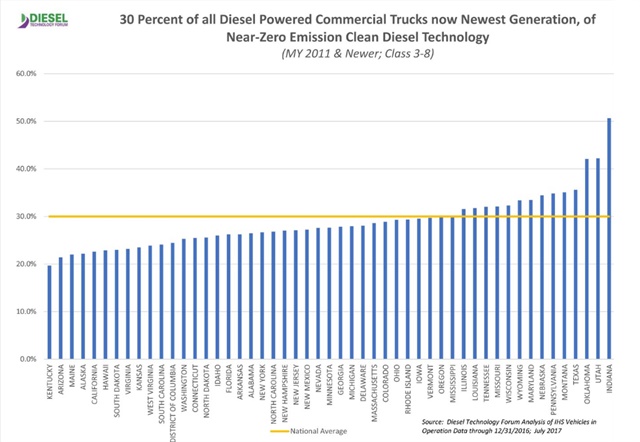
Clean diesel truck engines and emissions control systems now make up on average 30% of all heavy-duty commercial vehicles in operation in the U.S. as a result of adoption by fleets over the past five years, according to a recent report commissioned by the Diesel Technology Forum.

Nearly 3 million heavy-duty diesel commercial vehicles introduced from 2011-2016 in the U.S. are being powered by the latest clean diesel engines. Diesel Technology Forum executive director Allen Schaeffer said that in that 5 year period, clean diesel engines have saved 4.2 billion gallons of diesel fuel and reduced 43 million tons of carbon dioxide, 21 million tons of NOx and 1.2 million tons of particulate matter.

"Because diesel overwhelmingly dominates the heavy-duty truck sector and is also the number-one power source for medium-duty vehicles, the transition to newer generations of clean diesel technology (2011 and later model years) is significant,” said Schaeffer. “The 30% national average is up from just 25.7% last year.”

The research also found that benefits would increase with more adoption of newer clean diesel trucks. By percentage, Indiana is the state with the highest adoption rate of clean diesel Class 3-8 trucks at 51%, while green technology stalwart California ranks 46th at 25%.

“If California were to achieve the same new technology penetration as Indiana, it can eliminate another 200,000 tons of NOx and 11,000 tons of fine particles that would bring cleaner air faster to all California communities than any other strategies," said Schaeffer.

The research was conducted by HIS Markit, a global technical marketing research firm. State rankings data is based on Diesel Technology Forum analysis of IHS vehicles in operation in operation data representing Class 3-8 diesel trucks from model year 2011 through 2016 in all 50 states and the District of Columbia through Dec. 31, 2016.

"The ...Read the rest of this story