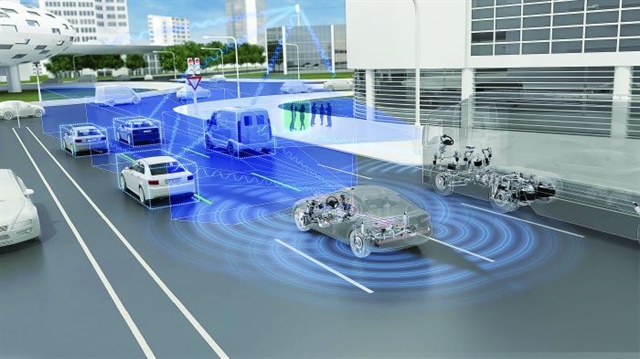
Author: Vitaliy Dadalyan

Are fuel economy standards the linchpin of the light vehicle industry?

New report argues that federally-mandated fuel efficiency standards are critical to the fiscal health of light vehicle OEMs.

A new report commissioned by the nonprofit organization Ceres argues that national fuel economy and emissions standards can help increase the viability and international competitiveness of domestic light vehicle manufacturers and suppliers – and may be critical to sustaining innovation and their fiscal health as well.

read more

...Read the rest of this story

Tires: Avoiding failures

Simple steps can help fleets and their drivers avoid catastrophic truck and trailer tire debacles while on the road. Checking and maintaining proper air pressure for truck and trailer tires is probably one of the more irritating and time-consuming maintenance tasks faced by drivers and fleet managers alike. But simple steps can help fleets and their drivers avoid catastrophic truck and trailer tire debacles while on the road.

read more

...Read the rest of this story

ATRI: What Makes Younger Drivers Safe?

<img width="150" src="http://www.automotive-fleet.com/fc_images/news/m-student-driver-atri-1.jpg" border="0" alt="

Photo via ATRI

" >

Photo via ATRI

" width="350" height="216">

The American Transportation Research Institute released the phase one findings of its research into whether safe younger drivers can be identified through certain characteristics – a key step in developing ways for trucking companies to be able to hire younger drivers in the face of a driver shortage.

The research was conducted in the hopes of developing a Younger Driver Assessment Tool that would identify younger drivers who exhibit many of the same characteristics as safe, older commercial drivers. While younger drivers are typically less safe than drivers in other age groups, ATRI's report examines the underlying characteristics of the age group to find if there are individual traits that can reliably predict driver safety outcomes.

“The potential to screen for the safest candidates among younger new entrants is an exciting step in the industry's workforce expansion,” said Greg Koepel, vice president, workforce development and administration, Roehl Transport. “We look forward to working with ATRI in the development and testing of the Younger Driver Assessment Tool.”

Traits that can reliably predict which drivers might be prone to safer driving, including personality, health, and cognition, are identified and discussed in the report.

Personality traits that can indicate a propensity for unsafe driving behavior include low agreeableness, low conscientiousness, impulsivity, aggressions, and sensation seeking. Because of the relation between these traits and unsafe driving, ATRI would try to develop a tool to screen these characteristics out.

Health also plays a vital role in safety, as sleeping disorders, attention-related disorders, substance use, instability, and obesity can all correlate with increased driving risks. Even health related problems such as obesity, which don't have an obvious connection to driving, can be an indicator because of its association with increased fatigue.

Cognition concerns patterns of thinking, understanding and remembering, all of which come into play during complex tasks ...Read the rest of this story
Defensive Driving Program Focuses on Distracted Drivers

<img width="150" src="http://www.automotive-fleet.com/fc_images/news/m-pro-defense-driving-course-1.jpg" border="0" alt="

Screenshot via ITI

">

Screenshot via ITI

">

Instructional Technologies Inc., announced a new defensive driving program called Pro-Defense that focuses on the increasing amount and types of distractions professional drivers face on the road.

Through a series of eight courses, the Pro-Defense program teaches drivers the skills, focus, and attitude they need to navigate modern roads and protect themselves from distracted drivers.

“The concept of defensive driving hasn't changed much since the mid-1950s," said Laura McMillan, vice president of training development at ITI. "In that time, the roads have gotten more congested, the vehicles faster, and the drivers more distracted and aggressive. The changes mean any single-subject defensive driving course is outdated. Yet, while many of the basic skills still apply to defensive driving, we knew we needed to re-think it with a modern, structured approach.”

Distracted driving is the cause of 41% of all accidents, according to the National Highway Safety Administration, and driver inattention plays a role in a considerable portion of all crashes. Secondary tasks or activities, often as a result of handheld electronics use, have contributed to a shift in recent years, with driver-related factors present in almost 90% of crashes, according to a National Academy of Sciences study.

Fatigued driving is also playing a role, with a total of 16% of Americans admitting to nodding off while driving in the previous month, according to a study conducted by the National Safety Council.

“This research led many of our customers to ask for a new approach to use when talking to drivers about defensive driving,” said McMillan. “They realize that while the same basic principles apply, vehicles, traffic, and operations that require multi-tasking have all changed. Defensive driving is now increasingly about being able to read the road and the actions and intentions of other drivers. Pro-Defense is designed to change behaviors and replace them with ...Read the rest of this story
Solar Power for Your Truck or Trailer Refrigeration Unit

<img width="150" src="http://www.automotive-fleet.com/fc_images/articles/m-carrier-solar-panel-1.jpg" border="0" alt="

Carrier Transicold Thin Film Flexible Solar Panels are designed to maintain the refrigeration unit's battery charge. Photo: Carrier Transicold

">

Carrier Transicold Thin Film Flexible Solar Panels are designed to maintain the refrigeration unit's battery charge. Photo: Carrier Transicold

">

Transport refrigeration system batteries are increasingly being tapped to power additional electronics such as telematics devices, fuel-level sensors, interior trailer lighting and other accessories. Because these accessories can continue to draw power – sometimes up to a few amps per hour – while the refrigeration unit is off, the reefer battery might not have enough charge to start the engine if the unit has not been operated for some time. That could mean an expensive jump-start, and it also means trailers drop off of asset-tracking systems.

But solar power options are coming to the rescue for some fleets.

K&J Trucking started testing Thermo King's ThermoLite solar panels four years ago on five trailers. After two years, the Sioux Falls, South Dakota-based refrigerated fleet liked the results well enough to spec them on a new trailer order replacing half its trailer fleet. By that point the return on investment was clear, according to Maintenance Manager Lou Charette.

“The solar option works well for us on the reefer end, because trailers get into places [where they shouldn't], and with tracking devices they tend to drain batteries in a two-to three-week period,” he says. “A trailer shouldn't sit that long, but they do, it's as simple as that. With this, the battery is constantly ready.

“It makes it so we can spot the trailer at any time, because if the battery goes dead, the GPS tracking goes out.” The solar option also eliminates middle-of-the-night service calls for jump-starting, “and any service call starts at $300 these days.”

In addition, battery life has been significantly extended.

Thermo King's ThermoLite solar panel solution was developed to provide an alternative power source to both refrigerated and dry van fleets and offset battery drain from ...Read the rest of this story