Author: Vitaliy Dadalyan

Navistar: VW partnership a win-win

Adapting VW's products for the U.S. market isn't as challenging as Navistar originally thought, according to the OEM.

At a Navistar ride and drive event held at its proving grounds in New Carlisle, IN, this week, company executives told Fleet Owner that the partnership agreement with Volkswagen Truck & Bus is off to a “robust start,” with both meshing well from the get-go.

“You would think there would be a lot of cultural differences, but surprisingly there's not much,” said David Majors, vice president of product development.

read more

...Read the rest of this story

Optimism grows for significant freight rate increases

Report says many fleets are 'bullish as we've ever heard.'

A wide range of trucking industry reports show capacity continues to tighten and significant freight rate increases are expected.

The recent hurricanes, the pending electronic logging mandate and a recent uptick in overall freight demand has “unquestionably” give trucking fleets the upper hand in 2018 negotiations for the first time in three years, according to report from Cowen and Co.

read more

...Read the rest of this story

Moving From Paper to ELDs Saves Time for Midwest Carrier

<img width="150" src="http://www.automotive-fleet.com/fc_images/articles/m-r-m-case-study.jpg" border="0" alt="

Mike Narvaez, safety and compliance director for R&M, talks about the benefits of getting rid of piles of paper. Photo: Fleetmatics

">

Mike Narvaez, safety and compliance director for R&M, talks about the benefits of getting rid of piles of paper. Photo: Fleetmatics

">

R&M Trucking decided to act sooner rather than later in meeting the ELD mandate, and implemented ELDs in November 2016. Moving from paper to electronic hours of service tracking has made it easier for everyone from drivers to dispatchers to operations at the company, which has terminals in the Chicago and Milwaukee areas.

“We knew we needed to get on the ball and find a solution when we saw the regulations went through,” says Mike Narvaez, safety and compliance director for the 200-truck fleet of company-operated and owner-operator trucks.

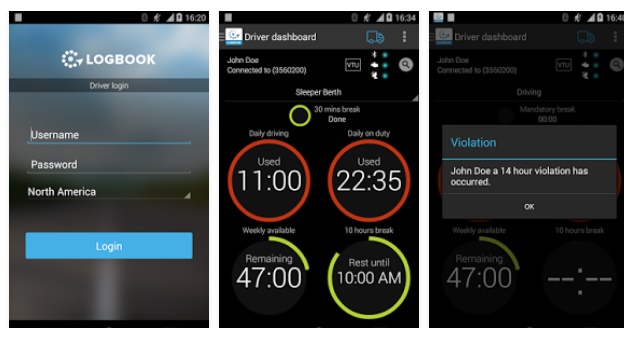
R&M handles a variety of freight, from local cartage to intermodal to air freight. Using a combination of Fleetmatics' (a Verizon company) Reveal and LogBook, they are able to comply with their own safety policies by receiving real-time alerts for any driver behavior that may cause problems in the future. “LogBook has helped us keep our safety scores down by ensuring that any time a driver is stopped on the side of the road and his hours of service are checked, he's fully compliant and there's not a shadow of a doubt whether his logs are current. The solution has helped with any negative safety scores we might have had,” Narvaez explains. Fleetmatics Reveal helps R&M see exact driver location and if they've run into any problems along the way.

“If a customer calls and wants an ETA or is worried about where a driver may be, I can log into the solution and see where they are. It gives me accurate up-to-date information on driver location,” says Corey Christensen, dispatcher at R&M.

R&M, like many companies, was used to navigating around stacks of driver logs, reports and paperwork – all of which were transferred ...Read the rest of this story

Fleetmatics Registers ELD as Self-Certified to Meet DOT Requiremenets

Fleetmatics, a Verizon Company, has registered its Fleetmatics Reveal LogBook Electronic Logging Device for Android with the Federal Motor Carrier Safety Administration as self-certified meet the ELD specifications.

Commercial drivers who are currently required to maintain records of duty status (hours of service logs) will be required to use an ELD to record their HOS by Dec. 18, 2017.

Reveal LogBook ELD manages drivers' RODS, so customers can easily record and store HOS information, and meets all technical specifications mandated by the Federal Motor Carrier Safety Administration, according to the company.

Fleetmatics says it will also continue to support customers using the version of LogBook meeting the current AOBRD (automatic on board recording device) specifications, which can be used during a grandfathered period of two years after the December ELD deadline.

According to FMCSA regulations, Fleetmatics notes, motor carriers must select and install an ELD solution and ensure drivers are trained to use them. Drivers must also understand and be able to use ELDs by the required December deadline, including how to annotate and edit RODS, certify RODS and collect required supporting documents.

Customers using Reveal LogBook applications have access to 24/7 driver support.

“Reveal LogBook ELD makes the transition to electronic logging simple and fast with no additional hardware,” said Todd Ewing, director, product management for Fleetmatics. “The ELD mandate deadline is coming up in just a couple of months, and we're ready to help get customers up and running very quickly on our FMCSA-listed solution.”

The Reveal LogBook ELD application includes streamlined certification flow, enhanced sub-status selections and improved Driver Vehicle Inspection Report (DVIR) functionality. A redesigned user interface simplifies the transition to ELD for both drivers and the back office. The app also provides flexibility to existing customers, enabling the continued use of their automatic onboard recording device (AOBRD) solution, or the ability to ...Read the rest of this story
FMSCA to Exempt Short-Term Truck Rentals from ELD Rule

The Federal Motor Carrier Safety Administration is expected to announce on Oct. 11 that it will grant an exemption from being required to use an electronic logging device to “all drivers of property-carrying commercial motor vehicles rented for 8 days or less, regardless of reason.”

The exemption will apply to the ELD mandate that kicks in on Dec. 18— just 10 weeks away.

FMCSA made it clear that drivers who will operate under this short-term rental exemption will remain subject to the standard hours-of-service limits and so will have to maintain a paper record of duty status (RODS) if required, and maintain a copy of the rental agreement on the vehicle.

The exemption results from a petition filed with the agency by the Truck Renting and Leasing Association.

FMCSA pointed out that TRALA, in its petition, was “concerned about the unintended technical and operational consequences that will unfairly and adversely affect short-term rental vehicles,” given that it will be “unlikely” that most of the ELDs used by these drivers will able to "communicate properly" with a rental company's telematics platform.

“TRALA states that while FMCSA recognized during the rulemaking process these issues associated with a lack of interoperability among ELD systems, and required certain technical specifications in the final rule, the agency stopped short of requiring full interoperability among ELDs," FMCSA stated in its notice to be published in the Federal Register.

In an Oct. 10 news release on the petition being granted, TRALA emphasized that the exemption will not apply to drivers of rental vehicles operating for longer than eight days. They will still have to comply with the new ELD rule.

TRALA President and CEO Jake Jacoby met with FMCSA on Oct. 5 at their request to explain the agency's decision. “While TRALA had the support of all its members, the vast majority ...Read the rest of this story

FDA Offers Sanitary Transportation Rule Training

<img width="150" src="http://www.automotive-fleet.com/fc_images/news/m-fda-1-1.jpg" border="0" alt="

Photo: USDA

">

Photo: USDA

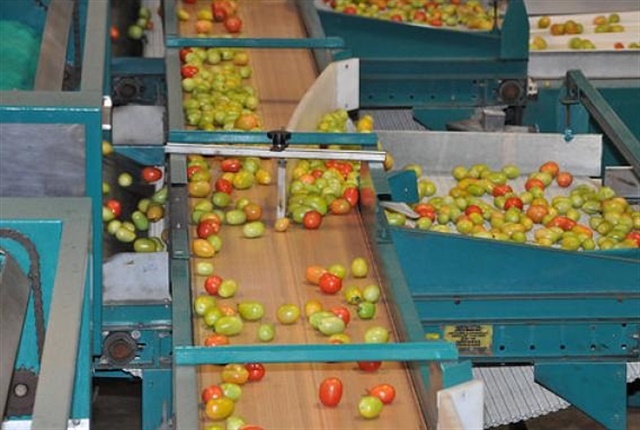
">The Food and Drug Administration is offering a free, one-hour training module to assist motor carriers in meeting the requirements of FDA's Sanitary Transportation of Human and Animal Food Rule, also known as the Sanitary Transportation Rule.

The Sanitary Transportation Rule requires carriers covered by the rule to provide food safety training to employees engaged in transportation operations. This applies when the carrier and shipper have agreed in a written contract that the carrier is responsible, in whole or in part, for the sanitary conditions during transportation.

Fleets are required to establish and maintain records documenting the training of operations personnel. The module can be used to:

Satisfy the minimum requirementsComplement or enhance training they currently offerTrain personnel using their own training programsProvide training obtained from a third-party vendor or other provider

This course is designed to provide basic food safety training to transportation operations personnel, but it does not include specific operating procedures and practices. It is intended to complement industry best practices already in place.

The new module will help carriers recognize their responsibilities as specified in the Sanitary Transportation Rule, identify potential food safety problems during transport, and highlight common ways to prevent food safety problems.

The FDA offers two ways transportation operations personnel can complete the module, either through an online course or by downloading the course files and importing them into their own learning management system.

Related: FDA Reveals Final Rule for Hauling Food Safely

Follow @HDTrucking on Twitter

...Read the rest of this story