Author: Vitaliy Dadalyan

Electric Axle for Trucks Saves Up to 15% in Fuel, Hyliion Says

<img width="150" src="http://www.automotive-fleet.com/fc_images/news/m-hyliion-10-16-17-3.jpg" border="0" alt="

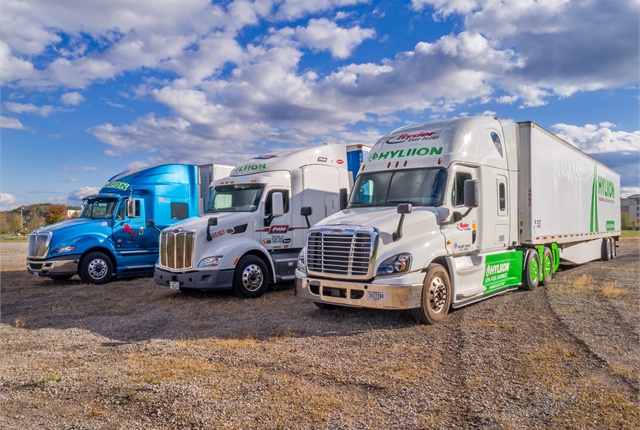
Mesilla Valley, PAM and Ryder are each testing a Hyliion electric-powered axle. The device supplies supplemental power and saves up to 15% in fuel, its maker says. Photos: Hyliion Inc.

">

Mesilla Valley, PAM and Ryder are each testing a Hyliion electric-powered axle. The device supplies supplemental power and saves up to 15% in fuel, its maker says. Photos: Hyliion Inc.

">

An electric-powered axle for highway truck-tractors has been announced by Hyliion, a startup technology company that has been developing a similar product for semitrailers. The truck version is now being tested by three major fleets, the company said.

Hyliion's 6X4HE system generates electric power on downgrades or while coasting, and supplies supplemental power during launch and on upgrades, explained Thomas Healy, founder and CEO. He said the system delivers substantial fuel savings, lowers exhaust emissions, and eases work for the driver.

A Hyliion axle replaces a 6x2 truck's non-driven dead axle or is added to a 4x2 truck, turning either into a 6x4. Existing 6x4 tractors can be converted by removing one mechanically driven axle and replacing it with a Hyliion axle.

The system includes a motorized axle, lithium-ion battery pack, and electronic controls. The battery pack also runs an auxiliary power unit during rest periods. It can be installed on a new or existing truck in about three hours.

Mesilla Valley Transportation, PAM Transport, and Ryder System all participated in testing and refining the 6X4HE, and each has one tractor running with it, Healy said.

Hyliion first announced a powered trailer axle last year, but switched its focus to a truck system at the request of fleet executives. The axle's hybrid action alone will save 15% in fuel, the company claimed.

“Fleets said they'd see a faster payback if it could be put on a truck because it would be used more often than on a trailer,” Healy told HDT. “We listened and focused our efforts to first deliver the 6X4HE System with an innovative APU” that uses the battery pack.

The APU ...Read the rest of this story
2018 Medium-Duty Report

A new future, with new operational realities for fleets, looms just around the corner — although getting any two experts to agree on just what that future will look like is largely impossible. What is clear is that trucking will be a vital cog in the newly emerging economic and retail realities taking shape today, with efficient urban delivery and last-mile delivery emerging as hugely important enablers for retailers large and small worldwide.

The impact of some of these trends are already showing up in medium-duty specs, according to Kevin Koester, Ford medium-duty truck and Super Duty fleet manager, who says the demands of urbanized deliveries are becoming increasingly apparent. “We're seeing a lot more medium-duty fleets — particularly in the P&D markets — cubing out now before they weigh out,” he says. “I think that is a reflection of more people skipping a trip to the grocery store and ordering items like paper towels online. So we're seeing an increase in moving goods like that, particularly in Classes 6 and 7 — simple, smaller items that weigh less.”

One of the more headline-grabbing trends affecting the medium-duty truck market is a move toward all-electric vans and trucks optimized for delivery routes in urban settings. Although reports are still sketchy as of press time for this article, it appears Tesla's much-touted debut electric truck will be a Class 7 model, optimized for urban and light regional routes with a daily charge range of between 200 and 300 miles. And other OEMs, such as Mitsubishi Fuso, Mercedes-Benz and Hino, are actively pursuing their own electric vehicle technology paths as well.

Opinions are divided as to how electric technology will be deployed in medium-duty trucks in North America. Koester thinks that instead of fleets of electric vans running routes, it's more likely to be the ...Read the rest of this story

Commentary: The Remanufacturing World’s Problem With Cores

<img width="150" src="http://www.automotive-fleet.com/fc_images/articles/m-denise-rondini-2013-3-36-1.jpg" border="0" alt="

Denise Rondini

" >

Denise Rondini

" width="185" height="225">

The biggest pain point for everyone involved in remanufacturing is cores. Things such as core management traceability, identifying cores, accounting for cores, space to store cores, and even the transportation of cores all add complexity to remanufacturing, says Tim Shaw, national sales and product manager for remanufacturing at Haldex.

No single one of these issues is more of a concern than the others, making it harder to address the core issue.

“If you conducted a poll of 10 different customers, they are all going to have a different opinion about what is most difficult for them,” Shaw says. “Some do a really good job at the traceability and tracking of cores, but on the flip side they might not be identifying cores correctly or they might not correctly determine core condition.” Even if you solve one of the problems, you are still left with several others.

Haldex is looking at a more flexible core program that tries to alleviate some of the issues customers have. While Shaw was not at liberty to go into great detail, he did mention speeding up the core process. “We are trying to make sure that the cores are processed in a quick and timely manner.” He also says the company is looking into things like longer time frames to return cores.

There are a couple of other areas where Shaw thinks manufacturers can help make the core process more user-friendly. One is in the area of core identification. Shaw thinks better tools will help fleets and distributors do a better job of identifying cores and understanding core condition to better assess core value.

“For our business model and for us to be in business, we have to have cores, and we have to have good cores,” Shaw says. Damage to the core can render ...Read the rest of this story

Ford Recalls 1.3M Trucks for Door Latches

<img width="150" src="http://www.automotive-fleet.com/fc_images/news/m-m-ford-f-150-5-1.jpg" border="0" alt="

Photo of Ford F-150 courtesy of Ford.

">

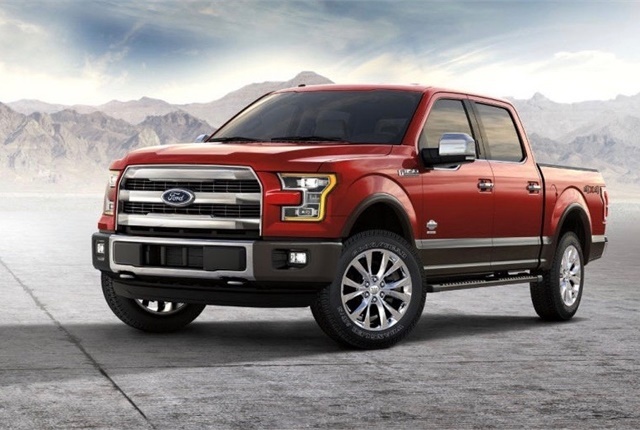
Photo of Ford F-150 courtesy of Ford.

">

Ford Motor Co. is recalling 1.1 million 2015-2017 Ford F-150 and 2017 Super Duty trucks in the U.S. because of faulty side door latches, according to the automaker.

Ford dealers will fix the problem by installing water shields over the door latches. The door latch actuation cables will also be inspected and repaired if needed. There will be no charge for this service.

The door problem stems from a frozen door latch or a bent or kinked actuation cable, which may cause the door to stop opening or closing properly. With this condition, the door may appear closed without the latch fully engaging the door striker. As a result, the door might open unexpectedly while driving, increasing the risk of injury, Ford said.

In addition to the affected trucks in the U.S., this recall covers 222,408 trucks in Canada and 21,090 in Mexico. The recall covers more than 1.3 million trucks in all of North America.

Ford said it isn't aware of any accidents or injuries tied to the issue. The company's reference number for the recall is 17S33.

Follow @HDTrucking on Twitter

...Read the rest of this story

Visiting the IFDA distibution solutions conference

The 2017 International Foodservice Distributors Association (IFDA) distribution solutions conference, held at the Gaylord Convention Center in National Harbor, MD, this week, provided 23 different workshops for foodservice companies to attend on a range of topics from recruiting and retaining workers to the latest advice or complying with new Sanitary Transportation Food Act, along with an exhibit floor packed with 156 vendors selling everything from trucks and trailers to clothing needed to work in sub-zero warehouses.

read more

...Read the rest of this story

Shorter trailer trade cycles may result from new food safety rules

Yet fleets may also save money by speeding up replacement cycles, too, argues one trailer leasing specialist.

Refrigerated motor carriers may need to rethink their trailer trade cycles in light of new food safety transportation rules that went into effect this past April, argued Don Drum, vice president of customer solutions for PLM Trailer Leasing, during a presentation at the 2017 International Foodservice Distributors Association (IFDA) co

read more

...Read the rest of this story