Remote over-the-air updates take hold
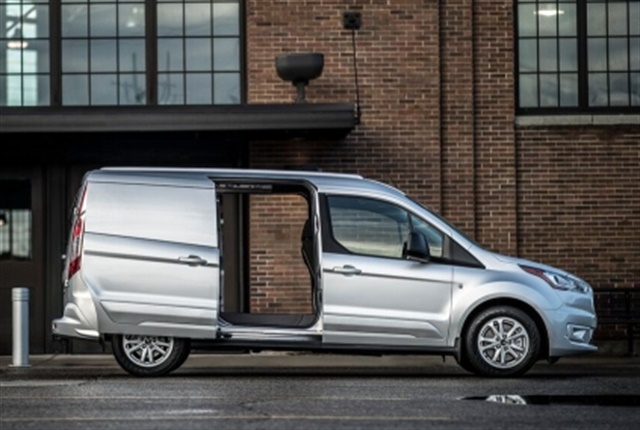
Photo of 2019 Transit Connect courtesy of Ford.
">Ford's 2019 Transit Connect compact cargo van is adding a diesel engine option, fleet model that can be easily converted to run on gaseous fuel, and array of driver-assisting features to reduce accidents for commercial users, Ford announced at the Work Truck Show in Indianapolis.
The upgraded model will offer three engines capable of running on five different fuels to give commercial and government fleets many choices to find the right engine for their needs. The 2019 Transit Connect will offer a standard 2.0-liter inline-four cylinder, 1.5-liter EcoBlue diesel, and 2.5-liter inline-four cylinder exclusively for fleets.
The base engine, which includes auto start-stop technology, delivers power through an eight-speed automatic transmission to achieve low-rpm cruising on the highway and responsive performance. The E85-compatible engine comes with a standard heavy-duty battery and available heavy-duty alternator to supply power for upfit applications.
The EcoBlue diesel should achieve an EPA-estimated 30 miles per gallon on the highway, according to Ford. The engine combines the latest in fuel injection, turbocharging, and emissions-control technologies to reduce fuel consumption. The engine is also fitted with the eight-speed transmission.
The exclusive fleet model pairs its engine with a six-speed automatic transmission. Ford is offering a factory gaseous fuel package that allows fleets to more easily convert it to run on compressed natural gas (CNG) or propane autogas.
The base model and diesel engine come with EcoMode and EcoCoach, which monitor fuel economy and encourage fuel-efficient driving behaviors.
“The original Transit Connect's compact size resonated with customers searching for a more maneuverable and efficient commercial van,” said Tim Stoehr, Ford's general fleet marketing manager. “We've enhanced Transit Connect's available technology and powertrains to keep up with what our customers need. It is a critical tool with smart features to help improve productivity out in the field.”
<img src="http://www.automotive-fleet.com/fc_images/news/m-fordtransitconnectcargo-interior-2.jpg" ...Read the rest of this story
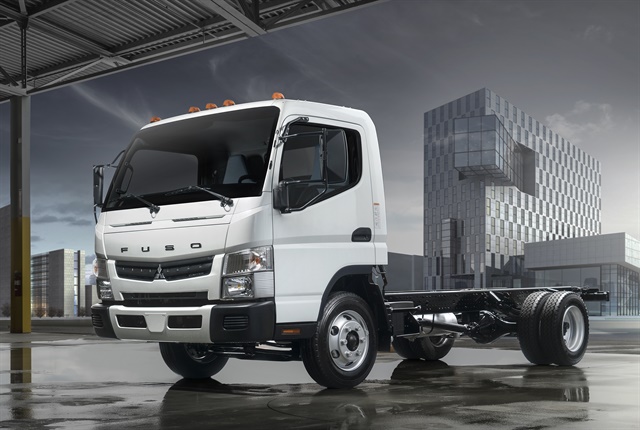
Photo of gasoline-powered FE Canter courtesy of Mitsubishi Fuso.
">Mitsubishi Fuso Truck of America will begin selling its gasoline-powered 2019 FE cabovers this month, after showing production-ready versions at the Work Truck Show in Indianapolis.
A General Motors-sourced 6.0L V-8 will power a Class 4 and Class 5 FE cabover. The Daimler AG-owned unit will also show a production-ready model of its battery-electric eCanter. The trucks will be sold alongside diesel models.
Class 4 models will include the FE140 (14,500 lb. GVWR) and the FE160 (15,995 lb. GVWR). Later this year, Fuso will offer the Class 5 FE180 (17,995 lb. GVWR), which would be the first gasoline-powered Class 5 cabover. In all models, the PSI-GM V-8 engine will make 297 horsepower and 361 pound-feet of torque.
Fuso will eventually offer a gaseous-prep package from the factory to allow buyers to use compressed natural gas (CNG) or propane autogas. The trucks come equiipped with a 40-gallon rear-mounted fuel tank.
The gasoline engine will be paired with an Allison 1000 automatic transmission with Fuel Sense 2.0 transmission management software, including DynActive shifting technology that improves fuel economy by as much as 6%. The software uses a Neutral-at-Stop feature that further reduces fuel consumption.
The FE gasoline trucks will also arrive with enhancements in the cab's interior, including improved driver seat bolstering. The seat cushion has been extended and the seatbelts are now red for higher visibility.
Instrument cluster colors have been improved under various lighting conditions, and the trucks now come with an LED cabin light. Storage space has been enhanced with a new driver side console, floor tray, and sun-visor pocket.
The truck is available with a black-on-black color scheme with silver trim accents in the interior. The cab improvements will also be offered on diesel-powered trucks.
Fuso will assemble the models at the Freightliner Customer Chassis Corp. (FCCC) plant ...Read the rest of this story

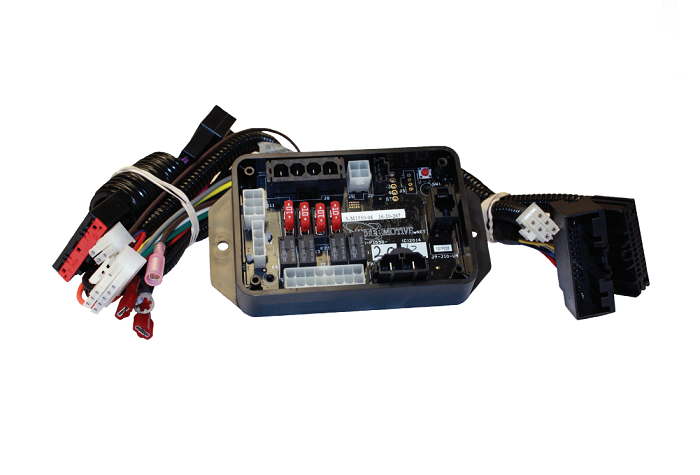
InterMotive Vehicle Controls has developed a Bluetooth version of its fully automatic stop/start idle reduction system called the EcoStar II.
EcoStar III automatically turns the engine off and on after the vehicle has been placed in Park for a programmable set amount of time. Using Bluetooth and a simple mobile app, EcoStar III is configurable to custom conditions and can pull data for tracking idle time reduction and fuel savings.
The EcoStar III works with the key in or out of the ignition to keep the vehicle secure as well as prevent unnecessary idling.
The system will monitor battery voltage and interior temperature (optional feature) to restart the engine if any of the specific condition settings are exceeded. It also includes high idle for a faster battery charge and better AC performance.
EcoStar III can be installed using plug and play connections on a work truck, fire truck, cutaway-bus, and ambulance vehicles.
Follow @HDTrucking on Twitter
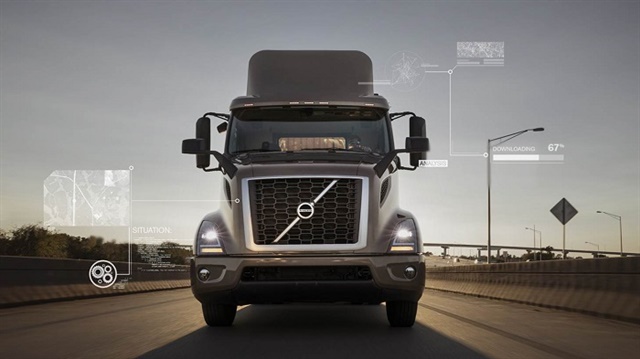
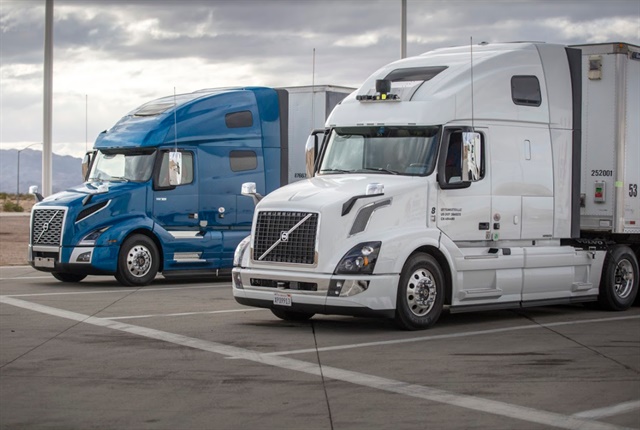
...Read the rest of this storyRemote Programming allows Volvo customers to perform over-the-air powertrain software and parameter updates anywhere in the U.S. and Canada where a cellular connection is available. Photo: Volvo Trucks
">Volvo Trucks has announced that it is now able to offer its customers the ability to remotely update its proprietary engine and powertrain systems on select truck models. The company made the announcement at the Technology and Maintenance Council Annual Meeting in Atlanta.
Volvo calls the new system Remote Programming. It is a new addition to Volvo's established, and standard, Uptime Service telematics system. According to Conel Deedy, director of Uptime Services for Volvo, the truck maker has successfully updated approximately 1,300 remote powertrains since June of last year, saving those customers an estimated 600 days of downtime or more in the process. He noted that half of those updates were handled by the driver of the truck, with the other half being completed by technicians.
When Volvo determines an engine or other powertrain updated is required, a customer service representative from the company's Uptime Center reaches out to a fleet or owner-operator to set up a convenient time to complete the process. At the designated time, the truck has to have the ignition on and the parking brake set, with a cellular or Wi Fi system enabled. Pardue said the entire update typically takes around 20 minutes to complete.
“Uptime isn't just a marketing word we toss around lightly. It's about the people, processes and technology we implement to meet our customer commitments,” said Deedy. “Remote Programming is already delivering strong uptime improvements. We see great potential for further improving truck availability and the ownership experience as we build on the platform and capabilities we've developed over more than two decades.”
In addition to software updates, Remote Programming can deliver parameter changes to the road speed ...Read the rest of this story
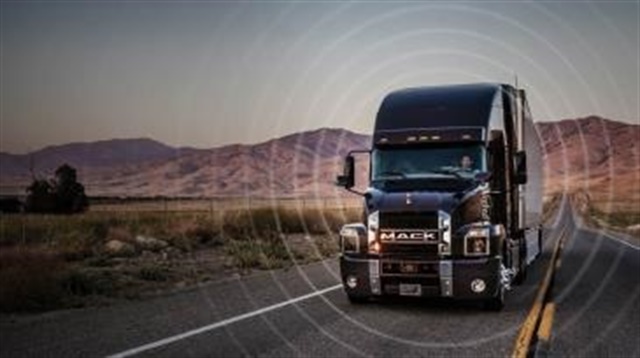
Late last year at the North American Commercial Vehicle Show in Atlanta, Mack Trucks announced its intention to have an over the air, remote software update capability for its GuardDog Connect telematics systems in early 2018. Flash-forward to the Technology and Maintenance Council Annual Meeting, currently underway, and the company has delivered on that promise.
Mack Over The Air is a new addition to Mack Truck's telematics suite that enables remote powertrain software updates. Photo: Mack
" width="350" height="196">Mack Over The Air is a new remote system that updates engine and powertrain software on Mack trucks equipped with Mack 2017 or newer engines. At a press conference held on the show floor in Atlanta, David Pardue, vice president of connected vehicles and uptime services for Mack said that “Mack Over The Air enables customers to ensure their trucks are operating at an optimal level without disrupting their schedules in today's hypercompetitive just-in-time economy.”
“This is just the latest step in our journey to provide industry-leading uptime for our customers.”
Since going live in Oct. 2017, Pardue said 20 customers and about 3,500 vehicles have benefited from Mack Over The Air. Mack has performed more than 380 updates, saving customers more than 500 days of downtime and decreasing the time needed to do a software update from days to minutes.
Mack Over The Air is powered by GuardDog Connect, which also provides proactive monitoring and repair planning for 65,000 in-service Mack trucks. Mack Over The Air uses GuardDog Connect - standard on all Mack models with Mack engines - to deliver software and parameter updates directly to customers' trucks.
Mack OneCall uptime agents in the company's 24/7 Uptime Center work with customers to schedule the updates based on when it works best for their operations. Once the update begins, Pardue said it generally took around 23 minutes ...Read the rest of this story
Uber's Advanced Technologies Group has released a video showcasing how its Autonomous Truck technologies can be used to haul goods across the country.
The video features an Uber autonomous truck transferring freight with a traditional heavy duty truck in Arizona. According to the video, the self-driving truck was bringing goods that originated in the Midwest to a point near Topock, Ariz., which is near the California-Arizona border. The self-driving truck is met by they traditionally-driven truck which has brought its own load from Los Angeles.
The video was not just for show, Uber's autonomous truck actually hauled the trailer from Sanders, Ariz., to Topock – a route spanning the length of the state. Arizona has become a hotbed of autonomous truck development in the past year, due in part to its regulatory climate that places few restrictions on self-driven vehicle testing.
At the meeting point, the two trucks traded loads, with the regular truck taking the goods from the Midwest back toward Los Angeles and the self-driving truck taking its new load back to the East.
Apart from showing how Uber's autonomous truck technology can already be used on long haul routes, the video is meant to showcase that, in either case, a truck driver is still needed to operate each vehicle. This supports Uber's vision for the future of trucking, where mixed fleets of self-driving long-haul trucks and human-driven regional trucks work together in a transfer hub logistical model.
Uber see's its self-driving trucks taking over many of the long-haul cross country routes while traditionally driven trucks transfer the goods in regional settings. Photo: Uber ATG
" width="420" height="282">This could also accelerate the timeline for self-driving trucks being used in regular operations. Current autonomous trucks still require a driver to be behind the wheel at all times, and have a harder time navigating ...Read the rest of this story