Author: Vitaliy Dadalyan

Hendrickson Adds Brake Maintenance Videos to Online Training Portal

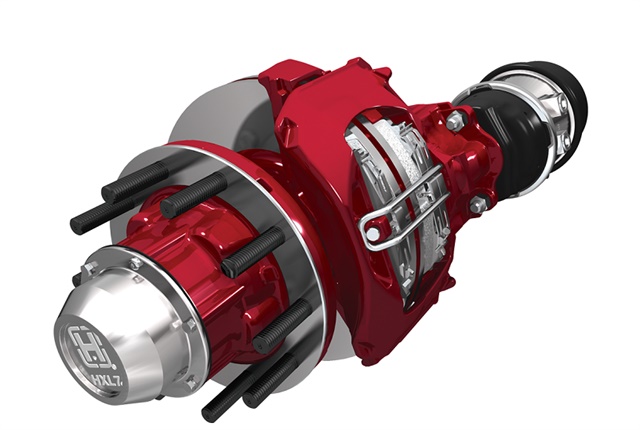
Hendrickson added new training videos to its online portal Hendrickson-Academy.com Image: Hendrickson

">

Hendrickson Trailer Commercial Vehicle Systems has added more air disc brake maintenance training videos to its online training portal, Hendrickson-Academy.com.

The online resource is free and features training videos for a variety of truck and trailer products, including Hendrickson's Maxx22T trailer air disc brake system.

“While the perception may be that air disc brakes are maintenance-free, the reality is that, like any other braking system, a regularly planned maintenance schedule is integral to maximizing performance and achieving optimal life,” said Greg Dvorchak, applications engineer for Hendrickson's wheel-end and braking systems business unit. “Hendrickson's free online training academy is a great tool for educating technicians on Hendrickson's recommended maintenance practices for a variety of products, including Maxx22T air disc brakes.”

Hendrickson announced the latest training videos prior to the Mid-America Trucking Show and will host several informational sessions during the show to educate attendees on key tips for maintaining trailer air disc brake systems.

Air disc brake maintenance training is available through Hendrickson's online education portal at www.Hendrickson-Academy.com.

Follow @HDTrucking on Twitter

...Read the rest of this story
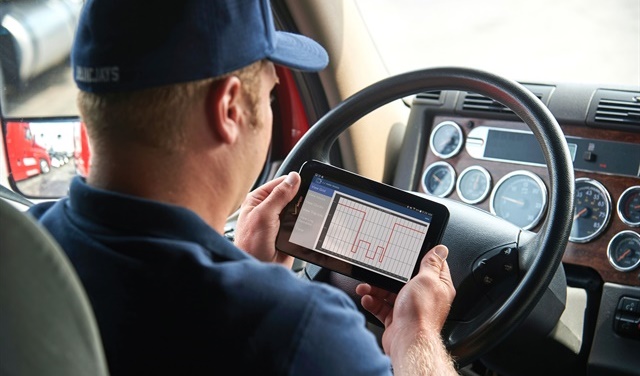
ELD Mandate: Don’t Rest Easy If You’re Grandfathered with AOBRDs

Grandfather clause in the ELD rule excuses carriers and drivers from complying so long as they are already using automatic onboard recording devices. But it's only a temporary fix — the clause expires in less than two years.

">

Being “grandfathered” may have a warm and cozy ring to it. But when that term applies to the electronic logging device mandate, don't let a vision of idly playing checkers across a cracker barrel while swigging back a cold root beer draw your eye away the calendar.

To be grandfathered means to meet certain conditions that allow one to remain under the provisions of a given law or regulation after a newer measure has taken legal precedence for all other affected parties.

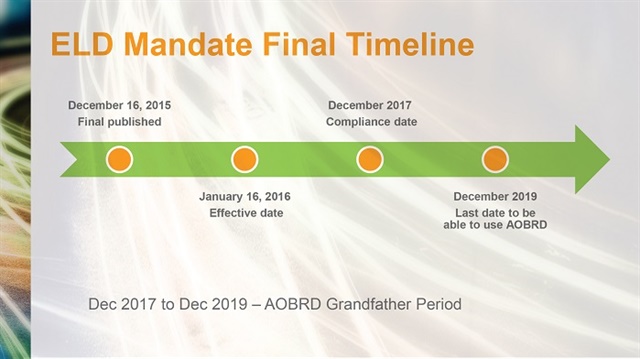
The grandfather clause in the electronic logging device rule excuses carriers and drivers from complying with the ELD rule so long as they are already using previously compliant automatic onboard recorder devices to track driver hours of service. To be perfectly clear, a grandfathered AOBRD is an e-log device that a motor carrier installed and required its drivers to use before the ELD rule's actual Dec. 18, 2017, compliance date.

But it's only a temporary fix. The clause expires in less than two years, on Dec. 16, 2019. At that point, all AOBRDs will have to be replaced by ELDs.

The reason AOBRDs will be phased out is they do not meet the technical specifications that the Federal Motor Carrier Safety Administration has required for ELDs. A carrier may not recognize much difference between an AOBRD and an ELD, according to Joe DeLorenzo, director of FMCSA's Office of Enforcement and Compliance. And in some cases, a vendor may be able to convert existing AOBRDs to ELDs with very few visible differences.

One of the biggest difference between the types of logging devices is that the ELD ...Read the rest of this story

FMSCA Loosens ELD Use as AOBRD under Grandfather Clause

Photo: J.J. Keller & Associates

">

The Federal Motor Carrier Safety Administration has slightly liberalized its stance on the use automatic on-board recording devices by some fleets that are using those devices under the terms of the AOBRD grandfather clause within the electronic logging device rule.

Per new guidance issued earlier this month by the agency, a motor carrier that had installed and required its drivers to use an AOBRD before Dec. 18, 2017 may now install and use a new “ELD-capable device that runs compliant AOBRD software” until Dec. 15, 2019. That latter date is the one on which the AOBRD grandfather clause expires.

FMCSA's new, more flexible position on fleets allowed to use AOBRDs during the grandfather period does not negate the requirement that any new AOBRD installed must be able to be updated for mandate compliance by Dec. 16, 2019, noted ELD supplier J.J. Keller & Associates in a news release.

“To be fully informed consumers, motor carriers with AOBRDs need to ask their current device supplier if their equipment can in fact be updated over-the-air to be ELD mandate compliant,” said Tom Reader, director of marketing for ELDs at J. J. Keller. “A motor carrier may have older AOBRDs that are compliant now, but that older equipment may not be able to be updated as required in December 2019.

“Our devices, currently operating as AOBRDs today, can be updated to mandate-compliant ELDs as needed,” added Reader. “Every one of our AOBRD customers will be able to perform the update.”

Follow @HDTrucking on Twitter

...Read the rest of this story

Emerging and Future Fleet Data Technologies

Predictive analytics can help keep trucks on the road. Navistar has been piloting a new OnCommand Connection feature called Live Action Plans, which predicts when a part is going to fail before it does. Photo: Navistar

">

When you hear the words artificial intelligence or machine learning, you may think of IBM's Watson, or the 2001 Steven Spielberg flick about a robotic boy. When you hear blockchain, you may think bitcoin. Yet these and other emerging data technologies are already being employed in trucking and logistics.

“I've been in the trucking world for a long time. Normally, trucking has not adopted things as fast” when it comes to technology, says Tim Leonard, chief technology officer and executive vice president at TMW Systems. But when it comes to things like deep learning analytics and blockchain, he says, “the transportation world is one of the leaders.”

Predictive analytics

We've been hearing for years now about the idea of predictive maintenance rather than preventive maintenance – the ability to analyze data and predict when failures are about to happen, allowing fleets to replace or repair components before they lead to a breakdown on the road.

Some fleets have already been using data from their own fleets to do predictive maintenance. As Randy Obermeyer, terminal manager in charge of equipment and maintenance for Batesville's private fleet in Batesville, Indiana, explains, “There's a lot of data that will tell you if you have an issue with that system before it becomes a major problem that's going to leave the guy sitting on the side of the road.”

For instance, he says, “If you know the starter lasts for two years, you can proactively put a new one on every two years and not worry about it breaking down at 25 months and causing unnecessary downtime.”

But the next step brings in data beyond ...Read the rest of this story

Bill Would Create Pathway for Under-21 Truck Drivers

Two U.S. House representatives from California have introduced a bill that would create a training pathway for truck drivers between the ages of 18 and 21 to be able to operate in interstate commerce.

Republicans Duncan Hunter and Trey Hollingsworth, with support from the International Foodservice Distributors Association and the American Trucking Associations, today introduced the Drive Safe Act.

Most states allow individuals to obtain a commercial driver's license at age 18, but federal regulations prevent those operators from moving goods from state to state until they are 21. This restriction on interstate deliveries is particularly problematic in regions like the greater D.C. metro area, where a younger driver would be prohibited from making a quick trip between Arlington, Virginia, and Bethesda, Maryland. But the same driver could haul a load from Arlington to Norfolk, Virginia, a more than three-hour drive.

In response, the Drive Safe Act would help train younger drivers far and above current standards, and in return would be allowed to drive interstate not only once the program is completed, but during the supervised training as well.

Under the legislation, officially named the Developing Responsible Individuals for a Vibrant Economy Act, once a driver has met the requirements to obtain a CDL, he or she may begin a two-step program of additional training that includes rigorous performance benchmarks. The program will require drivers to complete at least 400 hours of on-duty time and 240 hours of driving time with an experienced driver in the cab with them. All trucks used for training in the program must be equipped with safety technology including active braking collision mitigation systems, video event capture and a speed governor set at 65 mph or below.

The bill has the support of the International Foodservice Distributors Association and the American Trucking Associations.

IFDA says the driver shortage has ...Read the rest of this story