The Case for Fuel Filtration
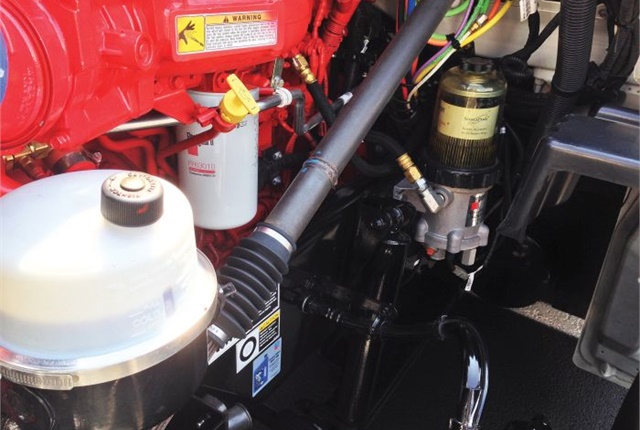
Supplemental fuel processors combine a fuel filter, water separator and heater all in one unit and are designed for severe conditions like extreme cold. Photo: Cummins Filtration
“>
Supplemental fuel processors combine a fuel filter, water separator and heater all in one unit and are designed for severe conditions like extreme cold. Photo: Cummins Filtration
“>
Where’s the value in putting a $40,000 engine at risk just to save a few bucks on a fuel filter?
It’s not always clear when a fuel filter is doing its job. You put it on, you change it for another one a few months later, and since nothing bad happened to your engine in the interim you have to believe the filter worked. Few fleets cut them open to see how well they worked. Even if you did, you likely wouldn’t see anything alarming, unless you have a serious fuel system or fuel quality problem.
Contamination comes in many forms. There’s ever-present water and debris from the bottom of the fuel storage tanks. Microbial growth in fuel tanks can form algae, which can be ingested by the fuel intake line. And poorly maintained fuel systems can contain rust or other particulates.
If you’re not satisfied with the life of your fuel filters, it’s probably not the filter you need to investigate.
“At times, variability in fuel quality (high contaminant content, additives and additive drop-out, glycerin from biodiesel production) manifests itself in the form of short filter life,” says Scott Grossbauer, global manager for clean solutions at Donaldson. “In reality, the filter is doing its intended job of removing particles of a size range at a particular efficiency and delivering contaminant holding capacity designed for the intended use.”
Today’s high-pressure fuel systems, with their extremely close internal tolerances, do not respond well to contaminated fuel.
“The average gallon of fuel can contain over 18 million potentially harmful particles, which can wear down critical components in your engine,” says Cindy Hawkins, global product manager for fuel at Cummins …Read the rest of this story
