Cargo Securement: What You Need to Know
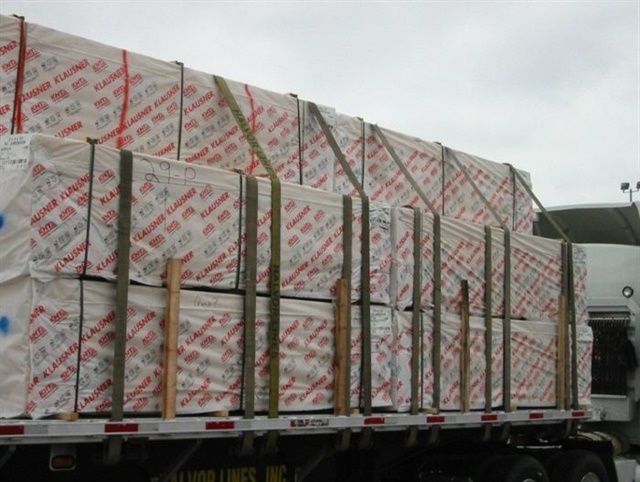
Belly strapping: The lower stack of this load was secured before the top stack was placed aboard and tied down. There are more than enough straps to satisfy safety and regulatory demands. Photos: Commercial Vehicle Safety Alliance
“>
Belly strapping: The lower stack of this load was secured before the top stack was placed aboard and tied down. There are more than enough straps to satisfy safety and regulatory demands. Photos: Commercial Vehicle Safety Alliance
“>
Securing loads is a matter of safety and good business. If a piece of cargo is damaged because it shifts or falls off a trailer, the carrier and driver won’t be paid because the load didn’t get delivered, and someone could get hurt or killed.
Keeping loads in place during transit is the aim of federal Part 393 regulations governing how items are to be blocked, braced or tied down on flatbeds and inside vans and refrigerated trailers – and on the tractor, for that matter. On a truck that’s moving, will the load stay put during turns and sudden stops?
What do inspectors look for in safety violations? “Make sure you have enough (securement) straps for the weight of the load,” says Kevin Tomlinson, director of maintenance at South Shore Transportation, a flatbed carrier based in Sandusky, Ohio. “We do a lot of belly strapping [on the first tier of the load] and then more on top. They check loads for having enough straps, and that they’re not frayed. The enforcement officers look for that kind of thing.”
Tie-down ratings
The combined ratings of all the straps or chains must equal at least one-half the load’s total weight, says Kerri Wirachowsky, newly appointed director of roadside inspection programs for the Commercial Vehicle Safety Alliance, and a 26-year veteran of enforcement work with the province of Ontario’s Ministry of Transportation. If the load is 40,000 pounds, all the tie-downs together must equal at least 20,000. There are further rules for blocking dense cargo.
“In Canada, the working load limit (WLL) must be visible and readable, printed, stamped or embossed …Read the rest of this story
