Improved Freight Demand Could Increase Equipment Purchases

Improved Freight Demand Could Increase Equipment Purchases

<img width="150" src="http://www.automotive-fleet.com/fc_images/news/m-ftr-index-april-1.jpg" border="0" alt="

Source: FTR

">

Source: FTR

">

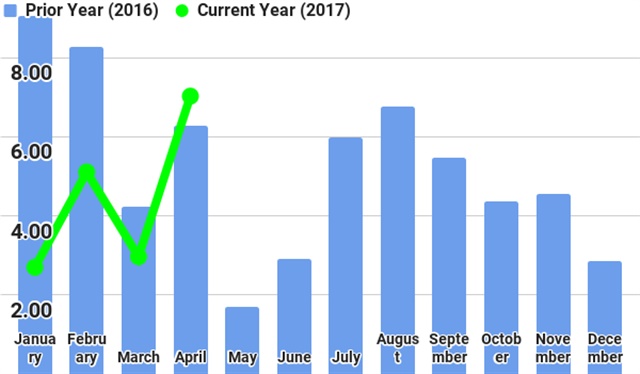
FTR's Trucking Conditions Index for April rebounded more than four points from March, showing improving conditions despite weak growth in the contract freight market.

The April TCI hit a reading of 7.03, showing that freight demand is moving higher as the industrial sector continues to improve, with capacity tightening. The first quarter of 2017 registered the strongest freight growth of the current economic recovery, according to FTR.

“Overall, our expectation of improvements in freight demand for 2017 are coming to fruition,” said Jonathan Starks, chief operating officer at FTR. “However, we are seeing a significant difference between the contract carriers, specifically those in more dedicated routes, and the spot market.”

The Trucking Conditions Index tracks the changes representing six major conditions in the U.S. truck market: freight volumes, freight rates, fleet capacity, fleet bankruptcies, fuel price, and financing. The individual metrics are combined into a single index that tracks the market conditions that influence fleet behavior.

FTR expects to see modest growth for the rest of 2017 and it is projecting the index to fall off in the next few months but remain in mid-range positive territory through 2018. Spot market load activity in early June was up more than 50% compared to the same time last year and the average rate has increased 10%, according to Starks.

“We typically see spot markets move prior to the contract arena, so we would expect to see stronger contract pricing negotiations as we finish 2017 and head into 2018,” said Starks. “The market is gaining strength, and conditions for carriers are showing significant improvements.”

With improving conditions, fleets also appear to be looking to buy new equipment. ACT Research's For-Hire Trucking Index indicated that May's purchase intentions are high, with 61% of responding fleets planning to buy new equipment in the next three months. ACT says purchase ...Read the rest of this story
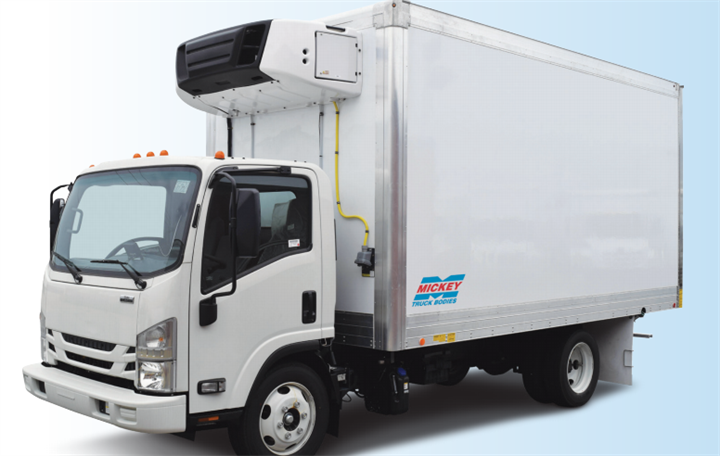
Mickey Truck Bodies Offers New Reefer Van Option

Mickey Truck Bodies has designed a refrigerated van option, featuring thermal-efficient composite panels on the roof, walls, and floor.

The Reefer body is designed to maintain temperature from 0 degrees to 32 degrees Fahrenheit in a more efficient manner than conventional panels, according to Mickey Truck Bodies. The bodies also use smooth sidewalls with no fasteners that allow for easier decal application and a “billboard” appearance.

Standard features include insulated roll-up rear doors, E-Track cargo constraints and food grade interior walls.

The company is currently building the unit in a 16-foot length but longer versions could be available in the future. Mickey evaluates the thermal efficiency of each new reefer unit to ensure that cargo is maintained at the required temperature.

Follow @HDTrucking on Twitter

...Read the rest of this story

Port Strike Highlights Pay, Emissions Regulation Struggles

<img width="150" src="http://www.automotive-fleet.com/fc_images/news/m-port-driver-strike-2.jpg" border="0" alt="

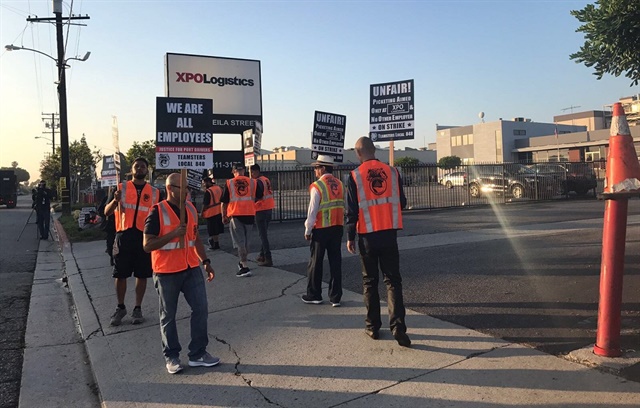
Picketers at XPO Logistics' port operations say port truck drivers should be classified as employees. Photo via

Picketers at XPO Logistics' port operations say port truck drivers should be classified as employees. Photo via Justice4PortDrivers Twitter

">

Southern California truck drivers and warehouse workers who serve the Ports of Los Angeles and Long Beach went on strike on June 19, protesting poor wages and labor practices.

The strike involves workers for Intermodal Bridge Transport, XPO Logistics, and California Cartage, and is just the latest in a series of wage and labor disputes surrounding the major Southern California ports complex.

In a letter from truckers to the clients of IBT that was released by the Teamsters Union, the drivers bring up the practice of hiring independent contractors to haul cargo to and from the ports as part of an “illegal business model."

“You cannot deny knowledge that your subcontractor is breaking the law as we have struck before, we have sent you letters, and the company's illegal behavior has been widely reported in the news media,” the drivers stated.

The impact of the strike is expected to be minimal to the ports, according to the Harbor Trucking Association. Similar picketing actions have occurred as many as 15 times in the last three years, and security and port operations personnel are prepared.

“It's not really a strike, it's just ambulatory picketing and [the impact] tends to be minimal,” Weston LaBar, executive director for the HTA, told HDT in an interview. "The most I've seen a dozen picketers at one terminal, most of them have single digits or no picketers whatsoever.”

The driver misclassification issue cited by the protesters argues that although the port trucking companies classify their drivers as independent contractors, they are not truly independent from the companies they work for and should be classified as company employees and given requisite benefits and wages. This has led to several lawsuits from ...Read the rest of this story